Last Updated: June 2026
How Should Whipping Cream Chargers Be Stored?
Table of Contents
Cream chargers are straightforward to use, but storage is where a lot of people go wrong. The good news is that storing them correctly doesn’t require much effort, it mainly comes down to knowing what to avoid. And there’s one distinction worth making upfront: storing an unused cream charger is completely different from storing a whipped cream dispenser that’s already been charged. Mixing up the two is one of the most common sources of confusion, so this guide covers both separately.
Ideal Storage Conditions for Unused Cream Chargers
Unused cream chargers are sealed steel cylinders under pressure, which means their storage requirements are more about safety than freshness.
Temperature is the most important factor. The recommended range is between 10°C and 25°C (50°F to 77°F). Beyond 50°C (122°F), the internal pressure inside the canister increases to a point where the risk of rupture becomes real. This rules out storing chargers near ovens, on windowsills that get afternoon sun, or inside a car on a warm day. According to the European Industrial Gases Association, pressurized gas cylinders should always be kept away from heat sources and direct sunlight, the same principle applies here, even at this smaller scale.
On the other end, very cold temperatures (below 0°C) can cause the N2O inside to condense, which reduces the effectiveness of the charge when you actually use it. A regular kitchen cupboard away from the stove works perfectly for most people.
A few other conditions worth keeping in mind:
Moisture and humidity. Steel canisters can develop surface rust if stored somewhere consistently damp, a basement, for example, or a cabinet under a leaking sink. Rust on the exterior doesn’t always affect the gas inside, but it can weaken the canister wall over time. A dry environment is always preferable.
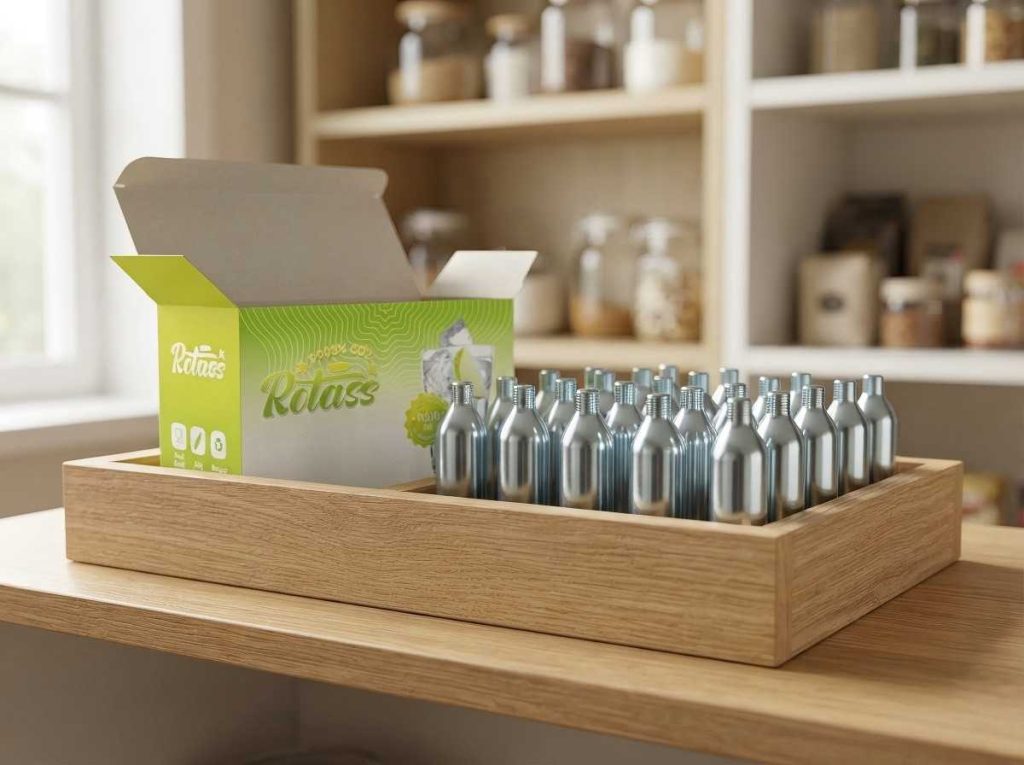
Upright position. Store chargers standing upright rather than on their side. This keeps the seal at the top and reduces the chance of any slow leakage. If you’re keeping them in a drawer, it’s worth using the original packaging or a small box to keep them from rolling around.
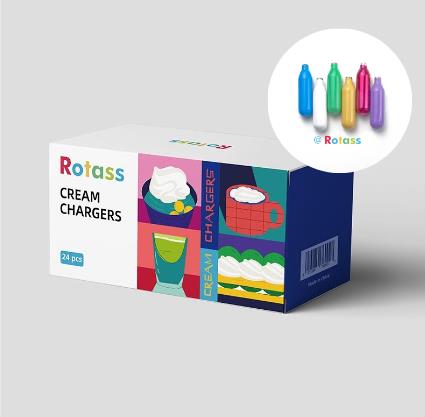
Original packaging. Until you’re ready to use them, keep chargers in their original box or sleeve. The packaging protects against minor physical damage and also makes it easier to check the production date when needed.
How Long Do Cream Chargers Last?
This is a question that comes up often, and the answer is more reassuring than most people expect. Unopened, properly stored cream chargers have a shelf life of several years, some manufacturers state up to 10 years. The N2O itself doesn’t expire; as long as the seal holds and the canister is undamaged, the charger will work just as well five years from now as it does today.
That said, the canister can degrade even if the gas inside is fine. Before using a charger that’s been sitting in storage for a while, do a quick visual check:
Rust or corrosion — surface discolouration is usually cosmetic, but deep rust or pitting is a reason to discard
Dents or deformation — any visible damage to the canister wall means the charger should not be used
Damaged seal — the foil seal at the tip should be fully intact; if it looks punctured or tampered with, discard it
If a charger passes these checks, it’s almost certainly fine to use.
Storing a Charged Whipped Cream Dispenser
Once you’ve loaded a charger into your dispenser and added cream, the storage rules change completely because now you’re dealing with a perishable food product, not just a pressurized canister.
A charged whipped cream dispenser should always go in the refrigerator. Heavy cream that’s been whipped and is sitting inside a pressurized dispenser will typically stay fresh for 3 to 5 days when refrigerated. The FDA recommends keeping dairy products consistently below 4°C (40°F) to prevent bacterial growth, and a charged dispenser is no exception.
A couple of practical points that often get overlooked:
Store it nozzle-down. Keeping the dispenser upside down in the fridge helps maintain the pressure distribution and makes dispensing easier when you take it out.
Don’t remove the charger holder between uses. Some people unscrew the charger holder after each use, assuming it needs to be removed for storage. However, leaving it in place is perfectly fine and won’t affect the cream or the dispenser. Removing it unnecessarily just introduces the risk of accidentally releasing pressure.
Don’t freeze a charged dispenser. Freezing affects both the texture of the cream and the behaviour of the gas inside. The result is usually a dispenser that either won’t work properly or produces a watery, separated output.
Common Storage Mistakes to Avoid
Most storage problems come from one of the following:
Storing near heat sources. The area around a stove or oven is a common spot for kitchen supplies, but it’s one of the worst places for cream chargers. Even residual heat from cooking can push ambient temperatures well above the safe range if chargers are stored directly above or beside the stove.
Leaving them loose in a drawer. Cream chargers rolling around freely in a drawer will knock against each other and against metal utensils. The canisters are durable, but repeated minor impacts can eventually compromise the seal. Using a small tray, box, or the original packaging keeps them secure.
Buying in bulk without checking conditions. Buying cream chargers in larger quantities makes sense economically, but only if your storage conditions are actually suitable for long-term storage. A warm, humid pantry will shorten the effective lifespan regardless of the manufacturer’s stated shelf life.
Using chargers without inspecting them. It only takes a few seconds to check for rust, dents, or a damaged seal and it’s a step that’s easy to skip when you’re in the middle of preparing something. Making it a habit is worth it.
How to Dispose of Empty Cream Chargers
Empty cream chargers are made from recyclable steel, but they shouldn’t just be dropped into a standard recycling bin without a second thought.
First, make sure the canister is completely empty before disposal. You can do this by checking that no gas is released when you press the valve, if there’s still pressure inside, the charger needs to be used or safely vented before it goes in the bin. Pressurized canisters in recycling or waste streams are a known hazard for waste handling equipment.
Once empty, most cream charger canisters can be placed in metal recycling. Check your local council or municipal recycling guidelines if you’re unsure — some areas have specific instructions for pressurized containers, even after they’re empty. For a more detailed breakdown of how to recycle used N2O cream chargers responsibly, Rotass has a dedicated guide on cream charger recycling worth reading through.

A Note on Charger Quality and Storage
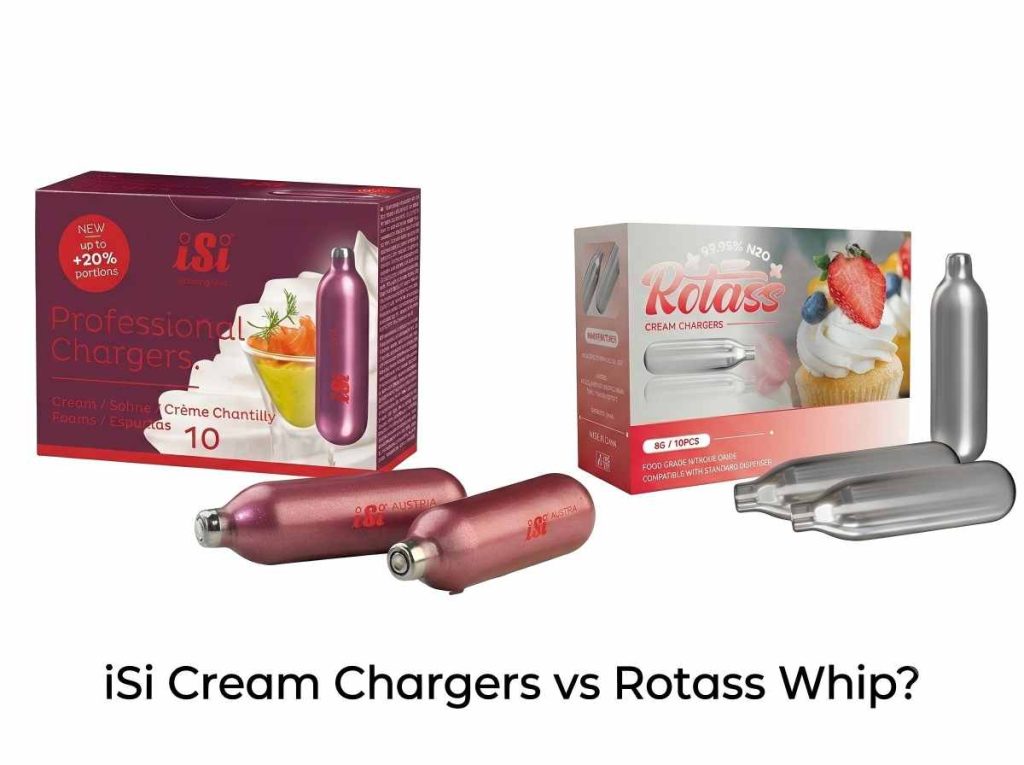
Storage conditions matter more when you’re working with lower-quality chargers. Canisters made from higher-grade steel such as HP295 are more resistant to pressure fluctuations and physical wear than those made from standard Q235B steel. If you’re buying in volume for a commercial kitchen or regular home use, the steel grade is worth paying attention to, not just the price per unit.
Good storage habits and good-quality chargers work together. One compensates for the limits of the other, but neither replaces the need for both.
For a full range of food-grade cream chargers built to consistent quality standards, visit the Rotass cream chargers page.