Last Updated: 2026 / 07 / 28
N2O Canister VS CO2 Cylinder: What Is Different?
Table of Contents
Nitrous oxide (N2O) and carbon dioxide (CO2) are two of the most widely used food-grade gases, but they are designed for very different purposes. If you’re shopping for gas cylinders or chargers for a whipped cream dispenser, soda maker, or commercial food service equipment, it’s easy to assume they can be used interchangeably. After all, both are stored under pressure, both are approved for food applications, and both are commonly sold in similar-looking cylinders.
In reality, choosing the wrong gas can lead to disappointing results or simply prevent your equipment from working as intended. This guide compares N2O canisters and CO2 cylinders side by side, explains where each one performs best, and helps you choose the right option for your application.
What Is an N2O Canister?
An N2O canister contains food-grade nitrous oxide, a colorless gas widely used in the culinary industry. Its primary role is to create smooth, stable whipped cream by dissolving into the fat content of cream under pressure. Once the dispenser is activated, the pressure drops rapidly, allowing the gas to expand and produce a light, creamy foam.
Because nitrous oxide has a neutral taste, it preserves the natural flavor of dairy products instead of changing them. This makes it ideal for applications where texture is just as important as taste.
Today, N2O is used in much more than whipped cream production. Restaurants, cafés, bakeries, and beverage businesses also rely on it to prepare culinary foams, mousses, dessert toppings, and infused sauces. In commercial kitchens, larger N2O cylinders have become increasingly popular because they reduce downtime and eliminate the need to replace small chargers repeatedly.
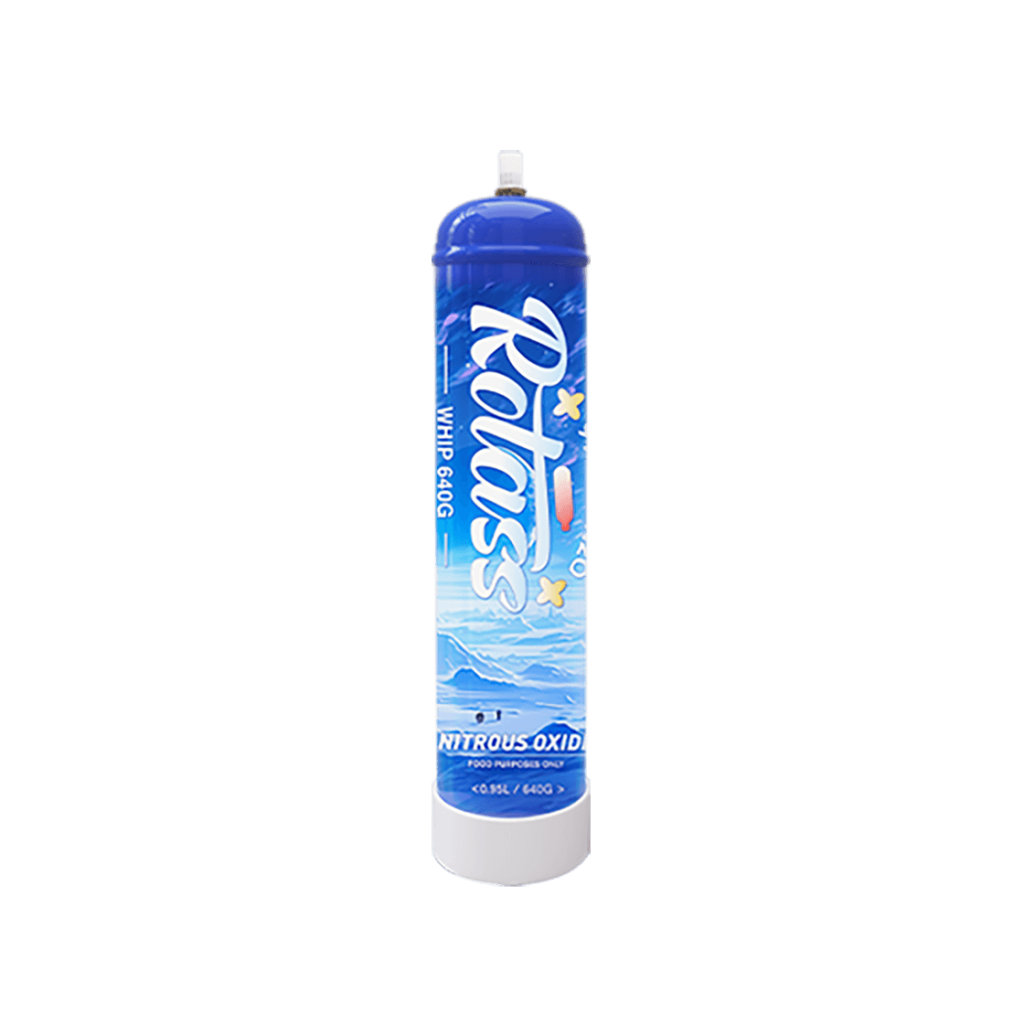
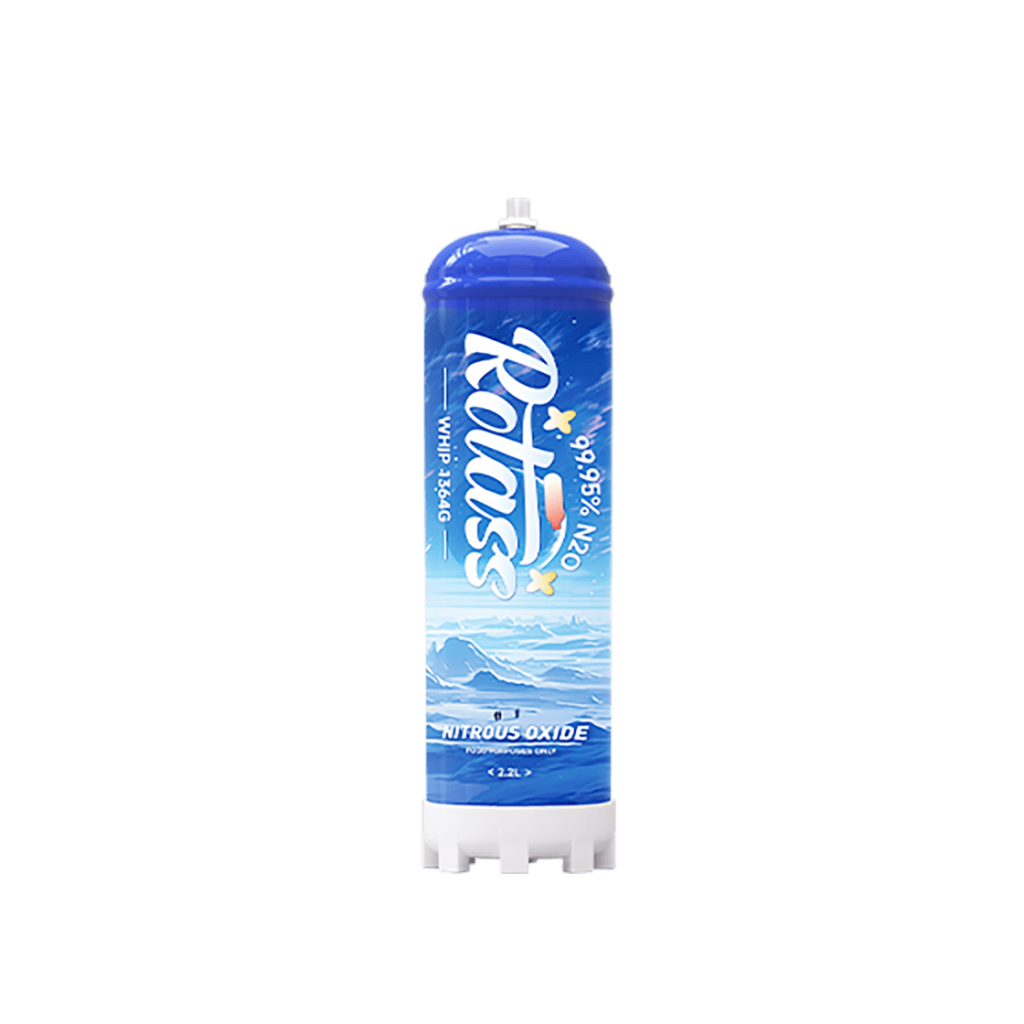
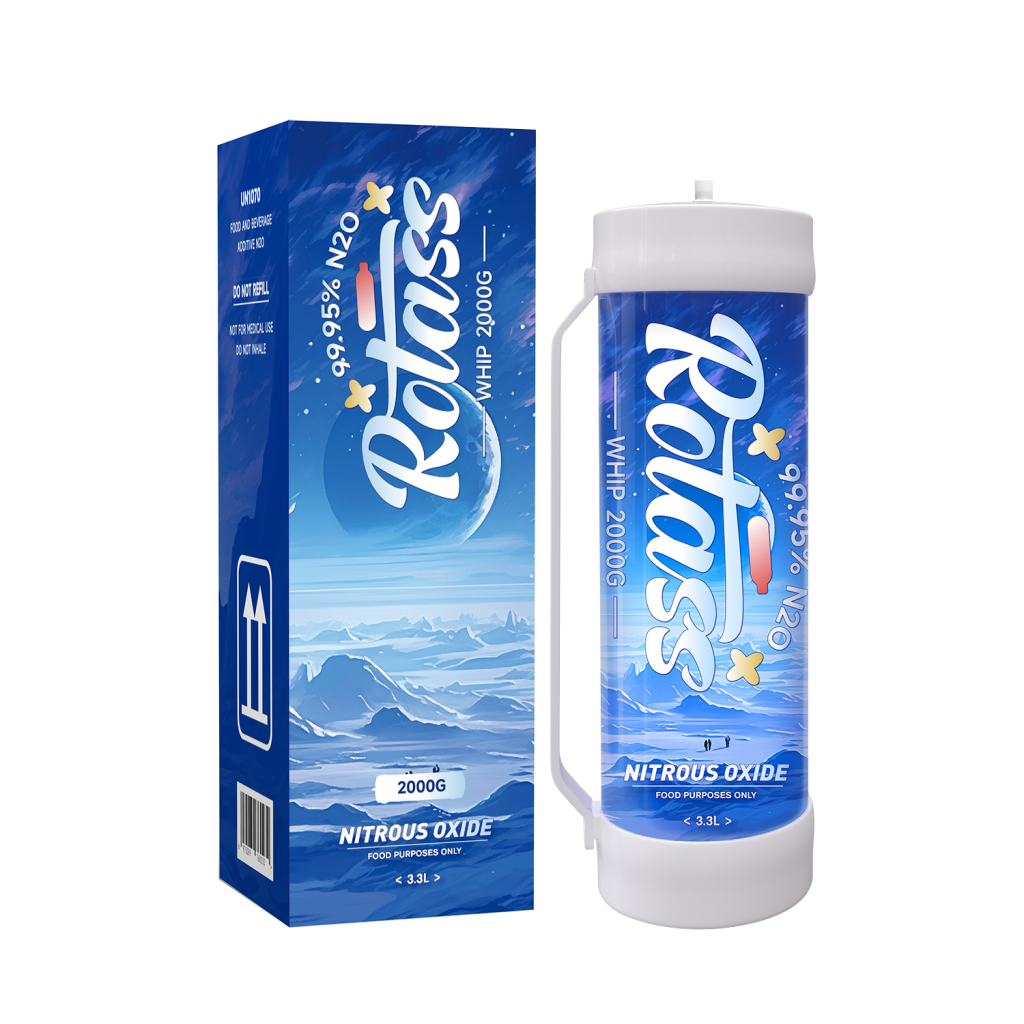
Depending on the manufacturer, food-grade N2O is available in several formats, including traditional 8g chargers, 580g cylinders, 640g cylinders, and larger capacities such as 2000g and 3750g. The right size depends on production volume, frequency of use, and equipment compatibility.
What Is a CO2 Cylinder?
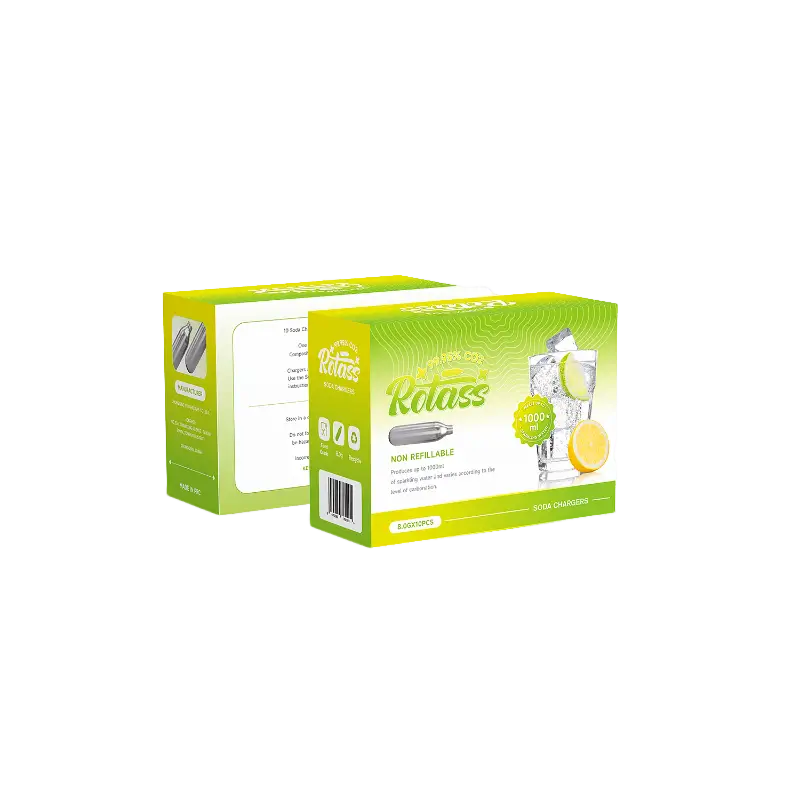
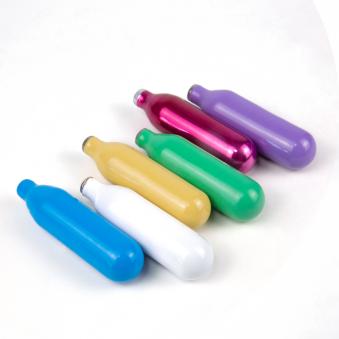
A CO2 cylinder contains food-grade carbon dioxide, a gas primarily used to carbonate beverages rather than create whipped cream.
When CO2 is released into a liquid under pressure, it dissolves and creates carbonation. This is what gives sparkling water, soda, beer, and other carbonated drinks their familiar fizz and refreshing mouthfeel.
Because carbonation is the intended goal, CO2 is commonly paired with equipment such as:
- Soda makers
- Sparkling water machines
- Draft beer systems
- Beverage dispensers
- Commercial drink carbonation equipment
Unlike N2O, carbon dioxide interacts with the water in beverages to produce a slightly acidic taste which is desirable in soft drinks and sparkling water.
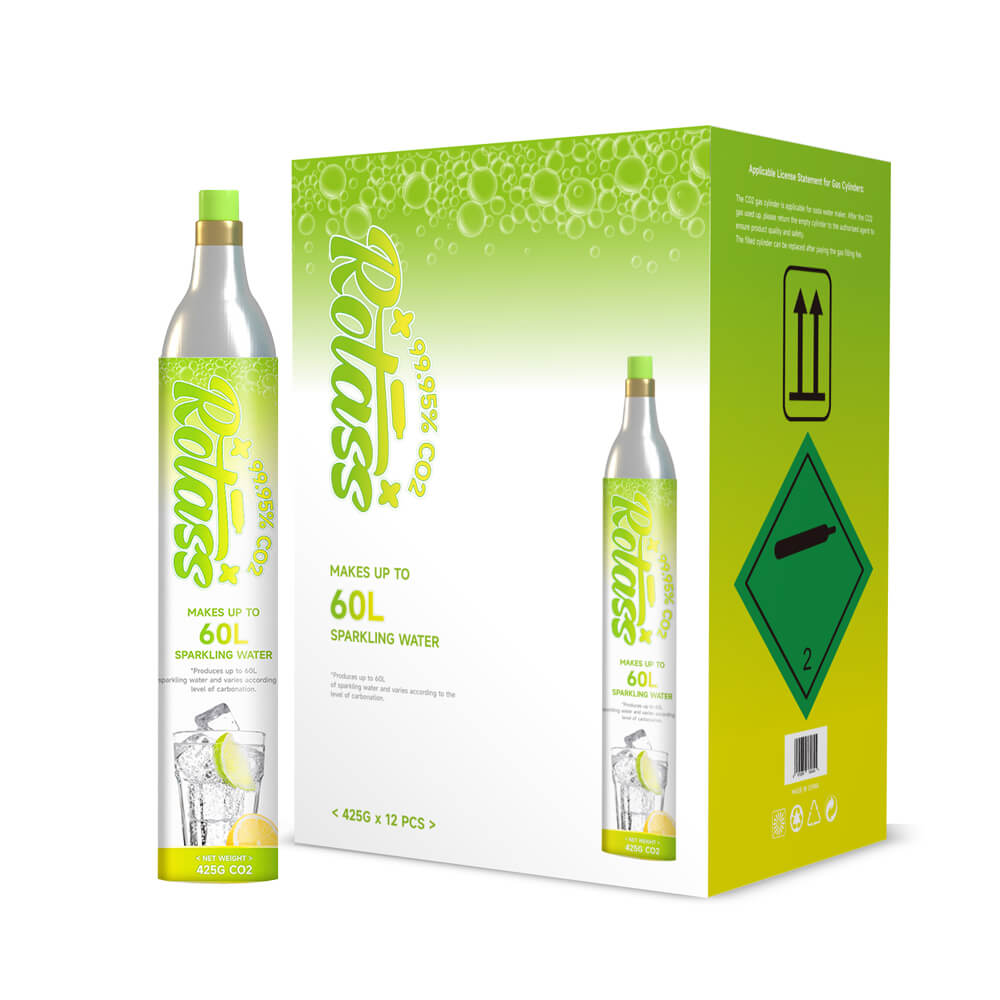
One reason these gases are often confused is that the cylinders themselves can look remarkably similar. Many are made from stainless steel or aluminum, use threaded valves, and are sold in comparable sizes. However, the appearance of the cylinder tells you very little about its intended use.
What matters is the gas inside and how it behaves during dispensing. That difference becomes much clearer when you compare their working principles, equipment compatibility, and performance in real food and beverage applications.
Key Differences Between N2O and CO2 Cylinder
At a glance, N2O and CO2 may seem to serve the same purpose. Both are food-grade gases stored under pressure, and both are used with specialized dispensing equipment. However, once they’re released, they behave in very different ways.
Understanding these differences makes it much easier to choose the right gas for your equipment and avoid unnecessary trial and error.
Purpose and Applications
The biggest difference between N2O and CO2 is their intended application.
N2O is used for whipping and aerating. It creates smooth, stable whipped cream and culinary foams without changing the product’s flavor. That’s why it’s widely used in whipped cream dispensers, cafés, bakeries, and commercial kitchens.
CO2, on the other hand, is used for carbonation. It dissolves into beverages to create fizz and is commonly used in soda makers, sparkling water systems, draft beer dispensers, and other beverage equipment.
Flavor and Texture
N2O has little effect on flavor. It helps create a smooth, dense, and long-lasting whipped cream while preserving the natural taste of dairy.
CO2 creates carbonation by dissolving into liquid, which gives beverages their refreshing bite. If used with cream, however, it can introduce a slightly acidic taste and produce a looser, less stable foam.
Related reading: Can You Use CO2 to Make Whipped Cream?
Equipment Compatibility
N2O is intended for whipped cream dispensers, cream whippers, and culinary siphons. These tools are designed to work with nitrous oxide and deliver consistent whipping performance.
CO2 is designed for soda makers, sparkling water machines, draft beer systems, and beverage dispensers. These systems use carbon dioxide to carbonate liquids.
Even if two cylinders look similar, they are not meant to be swapped between different types of equipment. Always follow the manufacturer’s recommendations to ensure both safety and optimal performance.
Gas Behavior
N2O dissolves into cream while it is inside the dispenser. As the pressure is released, the gas expands into tiny bubbles that become evenly distributed throughout the cream. This creates the smooth, dense texture that whipped cream is known for while helping it hold its shape for longer.
CO2 works differently. Instead of creating a stable foam, it dissolves into liquids to produce carbonation. As the gas is released, it forms the bubbles that give sparkling water and soft drinks their characteristic fizz.
This difference in behavior is the main reason the two gases are used for different applications. N2O is designed for whipping and aeration, while CO2 is designed for beverage carbonation.
N2O or CO2: How to Choose the Right Gas
If you’re still deciding between N2O and CO2, start by thinking about the product you want to make—not the cylinder itself.
The table below provides a simple guide.
| Applications | Recommended Gas |
| Make whipped cream | N2O |
| Prepare culinary foams | N2O |
| Top coffee or desserts with fresh cream | N2O |
| Carbonate drinking water | CO2 |
| Produce sparkling beverages | CO2 |
| Dispense draft beer | CO2 |
For businesses, it’s also worth considering production volume. High-volume cafés, bakeries, and dessert shops often choose larger N2O cylinders to reduce downtime and improve efficiency, while beverage businesses typically select CO2 cylinders based on the size of their carbonation systems.
If you’re purchasing a cylinder for commercial use, consider factors such as cylinder capacity, compatibility with your equipment, refill availability, and food-grade certification. Choosing the right size from the beginning can reduce operating costs and simplify day-to-day use.
Common Mistakes When Choosing Between N2O and CO2
Even experienced users occasionally confuse N2O and CO2 because the cylinders look similar. Avoiding a few common mistakes can help you get better results and protect your equipment.
Assuming all food-grade gases are interchangeable
Food-grade certification means the gas is suitable for food applications, not that it can be used for every application. Each gas has a specific purpose.
Choosing based on the cylinder alone
The appearance, size, or material of a cylinder doesn’t determine how it performs. What matters is the type of gas inside and whether it’s compatible with your equipment.
Using the wrong gas for the dispenser
Always follow the equipment manufacturer’s recommendations. A whipped cream dispenser is designed to operate with N2O, while a soda maker is designed for CO2.
Ignoring your production needs
A small charger may be sufficient for occasional home use, but commercial kitchens often benefit from larger cylinders that require fewer replacements and improve workflow.