Share your requirements with Rotass now!
What is Club Soda? A Few Things You Should Know
More people are turning to carbonated water when they want a refreshing drink without the sugar and calories commonly found in soft drinks. Club soda has become one of the most popular choices, thanks to its crisp carbonation, mineral content, and versatility in both drinks and recipes.
The growing interest is also reflected in the market. According to an IndustryARC report, the global club soda market was forecast to reach $16.8 billion by 2027, growing at a CAGR of 5.6% between 2022 and 2027.
But what is club soda exactly? Is it simply carbonated water, or is there more to it? How does it differ from seltzer, sparkling water, and tonic water? And can you make it at home instead of buying bottled club soda every time?
In this guide, we’ll cover what club soda is, its common uses, how it compares with other sparkling drinks, and the benefits of drinking it. We’ll also show you a simple way to make fresh club soda with a Rotass CO2 charger.
What Is Club Soda?
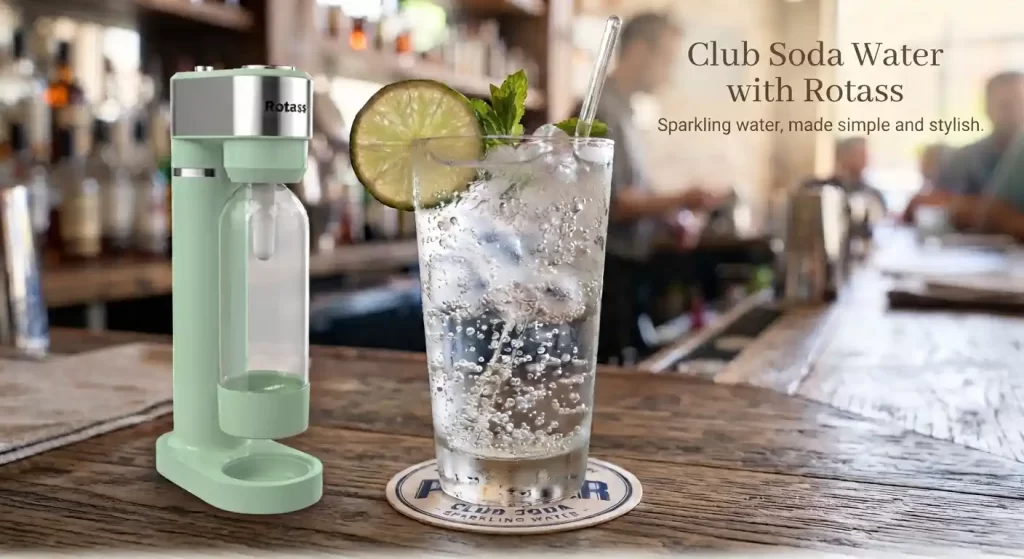
Club soda is water that has been carbonated with carbon dioxide and contains a small amount of added minerals. These usually include sodium bicarbonate, sodium chloride, and sometimes potassium sulfate. The minerals give club soda a light, slightly salty taste that you won’t get from plain carbonated water.
When you pour club soda into a glass, you can see a steady stream of fine bubbles rising to the surface. This consistent fizz is one reason bartenders often use it in mixed drinks. The carbonation also tends to stay noticeable longer than it does in some other sparkling waters, giving the drink a more refreshing feel.
Popular Uses of Club Soda
Club soda is not limited to drinking. Its carbonation and mild mineral taste make it useful in cocktails, cooking, and even a few simple household tasks.
Cocktails and Mojitos
Club soda is a popular mixer for cocktails because it adds fizz without making the drink overly sweet or changing its flavor too much. It is commonly used in drinks such as Mojitos, Gin Fizz, and Tom Collins, as well as simple spirit-and-soda drinks.
It can also be used to dilute a cocktail and give it a lighter, more refreshing texture without adding extra sugar.
Pancakes and Waffles
Some pancake and waffle recipes use club soda in place of part of the liquid. The carbonation can help make the batter lighter, although the result will also depend on the other ingredients and the recipe itself. For this reason, club soda is more of a recipe variation than a must-have ingredient.
A Simple Everyday Drink
Club soda is also an easy option when plain water feels a little boring. Served cold, it has a crisp, refreshing taste and can be flavored with lemon, lime, cucumber, or fresh mint. Unlike many soft drinks, it does not need added sugar to make it enjoyable, which makes it a simple choice for everyday drinking.
Light Cleaning
Club soda is sometimes used to deal with fresh spills on clothing, carpets, and other fabrics. The idea is simple: pour a small amount onto the stain and blot it with a clean cloth.
It should not be considered a substitute for a proper stain remover, especially for stubborn or set-in stains. Still, if club soda is already on hand, it can be a convenient first step for dealing with a fresh spill.
Club Soda vs. Other Sparkling Drinks
Club soda, seltzer, sparkling water, and tonic water can look almost the same in a glass, but they are not quite the same drink. The differences mainly come down to how the water is carbonated and whether anything else is added.
| Drink | Main Difference |
| Club Soda | Carbonated water with added mineral salts |
| Seltzer | Usually plain water that has been artificially carbonated |
| Sparkling Water | A broad term for water that is naturally or artificially carbonated |
| Tonic Water | Carbonated water with quinine and usually added sugar or sweetener |
The distinction between club soda and seltzer is relatively small. Both are generally unsweetened and carbonated, but club soda contains added mineral salts, which can give it a slightly different taste. Seltzer, on the other hand, is usually made by simply adding carbon dioxide to plain water.
“Sparkling water” is a broader term and can refer to several types of carbonated water, including water that is naturally carbonated at the source. This means a bottle labeled sparkling water does not necessarily have the same mineral profile as club soda.
Tonic water is different from the other three. It contains quinine, which gives it a distinct bitter taste, and most commercial tonic waters also contain sugar or another sweetener. That makes tonic water less suitable if you are simply looking for a low-calorie alternative to soda.
For everyday drinking, unsweetened club soda or seltzer is generally the simpler option. Both provide carbonation without the added sugar found in many soft drinks. Cleveland Clinic also lists unsweetened sparkling water as a reasonable alternative to sugary beverages.
Benefits of Drinking Club Soda
For many people, the biggest benefit of club soda is that it offers the fizz of a soft drink without all the sugar. Plain club soda is usually zero or very low in calories, although the exact amount can vary depending on the brand and added minerals.
The bubbles can also make water a little more enjoyable to drink, especially for people who are used to carbonated beverages. Some people prefer club soda with meals because it feels light and refreshing.
That said, club soda is not a solution for digestive problems. While carbonation may feel pleasant for some people, it can cause bloating or discomfort in others. If that happens, regular still water is usually the better choice.
How to Make Club Soda with Rotass
Buying bottles of club soda is convenient, but making it at home gives you control over the strength of the bubbles and keeps the cost lower over time. Rotass CO2 chargers are designed for this kind of use. They deliver high-purity carbon dioxide that produces fine, consistent bubbles without off-flavors.
Here is a simple method:
- Start with cold, clean water. Colder water holds carbonation better.
- Pour the water into a compatible soda maker or carbonation bottle.
- Attach a Rotass CO2 charger and release the gas according to the maker’s instructions. One charger is usually enough for a standard bottle. You can adjust the number of chargers if you prefer stronger fizz.
- Optional: Add a very small pinch of baking soda or salt if you want the classic club soda mineral taste. Stir gently.
The result is fresh club soda ready to drink or mix. High-purity CO2 from Rotass helps the bubbles last longer in the glass compared with lower-grade gas. The chargers are compact, easy to store, and work with most standard soda makers.
If you already have a soda maker, using Rotass chargers is a simple way to make club soda at home. For first-time users, a basic soda maker paired with Rotass CO2 chargers provides the essentials for making fresh carbonated drinks whenever needed.
FAQ
Can I make club soda without a soda maker?
You can try other methods, but a soda maker with CO2 chargers gives the most reliable and consistent results. Without proper equipment, the carbonation tends to be weaker and fades quickly.
How long does homemade club soda stay fizzy?
When stored in a sealed bottle in the refrigerator, it usually keeps good carbonation for one to two days. The colder it stays, the longer the bubbles last.
Is club soda the same as sparkling water?
Not exactly. Club soda has added minerals that create a slight salty taste. Sparkling water relies on natural minerals and can vary more in flavor.
Does club soda have calories or sugar?
Plain club soda has none. Always check the label on commercial brands, as some flavored versions may include additives.
Why use Rotass CO2 chargers instead of buying bottled club soda?
Homemade versions let you control the level of carbonation and avoid plastic bottles. Rotass chargers focus on purity, which helps produce clean-tasting, long-lasting bubbles at a lower ongoing cost.
Contact us now, and we’ll get back to you within minutes.