Share your requirements with Rotass now!
Does Nitro Coffee Have More Caffeine Than Regular Coffee?
Nitro coffee is quite different from regular iced coffee. You get that slow cascade when it is poured, the texture feels smoother, and it can even taste slightly sweeter without any sugar added. So it is easy to wonder: does nitro coffee have more caffeine than regular coffee?
The short answer is that it often can, but nitrogen itself is not the reason.
Adding nitrogen does not increase the caffeine in the coffee. What matters more is the coffee used to make it, the coffee-to-water ratio, how it is brewed, and how much water or ice is added afterward. In other words, two nitro coffees can have noticeably different caffeine levels even if they are made in the same style.
If you like the smooth texture of nitro coffee but do not want as much caffeine, you do not necessarily have to give it up. You can start with a lower-caffeine coffee or change the strength of the coffee base before infusing it with nitrogen.

Nitro Coffee vs Regular Coffee: Caffeine Content Comparison
Most nitro coffees end up higher in caffeine than a typical cup of regular coffee. Here is a general comparison based on common serving sizes:
- Regular drip or hot coffee (8 oz): around 95 mg
- Regular cold brew (12–16 oz): roughly 150–250 mg
- Nitro cold brew (12–16 oz): often 200–300 mg or more
These numbers come from industry averages and public data from major chains. For example, a 12-ounce Nitro Cold Brew from Starbucks contains about 215 mg of caffeine, while a 16-ounce version reaches around 280 mg. Regular cold brew at the same sizes tends to land lower.
Some cafe shops use lighter concentrates or serve smaller portions. Still, when you look at the typical recipes, nitro versions usually deliver more caffeine per serving.
Why Nitro Coffee Often Has More Caffeine
Nitro coffee can sometimes feel stronger than a regular iced coffee, even when the actual caffeine difference is not that large. A few things can affect how strong the drink seems.
One is the coffee base. Cold brew is often made with a fairly strong coffee concentrate that is steeped for many hours and then adjusted with water. Depending on the recipe, this can give the finished drink a relatively high caffeine content.
The way nitro coffee is served can make a difference too. It is usually poured straight from a keg or dispenser, so there may be little or no ice added to the drink. A regular iced coffee, on the other hand, can become more diluted as the ice melts.
Serving size is another simple factor. A 16-oz drink contains more total coffee than an 8-oz serving if the two are made at a similar strength.
The brewing method still matters, but there is no simple rule that cold brew always has more caffeine than hot-brewed coffee. The coffee-to-water ratio, steeping time, and final dilution all affect the result.
So, nitro coffee is not automatically stronger just because it contains nitrogen. Most of the caffeine comes from the coffee itself. Nitrogen mainly changes the texture and how the coffee feels and tastes when you drink it.
Other Differences & Benefits
Caffeine is not the only thing that makes nitro coffee different. Cold brew is often less acidic than hot-brewed coffee, and some people find that it feels easier on the stomach. The nitrogen changes the drinking experience as well. It can make the coffee taste smoother and less bitter, while giving it a slightly sweet impression even when no sugar is added.
The texture is another noticeable difference. Nitro coffee can feel creamy and full-bodied without milk or cream. That is one reason it works well for people who normally drink their coffee black but prefer a smoother, richer texture.
Can I Make Low-Caffeine Nitro Coffee?
Yes. You can make nitro coffee with less caffeine without losing the smooth texture.
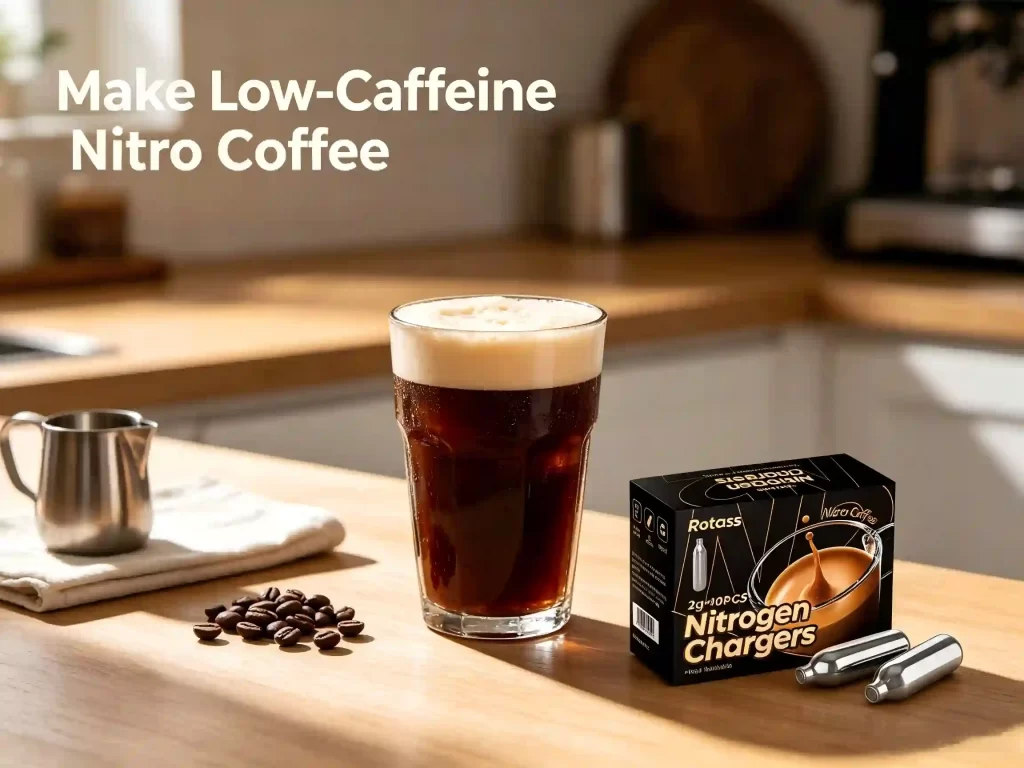
The easiest way is to make a weaker cold brew. Use less coffee, shorten the steeping time, or add some water to the finished cold brew before adding nitrogen. You can also use decaf beans if you want to cut the caffeine much further. Decaf coffee still contains a small amount of caffeine, but much less than regular coffee. Prepare the cold brew to the strength you want, chill it well, and then use a compatible food-grade N₂ charger. Rotass offers 2g N₂ cartridges for nitro cold brew and other nitrogen-infused drinks.
So if you like nitro coffee but want less caffeine, start by changing the coffee itself. The nitrogen can stay the same.
Health Considerations
Caffeine does not affect everyone in the same way. For most healthy adults, around 400 mg of caffeine per day is generally considered an amount that can be consumed without major safety concerns. A large nitro coffee can account for quite a bit of that daily intake, depending on how strong it is. If you are sensitive to caffeine, pregnant, or have concerns about blood pressure, it is worth paying attention to both the size of the drink and how often you have it.
Making nitro coffee at home gives you a little more control over the caffeine. You can adjust how much coffee you use and how long it steeps, rather than relying on a café’s standard recipe. If you want a lower-caffeine drink, changing the amount of coffee in the base is usually a simpler place to start than changing the nitrogen infusion itself.
Conclusion
Nitro coffee can have more caffeine than regular coffee, but the nitrogen itself does not add caffeine. The main difference usually comes from the strength of the cold brew and how much it is diluted.
If you want less caffeine, you can simply use less coffee, shorten the steeping time, dilute the cold brew, or use decaf beans. You can still add nitrogen afterward and keep the smooth texture and cascading effect. The drink’s real draw remains the texture and the clean flavor. Whether you prefer the full-strength version or a lighter one, the method is flexible enough to match what you need.
Contact us now, and we’ll get back to you within minutes.