
Share your requirements with Rotass now!
How to Make Nitro Cold Brew at Home: 3 Methods, Expert Tips & Real Cost Breakdown
Nitro cold brew has this reputation for being a coffee-shop-only experience. The cascading pour, the creamy foam on top, the silky texture. All of it makes the drink feel like it requires professional equipment to pull off.
It doesn’t, though. With the right setup and a bit of prep, you can get results that come surprisingly close to what cafés charge $5–6 a cup for. This guide covers three realistic home methods, from the cheapest entry point to a setup that rivals what you’d find on tap, and plus the details that most other guides leave out: which gas actually works, why your cold brew base matters more than anything else, and what to do when things go wrong.
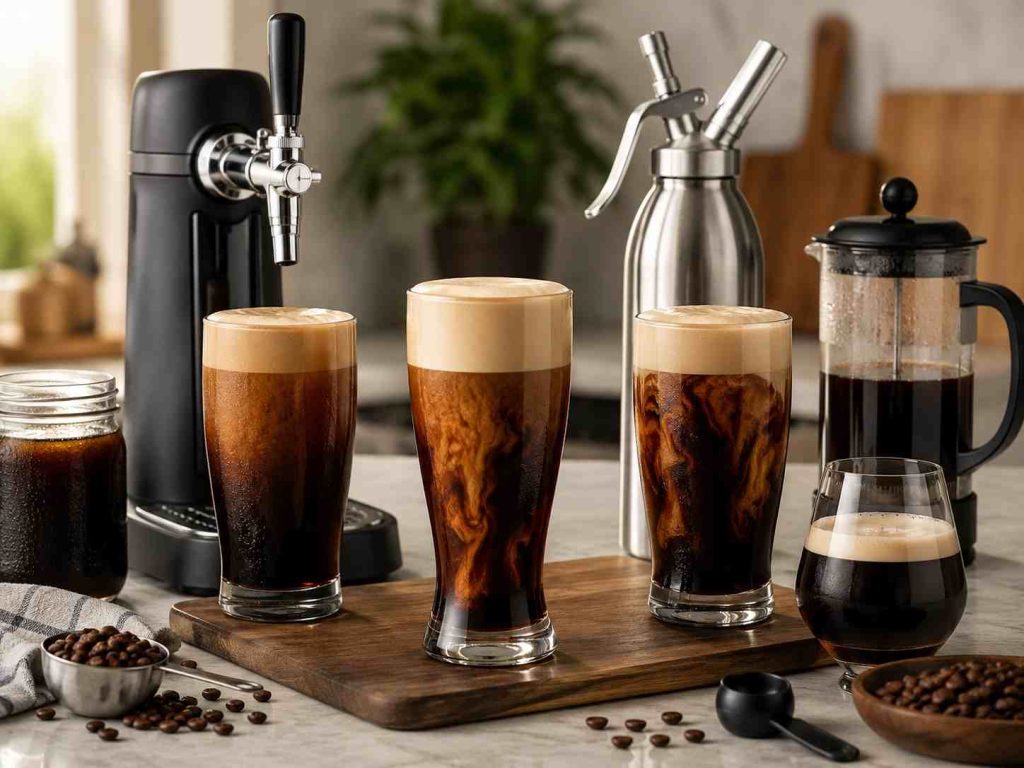
What Is Nitro Cold Brew and Why Does It Taste Different?
Nitro cold brew is cold brew coffee that’s been infused with gas under pressure. The pressurization creates microbubbles throughout the liquid, which changes both the texture and the way the drink tastes. It becomes smoother, slightly thicker, and — noticeably — sweeter, even without any added sugar.
That sweetness is real, not imagined. The bubbles interact with taste receptors in a way that suppresses bitterness and brings forward the natural sweetness already in the coffee. Research published in the Journal of Food Science has explored how texture and mouthfeel affect taste perception, and the principle holds here: change the texture, and you change how the flavors read.
One thing to clarify before we go further: most home methods don’t use actual nitrogen gas (N₂). They use N₂O — nitrous oxide, the same gas in whipped cream chargers. These are chemically different. Real nitrogen produces finer, more stable bubbles, which is why the texture at a good coffee shop is slightly more refined than what you’ll get at home. N₂O bubbles are a bit larger and dissipate faster. That said, the difference is modest enough that home-made nitro cold brew still tastes genuinely different and better than the same cold brew served flat.
Before You Start: Get the Cold Brew Base Right
The nitrogen infusion amplifies whatever’s already in your cold brew. It doesn’t fix a weak or bitter base, so this step matters more than most people give it credit for.
Choose the right beans. Medium to dark roasts hold up best. Cold brewing with lighter roasts often produces a flat, underwhelming result, because the bright acidic notes that make light roasts interesting tend to get muted by the extraction process. Go for something with chocolate, nutty, or caramel notes. The Specialty Coffee Association recommends a coarse grind for cold brew to prevent over-extraction and bitterness, it’s similar to what you’d use for a French press, .
Get the ratio right. For a concentrate, use a 1:4 coffee-to-water ratio by weight (e.g., 100g of ground coffee to 400ml of cold water). If you’d rather drink it straight without diluting, go 1:8. The concentrate approach gives you more flexibility.
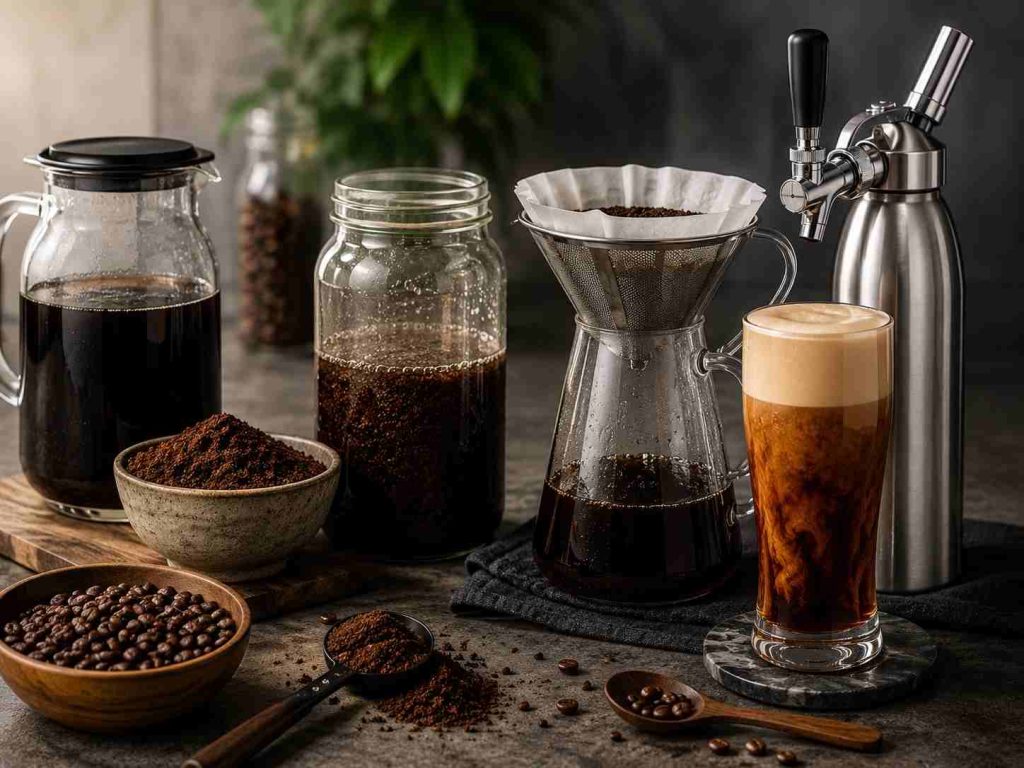
Steep and filter properly. Combine the grounds and cold water in a jar or pitcher, stir until all the grounds are saturated, then refrigerate for 18–24 hours. Strain twice: first through a mesh strainer, then through a paper coffee filter or cheesecloth. Cleaner filtration means better nitrogen absorption and a smoother final result.
That’s your base. From here, you have three options.
3 Ways to Make Nitro Cold Brew at Home
Method 1: Whipped Cream Dispenser — Best for Beginners
This is the fastest, most affordable way to try nitro cold brew at home. If you already own a whipped cream dispenser, your only additional cost is the chargers.
What you need:
- A 500ml or 1L whipped cream dispenser
- Food-grade N₂O cream chargers — Rotass 8g cream chargers are a reliable option
- Chilled cold brew concentrate
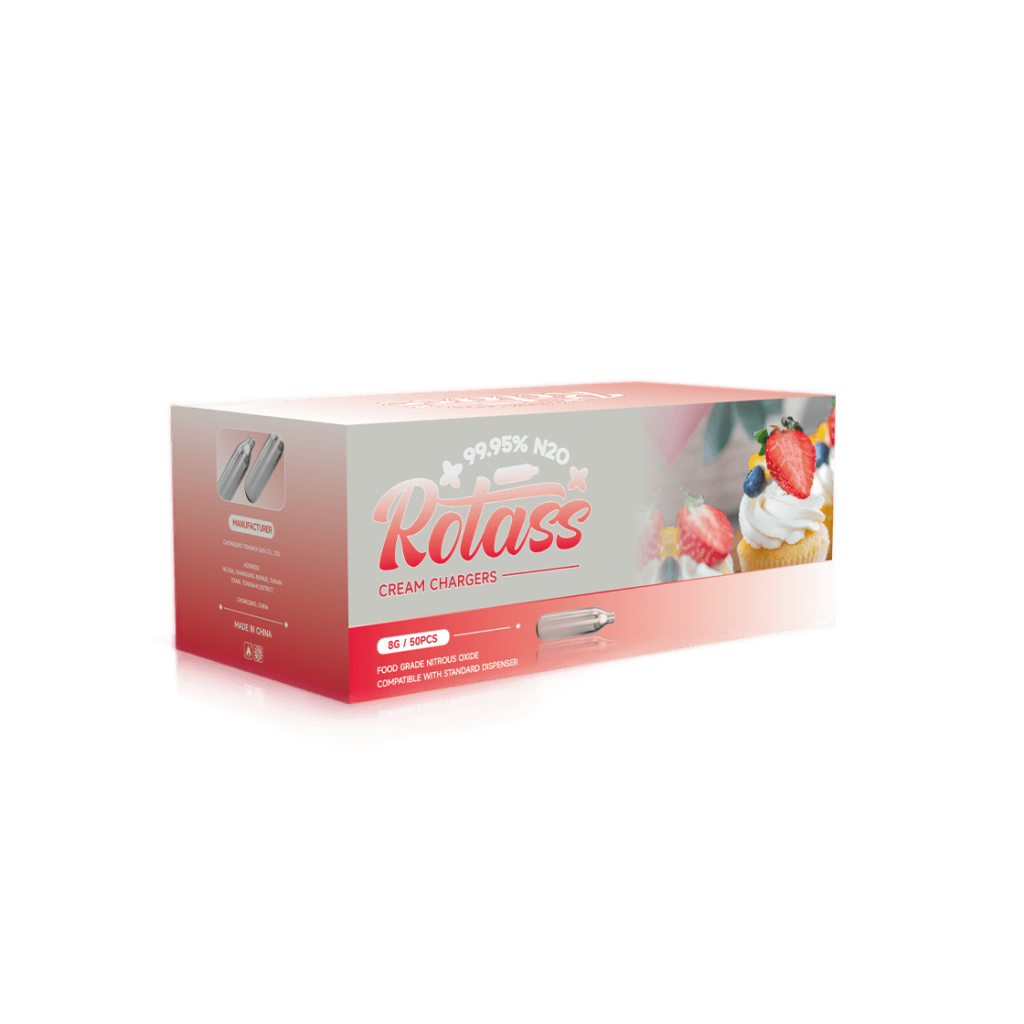
99.95% purity · OEM · Low MOQ · Local delivery
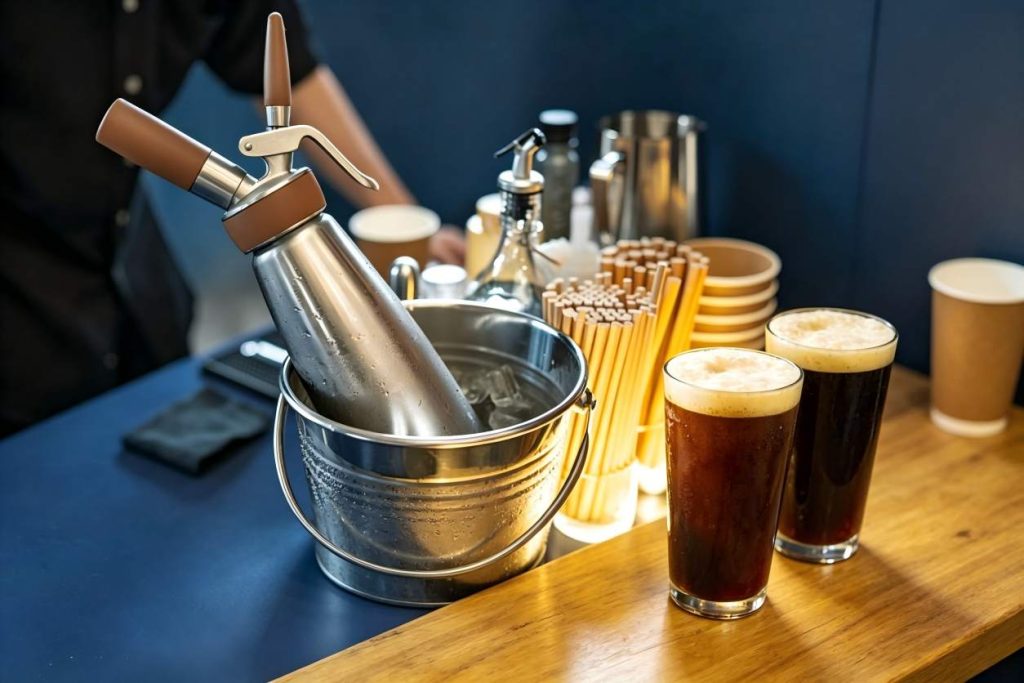
Steps:
- Make sure both your cold brew and the dispenser are thoroughly chilled. The colder the liquid, the better it absorbs gas, below 5°C is ideal.
- Pour the cold brew into the dispenser. Don’t fill it more than two-thirds full; you need headspace for the gas.
- Screw on the charger holder with one N₂O cartridge and puncture it. You’ll hear a hiss as the gas enters.
- Shake vigorously for 30 seconds.
- Let the dispenser sit upright for another 30 seconds.
- Hold your glass at a 45-degree angle and dispense slowly. This lets the foam settle and build naturally rather than collapsing.
Reality check: The bubbles are slightly coarser than a tap system, and the foam won’t hold as long. But for what you’re spending, the experience is genuinely satisfying, especially if you’re just getting started. Expect to spend $30–$50 on a quality dispenser.
Method 2: Mini Nitro Keg or Growler System — Best Overall
This is the setup most people end up with once they’re hooked on making nitro cold brew regularly. Brands like GrowlerWerks and Royal Brew make pressurized keg systems built specifically for cold brew, and the results are noticeably better than the dispenser method.
What you need:
- A pressurized keg or growler system (GrowlerWerks uKeg is widely recommended)
- N₂O cartridges compatible with your system — Rotass N₂O cylinders work well for larger batches
- Cold brew concentrate
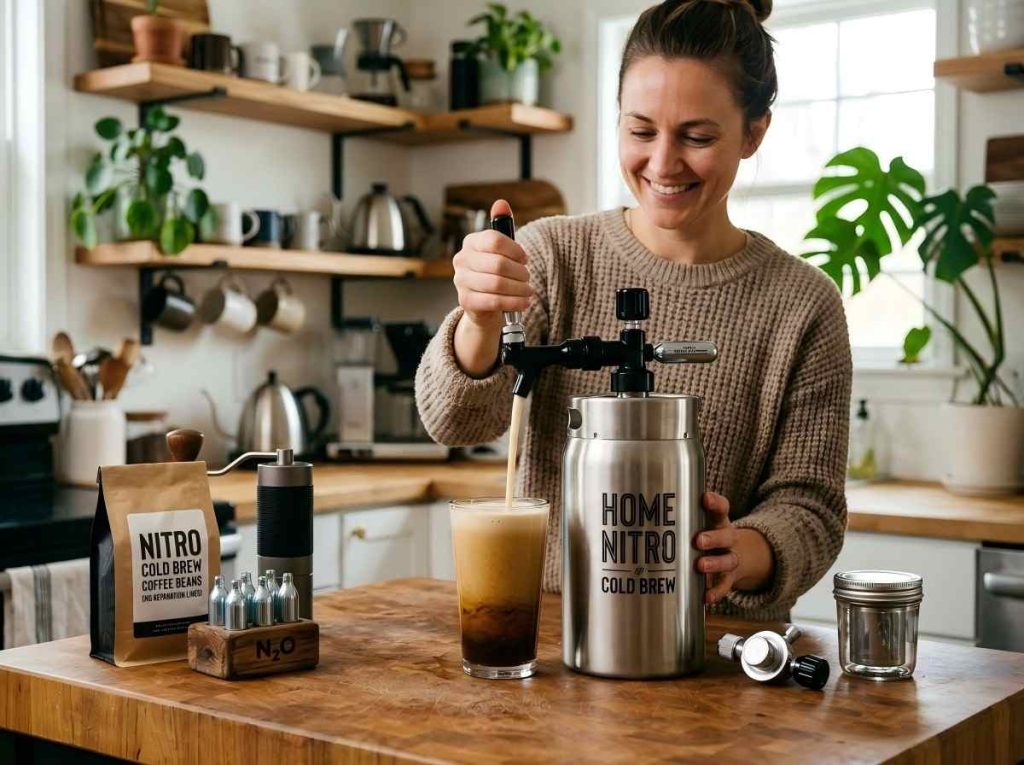
Steps:
- Pour your cold brew into the keg, filling it about 75% full.
- Seal the lid and charge with the cartridge. Most home systems perform well at 30–40 PSI, please check your specific model.
- Shake for 20–30 seconds to help the gas distribute through the liquid.
- Place it in the refrigerator for at least one hour before serving. The gas needs time to dissolve; longer is better.
- To pour, tilt the glass at 45 degrees and release the tap slowly. Let the cascade settle before filling fully.
Reality check: This method gets closest to coffee shop quality. The pour is smoother, the foam is finer, and a sealed keg holds its nitrogen for 24–48 hours in the fridge. The upfront cost is higher, $80–$150 including initial cartridges, but the per-cup cost drops quickly once you’re making it regularly.
Method 3: NitroPress — Best for Single Servings
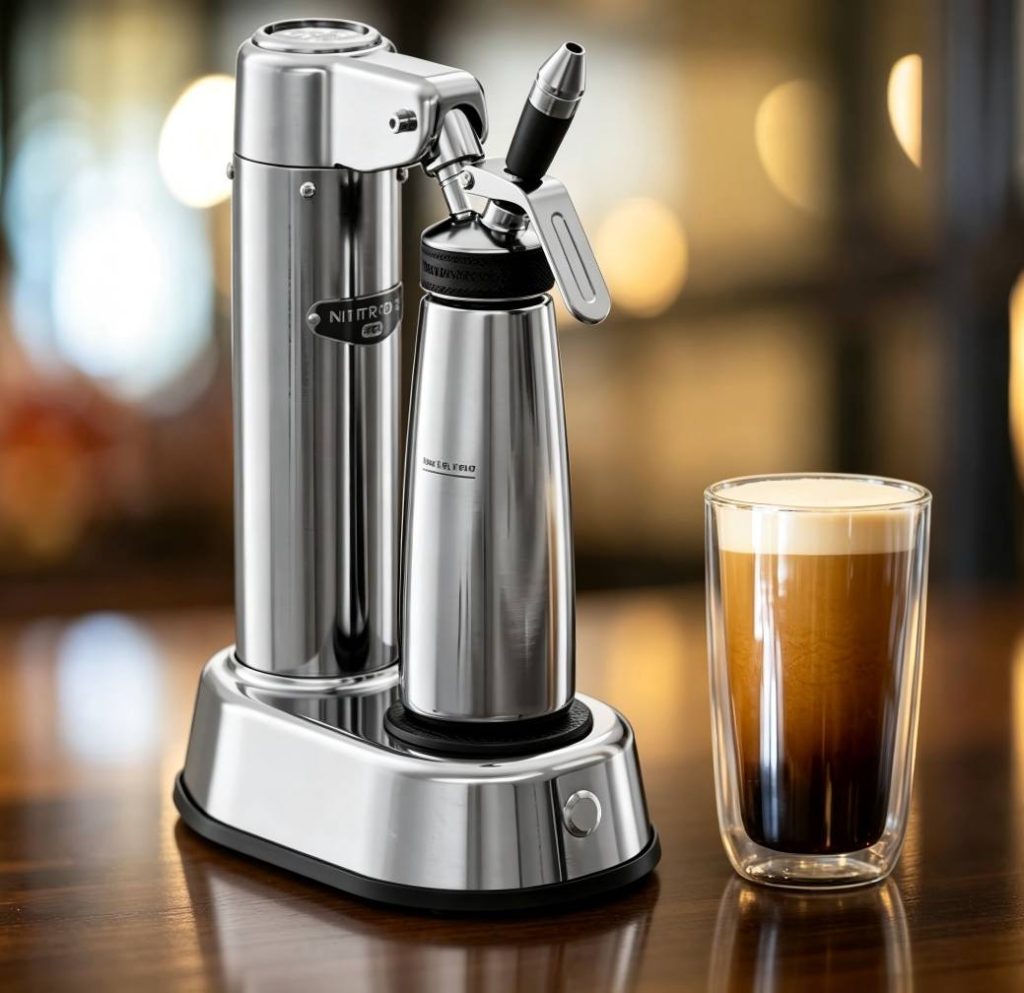
The NitroPress is a compact, handheld device designed specifically for single-cup nitro infusion. No keg, no large dispenser — just one serving at a time, ready in under a minute.
Steps:
- Fill the NitroPress with one serving of cold brew.
- Insert an N₂O cartridge and press to release the gas.
- Shake for 10–15 seconds.
- Press the dispenser nozzle to pour directly into your glass.
Clean, quick, and easy to store. The limitation is obvious: it’s one cup at a time, so it’s not practical if you’re making drinks for more than one person. Budget around $50–$70.
Method Comparison at a Glance
| Whipped Cream Dispenser | Mini Keg | NitroPress | |
| Upfront Cost | $30–$50 | $80–$150 | $50–$70 |
| Cost Per Cup | ~$0.50 | ~$0.30 | ~$0.60 |
| Texture Quality | ★★★☆☆ | ★★★★★ | ★★★★☆ |
| Ease of Use | Easy | Moderate | Easy |
| Batch Capable | No | Yes | No |
Serving and Customization
The pour angle matters more than it sounds. Tilt the glass at roughly 45 degrees and release slowly — this creates the cascade effect that makes nitro cold brew visually satisfying and lets the foam develop properly. Dispensing straight down collapses most of the texture before it reaches you.
Beyond the pour, here are a few variations worth trying:
Vanilla Sweet Cream: Blend 60ml of heavy cream with 1 tsp of vanilla extract and 1 tbsp of simple syrup until frothy. Spoon it gently over the top after pouring. This is the home version of Starbucks’ Vanilla Sweet Cream Nitro Cold Brew — and it’s straightforward to make.
Brown Sugar Oat Milk: Stir 1 tbsp of brown sugar syrup into your cold brew before charging. Pour, then top with frothed oat milk.
Straight Black: Genuinely worth trying before you add anything. Good beans and clean cold brew mean the drink stands on its own.
One practical note on sweetening: always use liquid sweeteners like simple syrup instead of granulated sugar. Sugar won’t dissolve properly in cold liquid.
When It Doesn’t Work: Troubleshooting
| Problem | Likely Cause | Fix |
| No foam or cascade | Coffee or dispenser not cold enough | Chill everything to below 5°C before charging |
| Foam disappears immediately | Insufficient gas or pressure | Use a fresh cartridge; check fill level |
| Tastes bitter | Concentrate too strong | Dilute to 1:8 ratio before charging |
| Tastes flat or watery | Under-extracted cold brew | Increase steep time or use more coffee |
| Dispenser won’t seal | Worn rubber O-ring | Inspect and replace the gasket |
Real Cost Breakdown
A nitro cold brew at Starbucks runs roughly $5.50 for 16oz. Three per week adds up to about $858 over a year — just on that one drink.
With a keg system at home, the math shifts substantially. A 250g bag of good coffee ($15–$20) yields around 6–8 servings of concentrate. Add charger costs of $1–$2 per session, and you’re spending $3–$4 per cup all-in. The equipment pays for itself within the first two to three months of regular use.
The whipped cream dispenser method costs a bit more per cup once charger costs are factored in, but even so, the break-even point against buying at a café comes within the first few weeks.
Making nitro cold brew at home has a short learning curve. Start with the whipped cream dispenser if you want to test the concept without committing to much, then move to a keg system once you’re making it regularly.
FAQ
Is N₂O the same as nitrogen gas?
No. N₂O (nitrous oxide) and N₂ (nitrogen) are chemically different. Most home chargers use N₂O, which creates slightly larger bubbles. Coffee shops use pure nitrogen for a finer, more stable texture. Both work for home use, N₂ just produces marginally better results if your system supports it.
Does nitro cold brew have more caffeine than regular coffee?
The caffeine content depends on your cold brew concentration, not the nitrogen. That said, cold brew concentrate is typically stronger than drip coffee, so the total caffeine per serving is often higher, usually 200–280mg per 16oz serving.
Can I store leftover nitro cold brew?
Once poured, drink it promptly. The nitrogen escapes quickly once it’s in the glass. Inside a sealed keg, it holds well for 24–48 hours. Plain cold brew concentrate keeps in the fridge for up to 7 days.
Why does my nitro cold brew taste sweet even without added sugar?
Nitrogen infusion changes how your taste receptors respond to the liquid. The microbubbles suppress bitterness and let the coffee’s natural sweetness come through. No sugar required.
Can I use CO₂ instead of N₂O?
Technically yes, but the results are quite different. CO₂ creates coarse carbonation bubbles and adds a tangy, soda-like quality that doesn’t work well in coffee. Stick with N₂O or pure N₂.
Chat with us on Whatsapp, we’ll sort you out in minutes.