
Share your requirements with Rotass now!
Beer Carbonation vs Soda Carbonation: What’s Actually Different?
Beer and soda both get their fizz from CO2, so it’s easy to assume the carbonation process is essentially the same. In practice, though, the two work quite differently — and if you’ve ever wondered whether you can use the same CO2 charger for both, the answer isn’t as simple as yes or no.
This article breaks down where beer and soda carbonation overlap, where they diverge, and what that means for the equipment you use.
How Carbonation Works in Both Beer and Soda
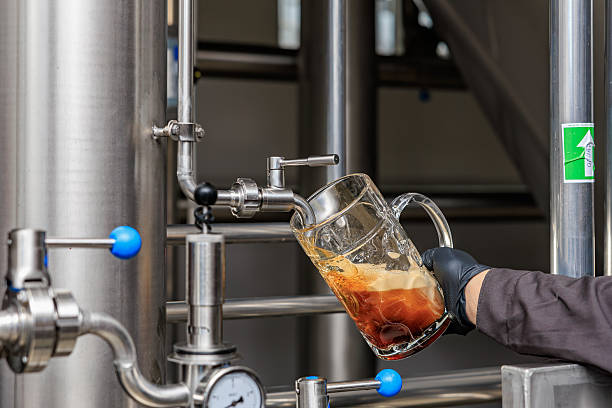
At the most basic level, carbonation is the same process in both cases: CO2 gas is dissolved into liquid under pressure, creating carbonic acid and producing bubbles when the pressure is released.
That shared foundation is why the idea of using the same charger for both seems reasonable. The difference lies in how much CO2 each beverage requires, the conditions needed for it to dissolve properly, and how the liquid itself affects the process.
For a full breakdown of how CO2 cartridges function in brewing specifically, our earlier guide covers that in detail.
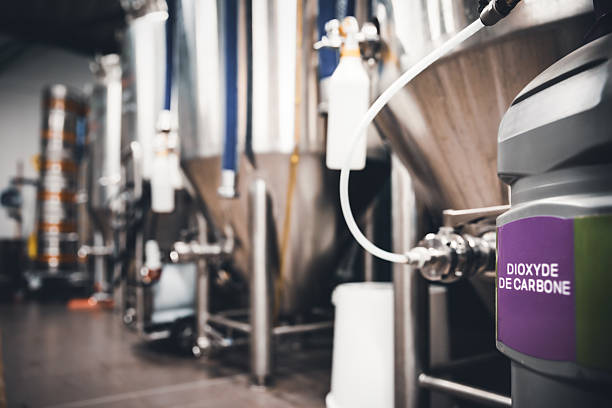
The Key Differences Between Beer and Soda Carbonation
This is where things start to separate.
| Beer | Soda | |
| CO2 level (volumes) | 1.8 – 3.2 | 3.0 – 4.5 |
| Carbonation temperature | 2–4°C | Room temp possible |
| Primary carbonation method | Force / natural | Industrial injection / CO2 charger |
| Liquid composition | Alcohol present | High sugar content |
| Required pressure | Lower | Higher |
Beer Uses Less CO2 Than You’d Expect
Soda is noticeably fizzier than most beers, and the numbers reflect that. A typical cola sits at around 3.5–4.0 volumes of CO2. Most beer styles fall well below that — a stout might sit at 1.8–2.2 volumes, while a wheat beer reaches around 2.8–3.2 at the top end.
This matters because it affects how much CO2 you actually need to introduce. Using the output level designed for soda on a beer will almost always result in over-carbonation. For a reference on target CO2 volumes by beer style, the Beer Carbonation System Guide covers this with a full pressure chart.
Temperature Requirements Are Different
Beer requires cold temperatures to carbonate properly — ideally 2–4°C. At warmer temperatures, CO2 doesn’t dissolve efficiently into beer, and a significant portion escapes as gas before it has a chance to absorb.
Soda is more forgiving on this front. While cold temperatures still improve CO2 absorption, home carbonation machines designed for soda can work reasonably well at room temperature. Beer doesn’t have that flexibility.
How Alcohol Affects CO2 Absorption
This is the part most people don’t think about. Beer contains alcohol, and alcohol has a mild but measurable effect on how CO2 dissolves into liquid. Specifically, it slightly reduces the liquid’s ability to hold dissolved CO2 compared to a sugar-water solution at the same temperature.
It’s not a dramatic difference, but it does mean that beer behaves differently from soda during the carbonation process even under identical conditions. This is one reason why carbonation methods developed for soda don’t translate directly to beer.
Can You Use the Same CO2 Charger for Beer and Soda?
This is the question most people actually want answered, so here it is directly: sometimes yes, but there are conditions.
What to Check First
The most important factor is food-grade certification. Any CO2 charger used with a beverage — beer or soda — needs to meet food-grade standards. This applies to both. A charger that isn’t certified food-grade introduces potential contaminants into whatever you’re carbonating, and that’s worth taking seriously regardless of what you’re making.
Beyond certification, check connector compatibility. CO2 chargers aren’t universal — the connection type varies by device, and a charger designed for one system may not fit another. Trying to force an incompatible charger creates leaks and wastes CO2.
The third thing to consider is output volume. Devices built specifically for soda are often calibrated to deliver more CO2 per charge than beer requires. Using one on beer without adjusting the amount introduced is a reliable way to end up with a foamy, over-carbonated result.
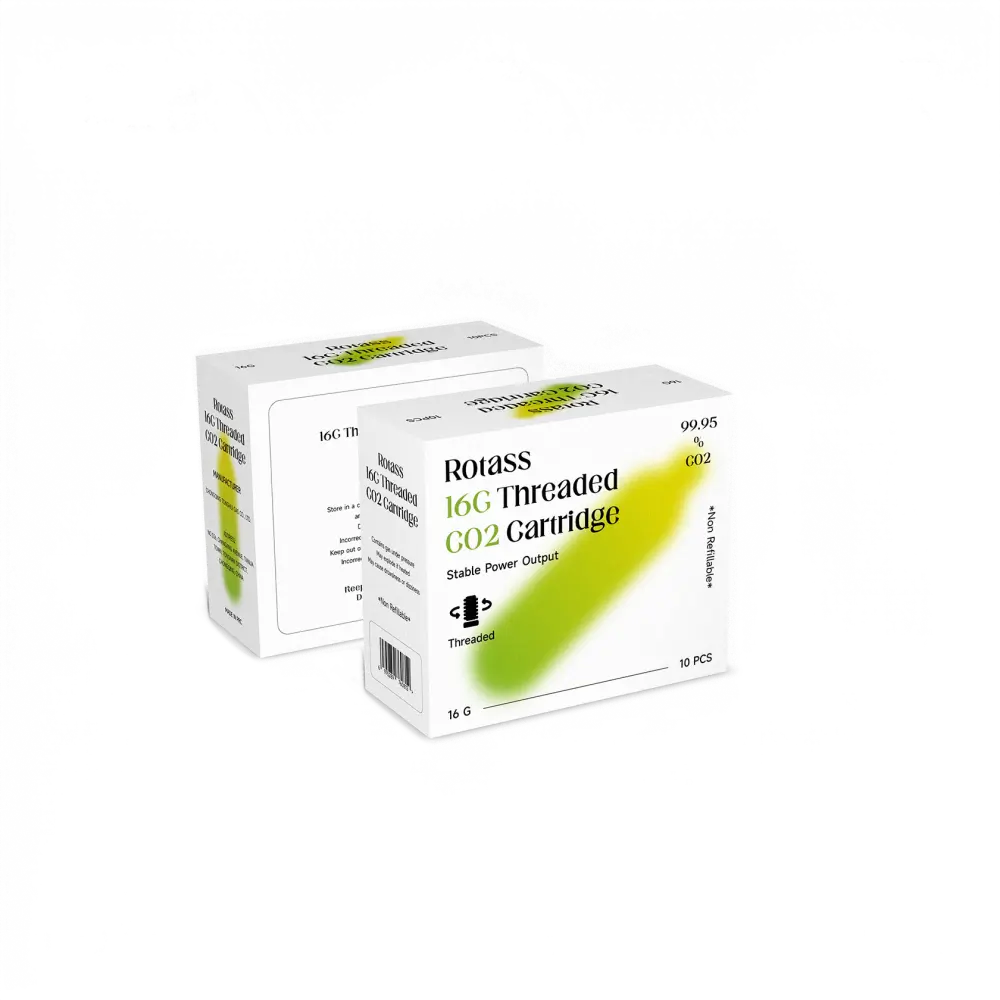
99.95% purity · OEM · Low MOQ · Local delivery
When to Keep Them Separate
If a device is purpose-built for high-pressure soda carbonation and offers no way to control how much CO2 is released, it’s not well-suited for beer. The same applies in reverse — a system sized for beer likely won’t deliver the carbonation level most sodas need.
The practical answer for most home users: if the charger is food-grade, the connector fits, and you can control the CO2 output, there’s no fundamental reason it can’t work for both. If any of those conditions aren’t met, keep them separate.
Does the Type of Carbonation Affect Taste?
CO2 itself is tasteless, but carbonation level has a real effect on how a drink tastes. This is more significant for beer than most people realize.
High carbonation in beer amplifies the perception of bitterness and acidity while suppressing some of the malt and hop character. A stout that’s over-carbonated tastes sharper and thinner than it should. An IPA that’s under-carbonated loses a lot of its liveliness on the palate.
Soda is intentionally carbonated to high levels partly because it needs that intensity to balance sweetness. Beer works on a different set of flavor variables, which is why each style has a recommended carbonation range rather than a single standard. According to the American Homebrewers Association, matching carbonation to style is one of the more impactful finishing decisions a brewer makes.
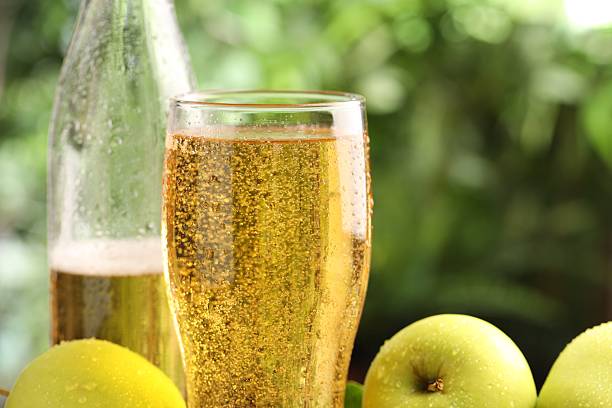
Choosing the Right CO2 Charger for Beer or Soda
Beer and soda share the same basic carbonation mechanism, but the similarities largely stop there. The CO2 volumes are different, the temperature requirements are different, and the liquid composition affects how each one absorbs gas. None of this makes beer carbonation complicated — it just means using equipment and settings that are matched to what beer actually needs.
The clearest takeaway: food-grade certification matters for both, and CO2 output designed for soda is generally too high for beer.
For a full guide on sizes and compatibility, the Beer Carbonation System Guide covers all of that in detail.
FAQ
Is beer carbonation the same as soda carbonation?
Both use CO2, but the required levels, temperatures, and equipment differ enough that the two shouldn’t be treated as identical processes.
Can I use a Rotass CO2 cartridge for beer?
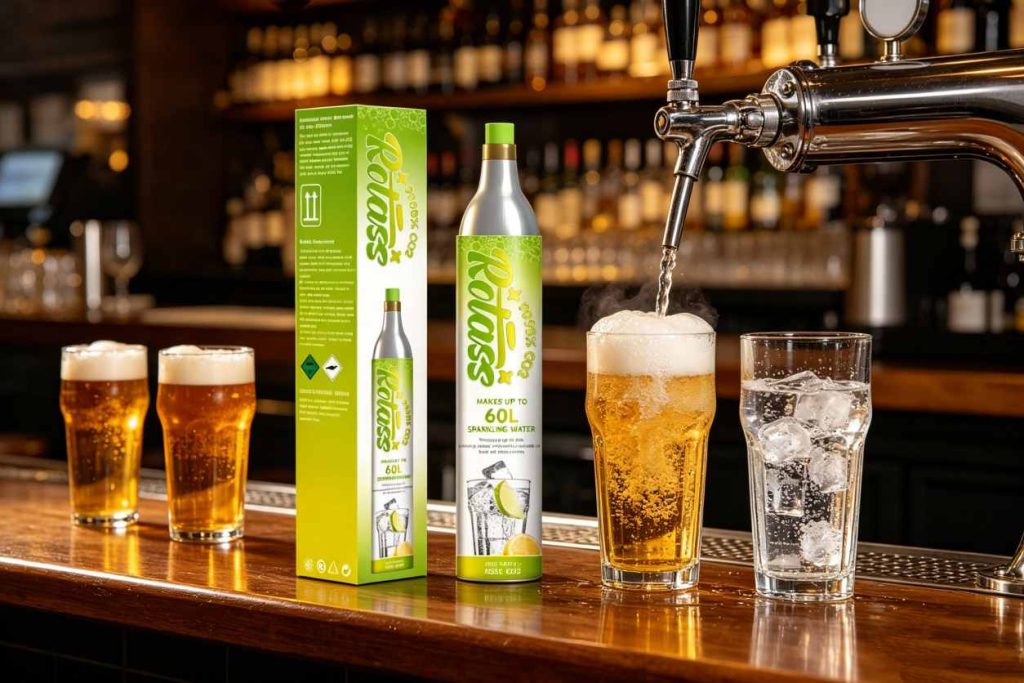
Yes. Rotass CO2 cartridges are food-grade certified and available in multiple sizes to match your setup. Whether you’re carbonating a mini keg or a larger home system, there’s an option that fits — without over-carbonating your beer.
Why does beer have less carbonation than soda?
Different flavor profiles require different carbonation levels. Beer relies on carbonation to complement bitterness, malt, and aroma — not to dominate them. Soda needs higher carbonation to balance sweetness.
Does alcohol affect how beer carbonates?
Yes, mildly. Alcohol slightly reduces CO2 solubility compared to a sugar-water solution, which is one reason beer and soda behave differently during the carbonation process.
What happens if you over-carbonate beer like soda?
The pour becomes mostly foam, and the beer tastes sharper and thinner than intended. Once CO2 is over-dissolved, the only fix is to let it off-gas slowly over time.
Chat with us on Whatsapp, we’ll sort you out in minutes.