Share your requirements with Rotass now!
3.3L Nitrous Oxide Cylinder Whip Cream Charger: Everything You Need to Know
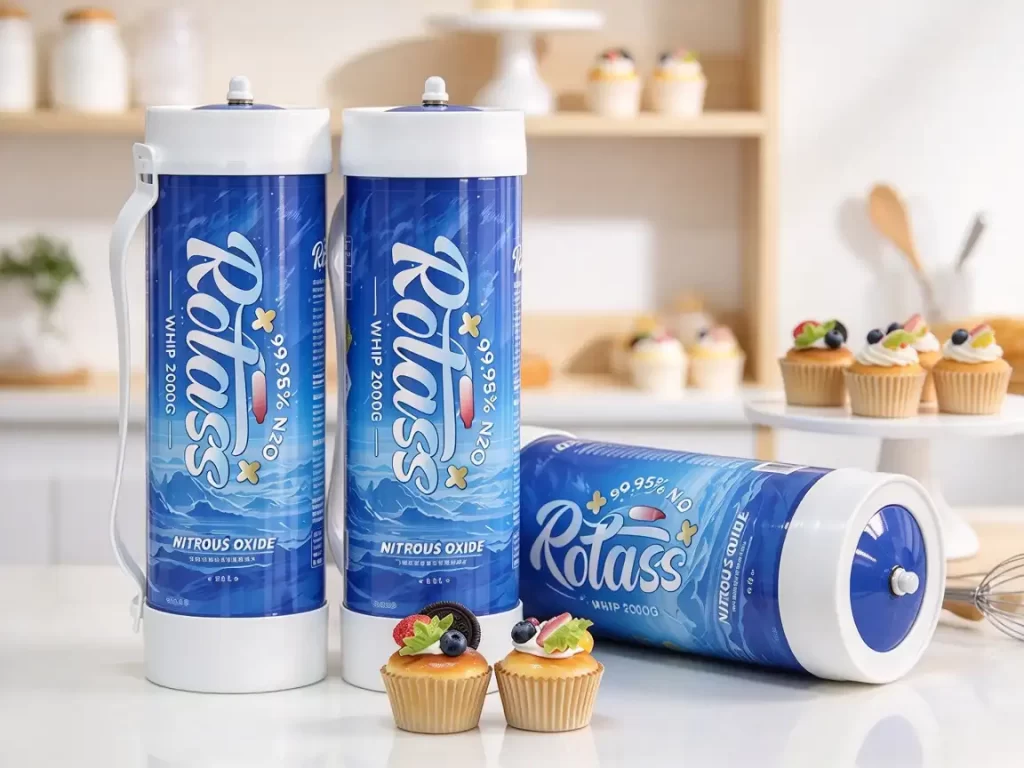
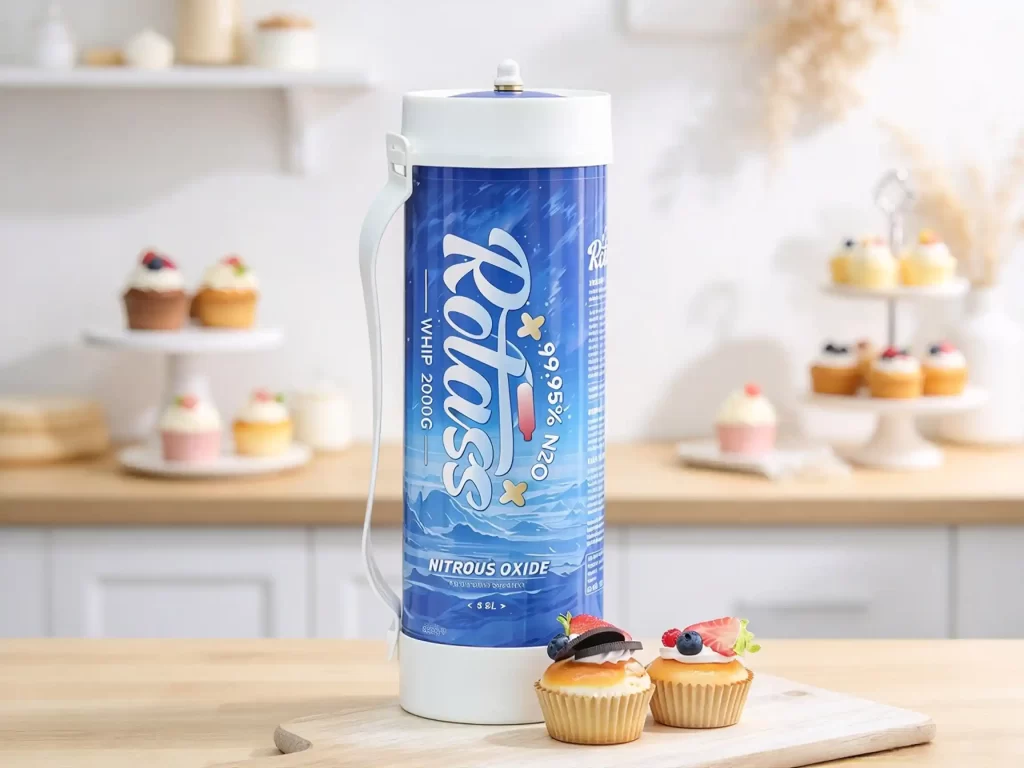
A 3.3L 2000g nitrous oxide cylinder is designed for users who need more N2O than standard 8g cream chargers can provide. It is commonly used with commercial cream whippers in cafés, bakeries, restaurants, and other food-service settings.
But what do the numbers 3.3L and 2000g actually mean? How many 8g cream chargers does one cylinder replace, and what regulator do you need? This guide covers the main points before you connect and use a 3.3L cylinder.
What Do 3.3L and 2000g Mean on a Nitrous Oxide Cylinder?
When you see 3.3L 2000g on a cream charger cylinder, the two numbers describe different things.
The 3.3L refers to the water capacity of the cylinder. It is a standard way of describing the internal volume of a gas cylinder and does not mean that the cylinder contains 3.3 litres of liquid N2O.
The 2000g refers to the net weight of nitrous oxide filled into the cylinder. For buyers comparing different N2O products, this is usually the more useful number because it tells you how much gas is actually supplied.
This distinction matters when comparing a 3.3L cream charger cylinder with smaller 8g cream chargers. A cylinder may look compact, but its gas capacity is much higher because N2O is stored under pressure.
How Many 8g Cream Chargers Equal One 3.3L 2000g Cylinder?
The calculation is straightforward:
2000g ÷ 8g = 250
So, in terms of N2O filling weight, one 2000g cylinder contains approximately the same amount of gas as 250 standard 8g cream chargers.
This does not mean you will always get exactly the same number of uses as 250 individual chargers. In actual operation, some gas can remain in the hose or regulator, and a small amount may be lost during connection, pressure adjustment, or disconnection.
For this reason, 250 is best treated as a theoretical equivalent rather than a guaranteed usage figure.
For businesses using whipped cream regularly, the larger cylinder can also reduce the need to handle and replace hundreds of small chargers. The actual cost and convenience will depend on the price of the cylinder, regulator setup, cream whipper capacity, and local supply arrangements.
How Much Whipped Cream Can One 2000g Cylinder Make?
The answer depends on the cream whipper, recipe, and the amount of N2O used for each batch.
For a simple comparison, if a 0.5L cream whipper uses roughly the equivalent of one 8g cream charger per filling, a 2000g cylinder has a theoretical capacity of around 250 fillings based on gas weight.
However, this should not be treated as a fixed production figure. The amount of cream produced after whipping depends on the recipe, cream temperature, fat content, whipper design, and how much air is incorporated during dispensing.
In a café, for example, the same cylinder may be used across many batches of whipped cream for coffee, desserts, and cold drinks. A bakery may use it for cake decoration and pastry production, while a restaurant may use it for plated desserts.
If you are calculating expected output for commercial use, it is better to test the cylinder with your actual cream recipe and equipment rather than relying only on the theoretical 250-charge comparison.
How Do You Connect and Use a 3.3L Cylinder With a Cream Whipper?
A 3.3L cylinder should be connected through a suitable cream charger regulator. The regulator controls the gas pressure and provides a more manageable connection between the cylinder and cream whipper.
The basic process is:
- Secure the cylinder. Keep it upright and stable before connecting any equipment.
- Install the regulator. Make sure the regulator connection matches the cylinder valve and is properly fitted.
- Connect the gas hose. Use a hose and fittings designed for the pressure and food-service application.
- Check the connections. Make sure the valve, regulator, hose, and whipper connection are secure before opening the cylinder valve.
- Open the valve slowly. Allow N2O to enter the system in a controlled manner.
- Charge the cream whipper. Follow the operating instructions supplied with the specific whipper.
- Close the cylinder valve after use. Do not leave the cylinder supplying gas when the equipment is not being used.
- Release pressure before disconnecting. Follow the equipment manufacturer’s procedure for safely depressurizing the system.
The exact connection method can vary between cylinder valves, regulators, hoses, and cream whippers. Always check the product instructions before use.
Because N2O is stored under pressure, cylinder handling should not be treated like handling an ordinary food container. OSHA guidance for compressed gases recommends inspecting cylinders, securing them against falling, and keeping them away from heat and other hazards.
Do You Need a Regulator for a 3.3L Cylinder, and What Pressure Should You Set?
Yes. A regulator is needed when a 3.3L cylinder is being connected directly to a cream whipper.
The cylinder stores N2O at a much higher pressure than the cream whipper is designed to receive directly. A regulator reduces and controls the pressure so that gas can be supplied to the equipment in a controlled way.
The correct working pressure should not be assumed to be the same for every cream whipper or regulator. Some commercial setups may operate within an approximate 8–12 bar range, but the actual setting should be based on the regulator specification and the cream whipper manufacturer’s instructions.
Setting the pressure higher does not automatically make whipped cream better or faster. Excessive pressure can damage equipment, cause unstable operation, or create an unnecessary safety risk.
For this reason, check the pressure range marked on the regulator and the operating instructions for your specific cream whipper before use.
Can You Refill a 3.3L Nitrous Oxide Cylinder?
If the 3.3L cylinder is supplied as a disposable, non-refillable cylinder, it should not be refilled.
Trying to refill a disposable cylinder can create pressure, valve, and cylinder-integrity risks. The cylinder is designed and tested for its intended filling and service conditions, not for repeated refilling by the end user.
After the N2O has been used, follow local requirements and the manufacturer’s instructions for disposal or recycling.
Also, the N2O in this product is intended for food preparation. Do not inhale nitrous oxide or use a food-grade N2O cylinder for recreational purposes.
How Long Is the Shelf Life of a 3.3L N2O Cylinder?
The shelf life of a 3.3L N2O cylinder depends on the manufacturer’s specifications, packaging, filling conditions, and applicable regulations. Instead of assuming a universal number of years, check the production date, expiry or best-before information, and storage instructions supplied with the cylinder.
For storage, keep the cylinder in a cool, dry and well-ventilated place away from direct sunlight, heat sources and flames. It should also be secured in an upright position where it cannot easily fall or be knocked over. OSHA specifically advises keeping compressed gas cylinders away from heat and storing them where they are protected from physical damage.
Before use, inspect the cylinder and valve. Do not use a cylinder that shows obvious damage, severe corrosion, leakage, or other signs that could affect its safe operation.
Conclusion
A 3.3L 2000g nitrous oxide cylinder provides about the same amount of N2O as 250 × 8g cream chargers by filling weight, although actual usage will vary with the equipment and recipe. For commercial whipped cream production, the larger format can be a practical option when used with the correct regulator and compatible cream whipper.
If you are looking for a 3.3L 2000g N2O cylinder for commercial food applications, contact our team for product specifications, regulator compatibility, packaging details, and ordering information.
Contact us now, and we’ll get back to you within minutes.