Last Updated: May 2026
How to Use Whipped Cream Chargers Effectively?
Table of Contents
If you’ve used a whipped cream charger before and ended up with flat cream, a watery mess, or cream that collapsed within minutes, you’re not alone. Most of the time, the charger itself isn’t the problem, it’s one or two small steps in the process that make all the difference between professional-quality whipped cream and a disappointing result.
This guide covers exactly that: not just how to use a whipped cream charger, but how to use it effectively.
Start with the Right Cream (This Step Is Non-Negotiable)
Before you even touch the dispenser, your choice of cream matters more than most people realize.
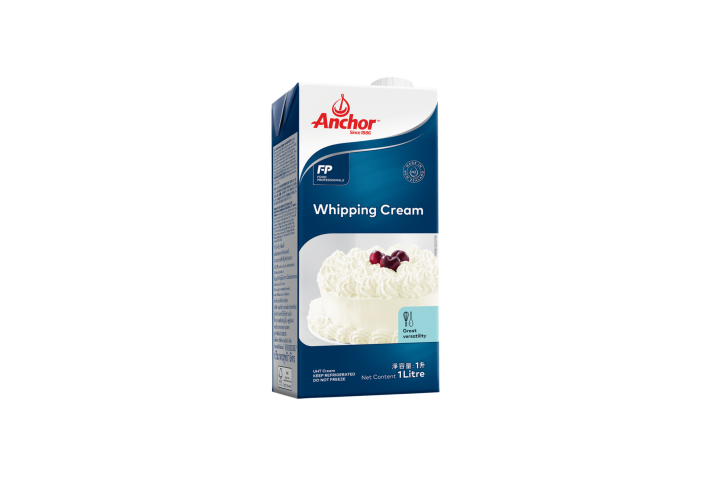
For whipped cream chargers to work properly, you need cream with a fat content of at least 30%, ideally 35% or higher. The reason is simple: nitrous oxide (N₂O) works by dissolving into fat molecules and expanding them. If the fat content is too low, there’s not enough structure for the gas to hold, and the cream stays liquid or collapses immediately after dispensing.
Heavy whipping cream or double cream are your best options. Half-and-half, light cream, or any plant-based alternative with under 25% fat will rarely produce a stable result.
One more thing: temperature matters just as much as fat content. Cold cream whips significantly better than room-temperature cream. Before you start, keep your cream in the refrigerator and if possible chill the dispenser itself for 10–15 minutes. A warm dispenser is one of the most common reasons cream turns out flat, and it’s completely avoidable.
How to Load and Use the Charger Correctly
Once your cream is cold and you have your equipment ready, here’s how the process should go.
Fill the dispenser, but not all the way. Pour your cream into the canister and stop at the max fill line usually around half to two-thirds capacity. Overfilling leaves no room for the gas to expand, which directly affects the texture. If you’re adding flavorings like vanilla extract, powdered sugar, or a pinch of salt, mix them into the cream before pouring.
Screw the head on firmly, then load the charger. Insert the N₂O charger into the charger holder and screw it onto the dispenser head until you hear a hissing sound. That sound means the gas has been released into the canister. Don’t stop before you hear it — an incomplete release means under-pressurized cream.
Shake, but not excessively. Give the dispenser 2–3 firm shakes after charging. This distributes the gas evenly through the cream. More than 5 shakes can actually over-mix the cream and affect texture, especially if it’s already cold and thick.
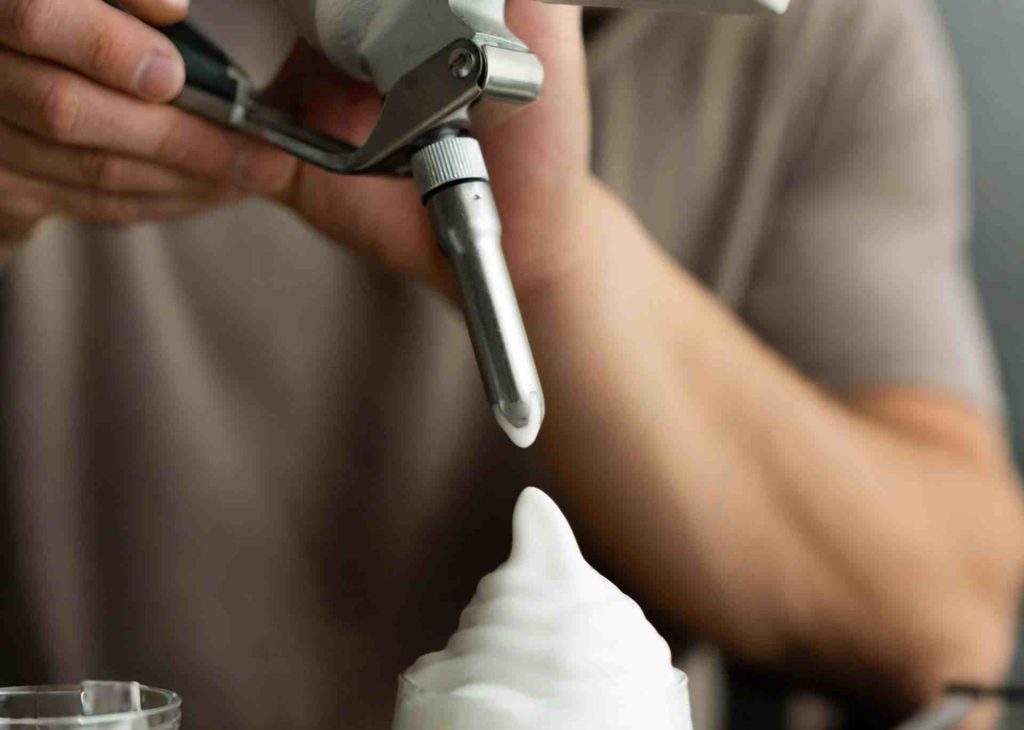
Dispense with the nozzle pointing down. Hold the dispenser upside down and press the lever slowly. The pressure inside does the work, you don’t need to force it. A slow, steady press gives you a smoother, more consistent result than a quick burst.
One charger (8g) is typically sufficient for up to 500ml of cream. If you’re making a larger batch, use a second charger rather than overfilling. Using two chargers on a half-filled canister won’t improve texture, the ratios need to be right.
The Mistakes That Ruin Most Results
Even with good cream and correct technique, a few common mistakes consistently produce poor results. These are worth knowing.
Using warm cream or a warm dispenser is probably the single most common issue. Nitrous oxide dissolves more effectively in cold fat. At room temperature, the gas escapes before it can fully incorporate, and the cream dispenses flat.
Not shaking after charging means the gas sits unevenly in the canister. The first press of the lever releases mostly gas, and the cream that follows is under-whipped.
Leaving the dispenser unused for too long after charging is another issue. Once charged, cream should ideally be used within a few hours. If you’re storing it in the fridge for later, that’s fine but leaving a charged dispenser at room temperature causes the cream to break down faster.
Straining the mixture before loading is something most guides skip, but it matters. If you’re adding fruit purées, coffee, or any liquid with pulp or particles, strain it before it goes into the dispenser. Solid particles clog the nozzle and reduce gas flow, which means inconsistent cream every time.
Beyond Whipped Cream: What Chargers Can Actually Do
Most people buy whipped cream chargers for exactly that whipped cream. But the same tool opens up a range of applications that are worth knowing about, especially if you’re using the dispenser regularly.
Culinary foams have become a standard technique in professional kitchens, and chargers make them accessible at home. You can use the same process with reduced broths, infused oils, or fruit juices to create light, airy foams that sit on top of soups, cocktails, or desserts. The key is to add a small amount of a stabilizer (like lecithin or gelatin) so the foam holds its structure after dispensing.
Rapid infusions are arguably the most underrated use. Normally, infusing spirits, oils, or cream with herbs, spices, or citrus takes hours or even days. A whipped cream charger dramatically speeds this up, the pressurization forces the liquid into the flavoring agent, and then releasing the pressure pulls it back out, fully infused, in minutes. This works well for things like herb-infused oils, spiced cream, or flavored spirits.
Mousses and light dessert bases are another option. With the right ratio of cream to stabilizer, a dispenser can create airy mousses directly, no folding, no extra steps. Chocolate mousse, mascarpone foam, and whipped ganache all work well through a dispenser.

Storage and Shelf Life
Charged cream stored in a sealed dispenser in the refrigerator stays good for 2 to 3 days. After that, the texture starts to change and the cream may separate slightly. The N₂O does slow oxidation to some extent, which is why dispenser cream lasts a bit longer than hand-whipped cream but it’s not indefinite.
A few practical storage notes:
Store the dispenser upright in the fridge, with the nozzle cap on. This reduces air contact and keeps the pressure more stable. Before each use after storage, give it one or two gentle shakes to re-distribute the gas.
If you notice that cream is dispensing as liquid rather than foam after storage, it usually means the pressure has dropped or the cream has started to separate. At that point, it’s best to release the remaining pressure, clean the dispenser, and start fresh.
For food safety, always check the cream before serving. If there’s any off smell or visible separation that doesn’t resolve after shaking, discard it.
Cleaning the Dispenser Properly
A clean dispenser isn’t just about hygiene, it directly affects how well the charger works next time.
After each use, release any remaining pressure through the nozzle (point it away from you and press the lever gently). Then unscrew the head and rinse all removable parts, the canister, head, gasket, and nozzle with warm soapy water. Avoid the dishwasher for the head and gasket; the heat can warp the sealing components over time.
Pay particular attention to the nozzle. Cream residue dries quickly and can partially block the opening, which leads to uneven dispensing on the next use. A small cleaning brush or pipe cleaner works well here.
Let everything air-dry completely before reassembling. Moisture trapped inside the canister can affect the cream on your next use and, over time, may cause rust in lower-quality dispensers.

A Note on Charger Size and Quality
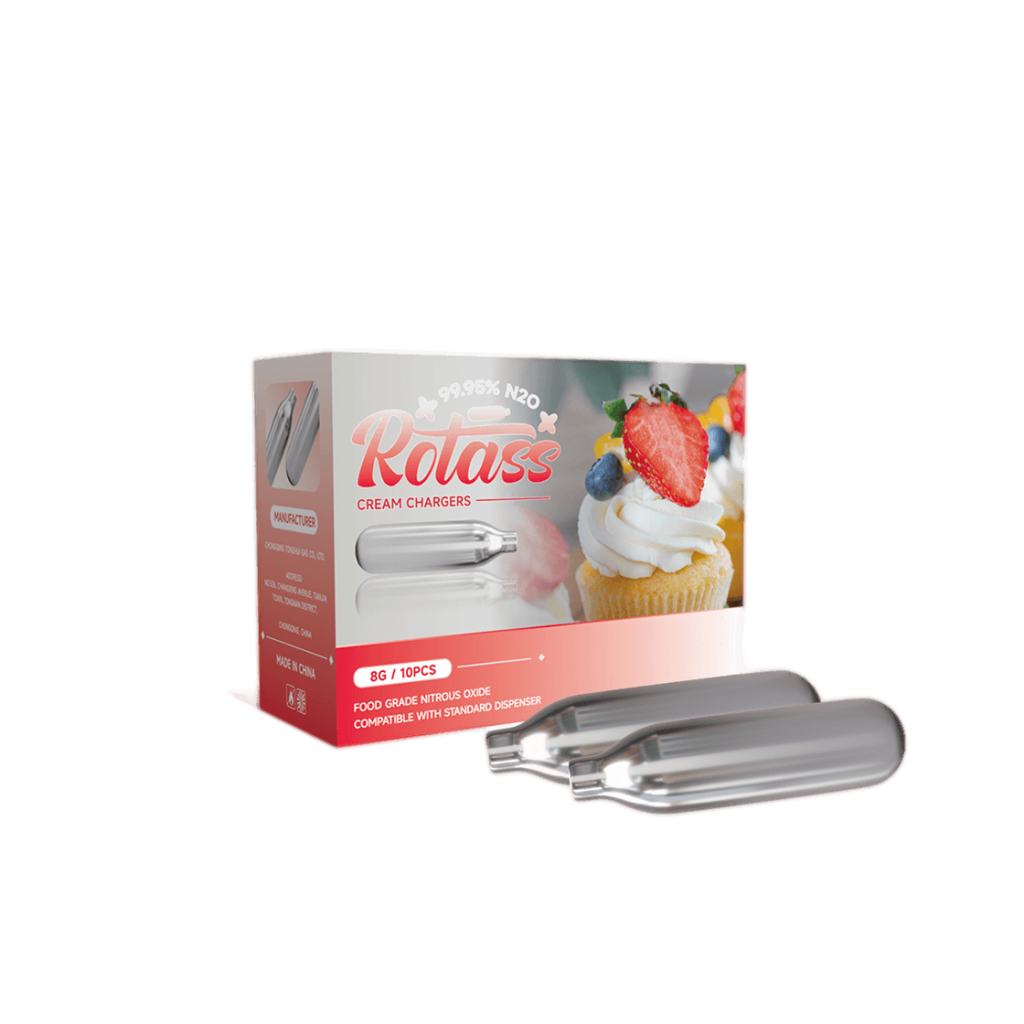
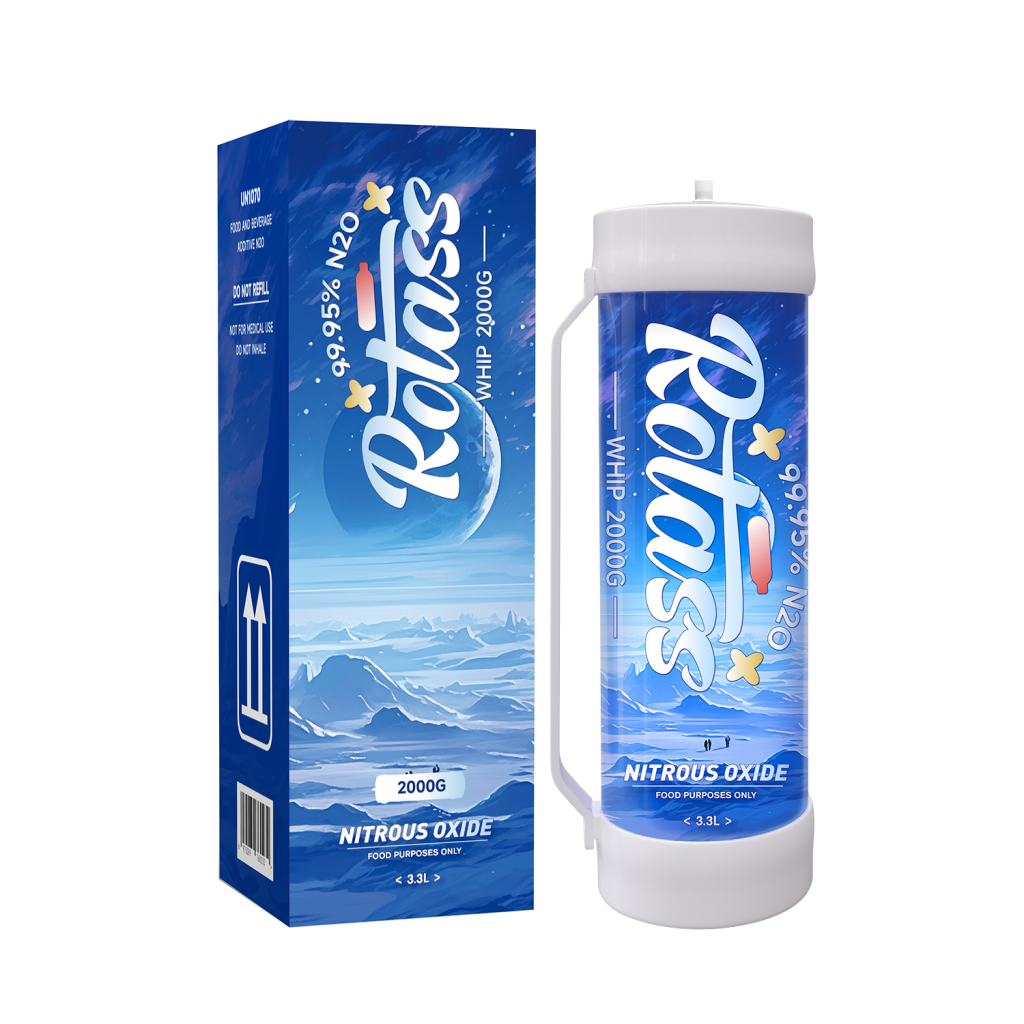
Standard 8g chargers are compatible with the vast majority of home dispensers and are the right choice for most uses. Larger 580g or 615g cylinders connect via a pressure regulator and are more practical for commercial settings or high-volume use, they’re not designed to screw directly into a standard home dispenser.
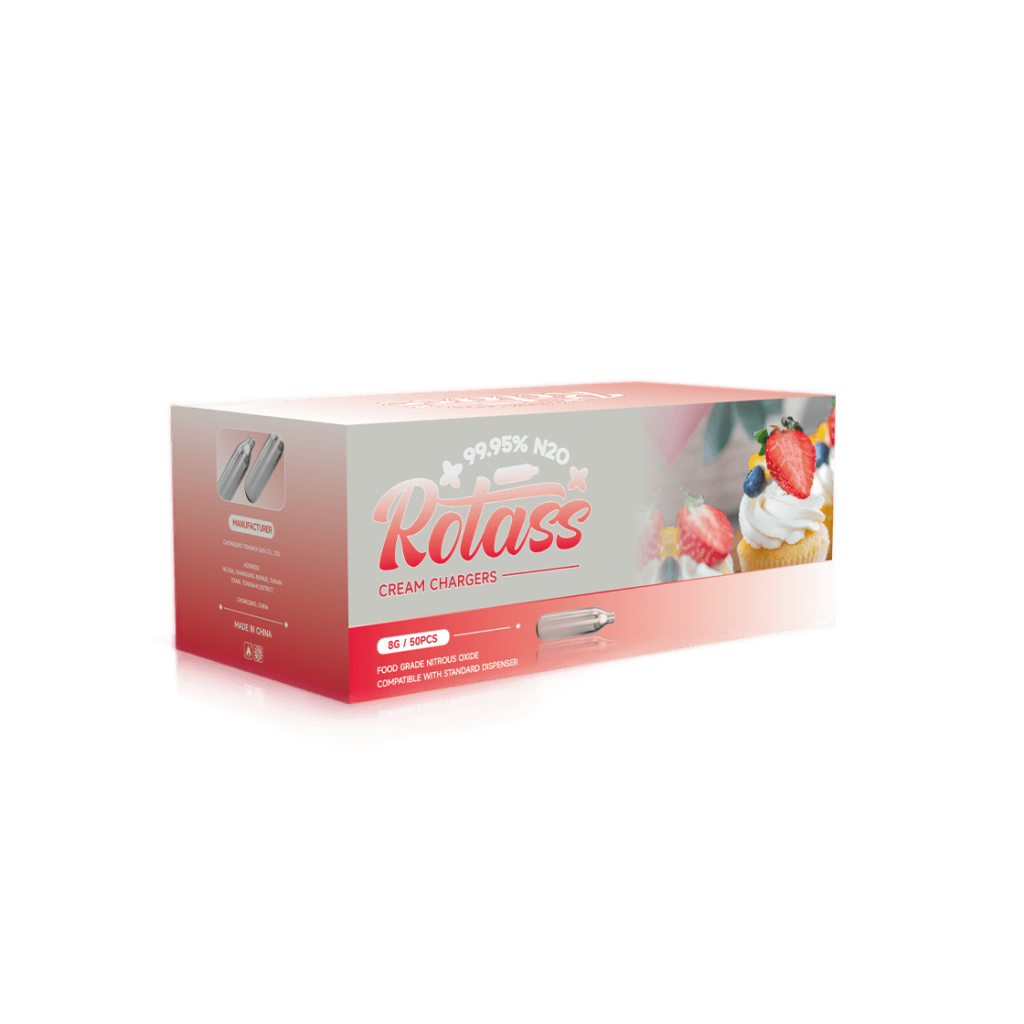
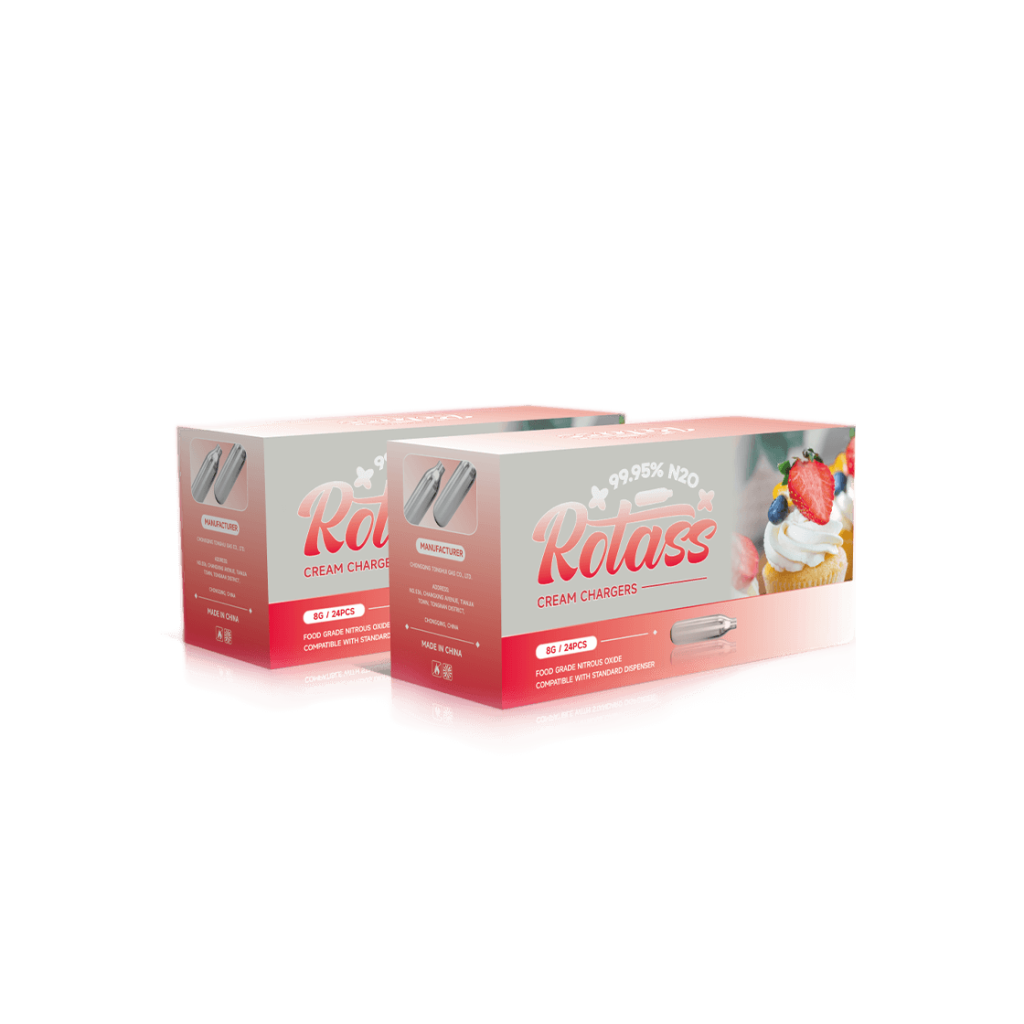
Whatever size you use, charger quality matters. Food-grade N₂O should have a purity level of 99.9% or above. Lower-purity gas can introduce off-flavors into the cream and, in worst cases, may contain contaminants that aren’t suitable for food use. Look for chargers that are certified food-grade and come from a manufacturer with verifiable quality control processes, Rotass chargers, for reference, are tested to meet food-grade certification standards before shipping.
Using a whipped cream charger effectively comes down to a handful of consistent habits: cold cream, correct fill level, proper charging technique, and clean equipment. Get those right and the results are reliably good, whether you’re topping a dessert at home or producing foams for a professional kitchen.
Contact us now, and we’ll get back to you within minutes.