Share your requirements with Rotass now!
How to Choose Flavored Cream Chargers: A Complete Buying Guide
Choosing flavored cream chargers isn’t just about picking the most attractive flavor. For cafés, dessert shops, beverage brands, distributors, and wholesalers, the right product also needs to deliver consistent performance, meet food safety requirements, and comply with local regulations.
A broad flavor selection and competitive pricing may look appealing at first, but they shouldn’t be the only factors influencing a purchase. The quality of flavor ingredients, food-grade manufacturing standards, labeling accuracy, and production consistency all have a direct impact on whether the product is suitable for your target market.
When purchasing flavored cream chargers for foodservice or wholesale distribution, it’s worth checking these details before committing to a large order. A little extra evaluation at the sourcing stage can help reduce the risk of quality problems, import issues, or unexpected costs later on.
In the following sections, we’ll look at the factors that matter most when comparing flavored cream chargers, including available flavor options, product specifications, labeling requirements in the United States and Europe, and practical ways to assess potential suppliers before making a purchasing decision.
What Are Flavored Cream Chargers?
A flavored cream charger is a steel cartridge filled with food-grade nitrous oxide (N₂O) and a food-grade flavoring. Like a standard cream charger, it is designed to work with whipped cream dispensers. The difference is that the flavor is released together with the gas during dispensing, giving the whipped cream a ready-made taste without the need to add syrups, extracts, or other flavorings separately.
Common options include vanilla, chocolate, strawberry, caramel, mint, and other popular dessert flavors. This makes flavored chargers a convenient choice for cafés, bakeries, beverage shops, and other foodservice businesses looking to create consistent products while simplifying preparation.
From a technical standpoint, flavored and standard cream chargers are largely the same. They use the same food-grade N₂O, operate under similar pressure conditions, and are compatible with the same dispensers when the cartridge size matches. The main difference is the added flavoring ingredient, which also affects how the product must be labeled. In many markets, a charger containing only nitrous oxide has relatively straightforward labeling requirements, while products with added flavorings may need additional ingredient declarations or other regulatory information depending on local food regulations.
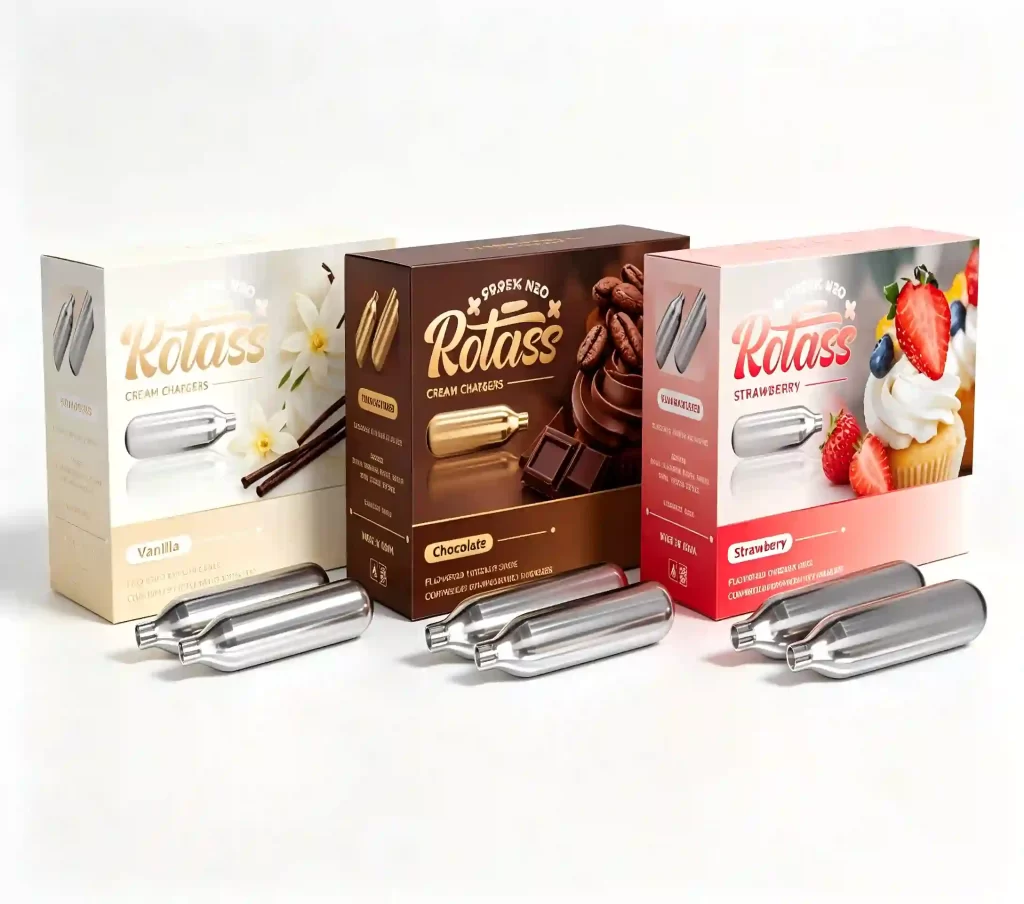
Popular Cream Charger Flavors and Their Best Applications
Different flavors are suited to different types of foodservice businesses, so the right choice often depends on your menu and customer preferences.
Vanilla and chocolate are among the most popular options because they pair well with a wide variety of desserts, coffee drinks, and baked goods. Many cafés and dessert shops choose these classic flavors as everyday staples thanks to their broad customer appeal.
Fruit flavors such as strawberry and blueberry are commonly used in milkshakes, bubble tea, smoothies, and seasonal desserts. Their lighter, sweeter profile works particularly well with cold beverages and limited-time menu items.
Caramel and hazelnut are frequently selected by specialty coffee shops, where they complement espresso-based drinks such as lattes, cappuccinos, and mochas without overpowering the coffee itself.
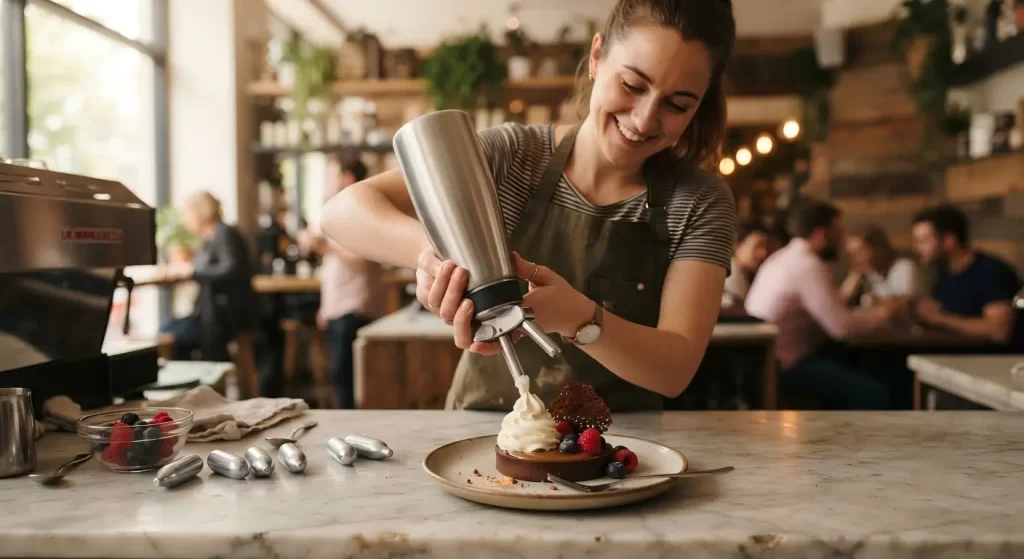
Which Flavored Cream Charger Sell Best?
For distributors and wholesalers, stocking every available flavor isn’t always necessary. In most cases, focusing on a small selection of proven best sellers is a more efficient approach. Products with steady year-round demand are easier to manage, reduce inventory pressure, and generally offer faster stock turnover.
Across many markets, vanilla, chocolate, strawberry, and caramel remain the most widely purchased flavors. Their versatility allows them to be used in coffee, desserts, milkshakes, bubble tea, and other popular menu items, making them suitable for a broad customer base.
If you’re planning a private label or OEM project, it’s also worth discussing regional flavor preferences with your manufacturer. Consumer tastes can vary by market, and selecting flavors that match local demand can help improve product acceptance and sales performance.
What to Check Before Buying Flavored Cream Chargers
Choosing the right flavored cream charger involves much more than comparing prices or selecting popular flavors. For commercial buyers, long-term product performance, food safety, and supplier reliability often have a greater impact than the initial purchase cost.
Before placing a bulk order, it’s worth evaluating several key factors that can directly affect product quality and business operations.
Verify Food-Grade Quality
The quality of the nitrous oxide should always come first. Whether the charger is flavored or not, the N₂O should meet recognized food-grade purity standards and be manufactured specifically for food applications. High-quality gas helps ensure stable whipping performance and consistent results, while poor-quality filling or impurities may affect both texture and flavor.
Rather than relying on product descriptions alone, ask suppliers for supporting documentation such as food safety certifications, certificates of analysis (COAs), or batch testing reports. A reputable manufacturer should be able to provide these without hesitation.
Check Flavor Ingredients and Labeling
The flavoring itself deserves just as much attention as the gas inside the charger. Some products use natural flavorings, while others contain nature-identical or artificial flavor compounds. The choice can influence product cost, ingredient declarations, and labeling requirements in different markets.
If you’re sourcing products for export, private labeling, or OEM projects, confirm exactly which flavor ingredients are used and whether the formulation complies with your destination market’s regulations. Addressing these details before production can help avoid labeling issues and unnecessary delays later.
Evaluate Product Consistency and Shelf Life
For cafés, restaurant chains, and beverage brands, consistency is essential. Customers expect the same flavor and performance every time they order, so each production batch should deliver comparable taste, aroma, and whipping results. When evaluating a new supplier, requesting samples from different production batches can provide a better indication of long-term quality than testing a single sample.
Shelf life is another practical consideration, especially for businesses importing products or holding inventory for extended periods. While cream chargers generally offer a long storage life, added flavoring ingredients may have specific storage recommendations. Before purchasing, confirm the manufacturing date, recommended storage conditions, expected shelf life, and expiration information to ensure the products remain in optimal condition throughout your sales cycle.
Confirm Compatibility, Packaging, and Order Requirements
Most flavored cream chargers are available in the standard 8g format and are compatible with common whipped cream dispensers, while larger commercial cylinders may be more suitable for high-volume operations. Choosing the correct cartridge size helps avoid compatibility issues and improves operational efficiency.
Packaging should also match your business model. Retail packs may suit cafés and restaurants, whereas distributors often prefer larger wholesale cartons. For private-label projects, it’s important to confirm available packaging options, branding services, and minimum order quantities (MOQs) early in the discussion, as these requirements often differ from standard products.
Look Beyond Price When Choosing a Supplier
Price is an important consideration, but it shouldn’t be the only one. A lower unit cost can quickly lose its advantage if products suffer from inconsistent quality, delayed deliveries, or compliance issues.
When comparing suppliers, consider their production capacity, quality control procedures, certifications, lead times, and ability to support repeat orders. A manufacturer that consistently delivers reliable products and responsive service often provides greater long-term value than simply offering the lowest quotation.
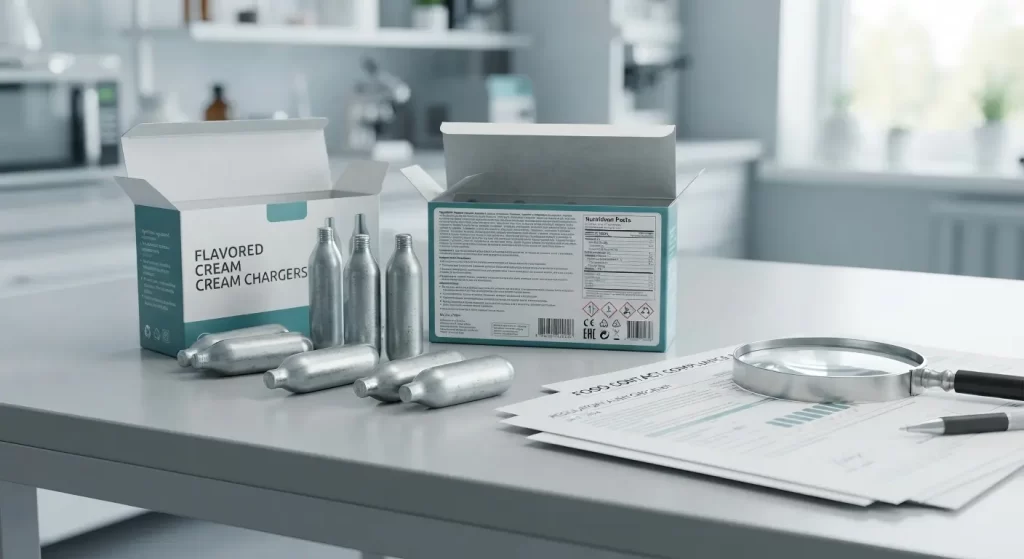
Labeling Requirements for Flavored Cream Chargers
Adding flavoring ingredients means labeling requirements become more complex than those for standard N2O cream chargers. While specific rules vary by market, accurate ingredient information and compliant packaging are essential for customs clearance, retail distribution, and product traceability.
FDA Requirements (United States)
In the United States, flavored cream chargers are subject to FDA regulations covering food ingredients and product labeling. Depending on the formulation, labels may need to identify whether flavorings are natural or artificial, declare any applicable allergens, and avoid claims that cannot be substantiated.
Packaging should also include key product information, such as the manufacturer or distributor’s name and contact details, along with batch or lot identification where required. These details help support product traceability if questions arise during distribution or a product recall.
European Union Requirements
The European Union follows the Food Information to Consumers (FIC) Regulation, together with other applicable food legislation and guidance from the European Food Safety Authority (EFSA). Compared with the U.S., EU labeling requirements are often more detailed.
Depending on the product, labels may need to identify flavorings by category, provide mandatory allergen information, and include additional declarations required under EU food labeling rules. Businesses importing flavored cream chargers into EU countries should confirm that packaging has been prepared specifically for the European market, as labels designed for other regions may not meet local requirements without modification.
Common Labeling Mistakes to Avoid
Many labeling issues are relatively minor but can still lead to customs delays, retailer rejection, or requests for relabeling. Common examples include:
- Missing or incomplete ingredient declarations, particularly for flavoring ingredients
- Flavor descriptions that do not accurately reflect the product formulation
- Missing manufacturer or distributor information, batch numbers, or traceability details
- Packaging that does not meet the labeling requirements of the destination market
For OEM and private-label projects, reviewing label artwork before production is one of the simplest ways to avoid these problems. Correcting a digital design takes far less time and cost than replacing thousands of printed packages after production has already begun.
Accurate labeling is more than a regulatory requirement. It also helps products move more smoothly through customs, improves traceability throughout the supply chain, and gives distributors and commercial buyers greater confidence in the products they purchase.
How to Evaluate a Reliable Flavored Cream Charger Supplier
Choosing a supplier involves more than comparing product prices or the number of flavors available. For distributors, importers, and private-label brands, manufacturing standards, quality control, and regulatory support often have a greater impact on long-term business success than the initial purchase cost.
When comparing potential suppliers, look beyond the product catalog and ask for information that demonstrates their production capabilities and compliance. A reliable supplier should be able to provide:
- Food-grade N₂O certifications and supporting quality documentation
- Detailed ingredient specifications rather than only listing the flavor name
- Batch numbers and manufacturing dates for product traceability
- Regulatory documentation suitable for your destination market, such as FDA- or EU-related compliance documents where applicable
- OEM and private-label packaging support
- Shelf-life testing or product stability data
- Experience exporting to your target market and familiarity with local import requirements
Using the same checklist for every supplier makes it easier to compare quotations objectively and identify potential risks before placing an order. Documentation, production capability, and regulatory support can often be just as important as price when selecting a long-term manufacturing partner.
If you’re developing your own branded product line, partnering with an experienced OEM manufacturer can simplify product development, packaging customization, and regulatory preparation. At Rotass, we support distributors, wholesalers, and private-label brands with food-grade cream chargers, OEM packaging solutions, and export documentation tailored to different international markets.

For wholesalers and distributors, compliant labeling plays an important role in keeping products moving smoothly through the supply chain. Missing or inaccurate label information can lead to customs inspections, shipment delays, or requests for additional documentation, particularly when products are entering regulated markets.
Accurate labeling also supports product traceability and consumer safety. If questions arise about ingredients, allergens, or product quality, distributors are often expected to provide clear documentation to retailers or regulatory authorities. Choosing manufacturers that maintain complete technical documentation and operate under recognized food safety management systems, such as HACCP or ISO 22000, can help simplify compliance and strengthen confidence throughout the supply chain.
FAQ
Contact us now, and we’ll get back to you within minutes.