Share your requirements with Rotass now!
How to Store CO2 Cartridges Safely?
CO2 cartridges look simple enough. But they’re pressure vessels, and how you store them matters more than most people think about. Leave one in the wrong spot long enough and it can lose pressure, corrode, or in rare cases rupture. Getting this right doesn’t take special equipment or a dedicated storage room, just a handful of habits applied consistently.
The rules below apply to any CO2 cartridge, whether it’s sitting next to your soda maker or riding around in a bike saddle bag all summer. Some of the risks shift depending on how you use them, which is why the use-case breakdown further down is worth reading even if you already know the basics.
Why CO2 Cartridge Storage Safety Matters
Inside a sealed cartridge, carbon dioxide sits partly as liquid, partly as gas. Heat things up and that liquid expands, pushing internal pressure higher along with it. Cartridges are built with some safety margin for this, but it’s not unlimited — most have a pressure relief mechanism that kicks in around 150°F, letting gas escape before pressure gets to a dangerous level. The Compressed Gas Association’s G-6 guidelines are what the industry works from when it comes to handling CO2 safely, and storage temperature is one of the first things they cover.
How to Store CO2 Cartridges Safely: The Core Rules
A few basics apply no matter what you’re using your CO2 cartridges for:
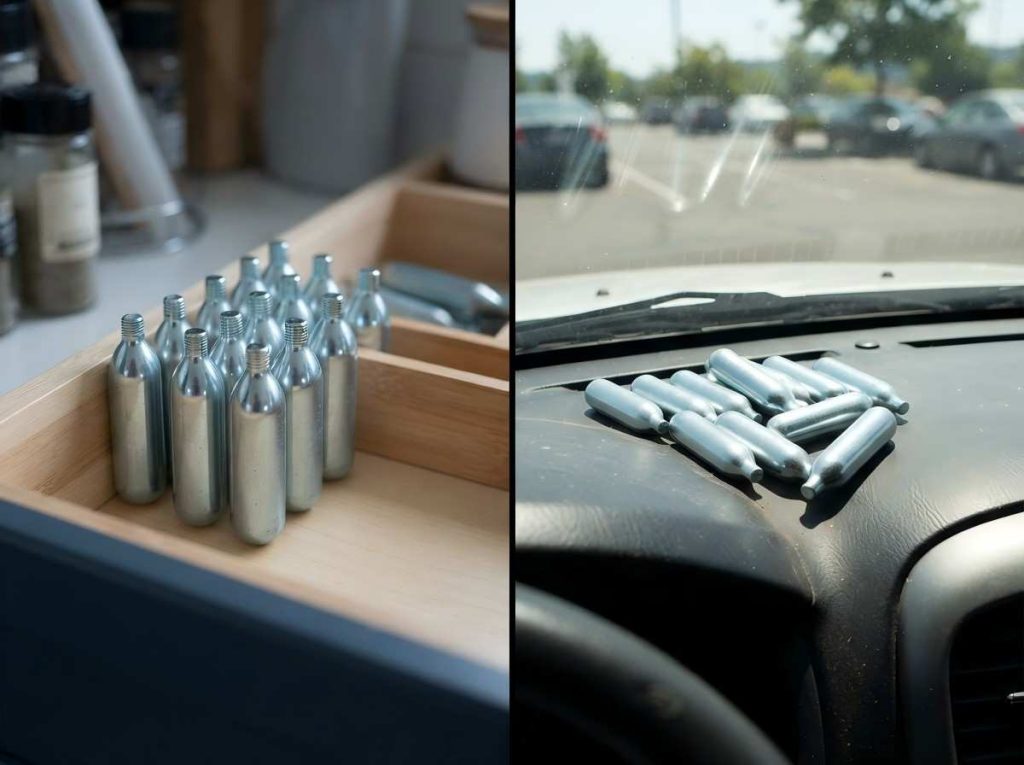
- Keep temperatures under control. Anywhere below 125°F (51.7°C) works — that’s the ceiling CGA guidelines recommend. If you want cartridges to last longer, aim lower, ideally under 80°F (27°C) for everyday storage.
- Avoid moisture. Damp air is one of the main reasons steel cartridges corrode on the surface. A basement that stays humid or an uncovered shed outside isn’t a great long-term spot.
- Store them upright. Not a strict rule for short periods, but keeping cartridges upright helps the liquid-to-gas ratio inside stay stable and puts less stress on the seal.
- Never leave cartridges in a parked car. This is where most storage mistakes actually happen. On a 95°F day, a closed car can reach 140–170°F inside within half an hour — well past the point where a relief valve is built to trigger. A glovebox or center console in direct sun is about as bad a spot as there is.
- Keep cartridges clear of direct heat sources, whether that’s a stovetop, a radiator, or a window that gets hard afternoon sun.
CO2 Cartridge Storage Tips by Use Case
The core rules above cover the fundamentals, but where people actually keep their cartridges — and what tends to go wrong — varies a lot depending on how they’re used.
| Use Case | Typical Storage Spot | Main Risk | What to Watch For |
| Home soda makers | Kitchen counter or cabinet | Proximity to stovetop or oven heat | Keep at least a few feet from any cooking surface |
| Bike tire inflation (threaded cartridges) | Saddle bag, garage, or car trunk | Hot car trunk or direct sun during rides | Don’t leave spares in the car between rides in summer |
| Home brewing / kegerator systems | Basement, closet, or dedicated brew space | Temperature swings between seasons | A consistent indoor spot beats an unheated garage |
| Airguns and BB guns | Range bag or garage shelf | Sun exposure after outdoor use | Move cartridges indoors once you’re done shooting for the day |
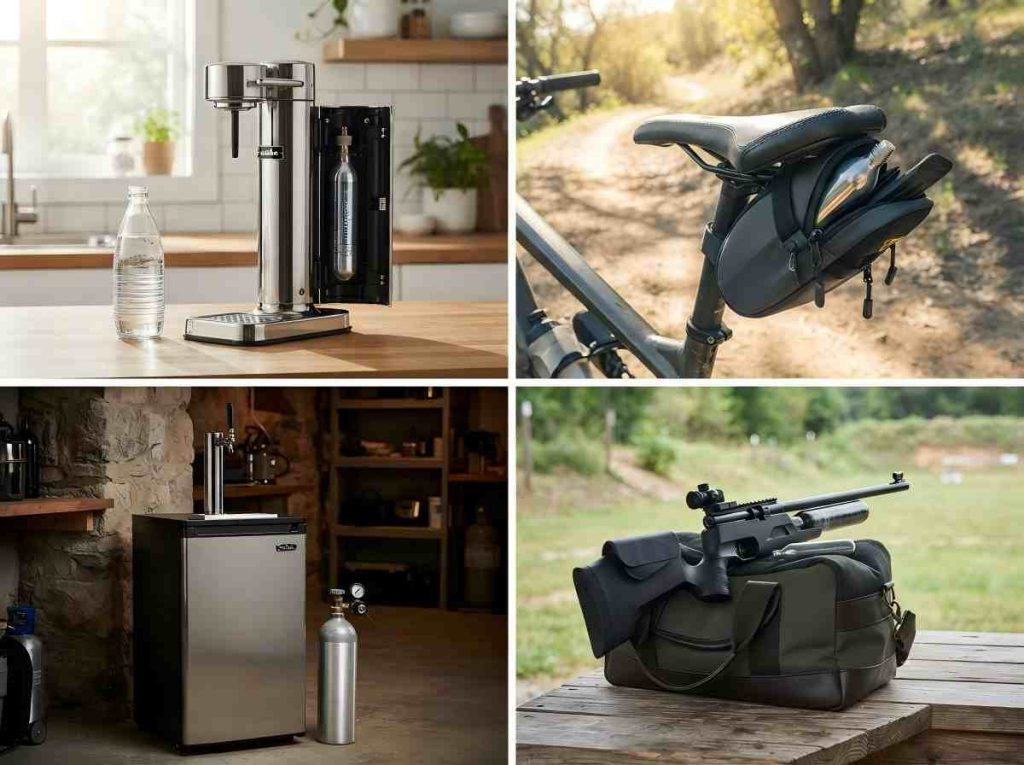
The rules above cover the fundamentals, but where people actually keep their cartridges — and what tends to go wrong — depends a lot on how they’re being used.
Bike riders run into a specific version of this problem. Threaded cartridges for tire inflation don’t need anything different storage-wise, but they end up in situations regular kitchen cartridges never do — tossed in a saddle bag, forgotten in a hot trunk after a ride. That’s usually where things go wrong, not from bad habits but from convenience. Worth thinking about too: cartridge size changes how much space you need for spares, and bigger cartridges are easier to knock loose if they’re rattling around unsecured.
Storing Food-Grade CO2 Cartridges for Beverage Use
Soda makers and home brewing setups both put CO2 in direct contact with something you’ll drink, which changes the storage picture a little. Beyond temperature and humidity, it’s worth keeping cartridges away from cleaning products, solvents, or anything else chemical sitting on the same shelf. The cartridge is sealed, but handling it after it’s picked up residue from a nearby bottle of cleaner isn’t ideal.
Rotass produces its CO2 under the FSSC 22000 food safety standard, with purity reaching 99.95%. That level matters most in beverage use, where even a trace impurity can throw off taste. The certification covers what’s inside the cartridge, though — once it leaves the factory, storage is on the user. A clean, chemical-free shelf is what keeps that quality intact until it’s actually used.
Can You Store a Partially Used CO2 Cartridge?
This comes up more than you’d think. Most consumer CO2 cartridges are single-use by design. Once pierced, they release their full charge with no way to stop it partway through. That’s different from the larger CO2 tanks in some kegerator systems, which have actual shut-off valves and can be used a bit at a time.
Standard 8g, 12g, or 16g cartridges which used in soda makers, whipped cream dispensers, or bike pumps don’t work that way. Once one’s punctured, that’s it, use it up. Saving a partially discharged cartridge won’t hurt anything, but it also won’t hold pressure like an unopened one does. There’s not much point keeping it around.
Common CO2 Cartridge Storage Mistakes to Avoid
A few habits show up again and again, even among people who otherwise follow the temperature rules:
- Putting cartridges in the freezer. This isn’t necessary and doesn’t extend shelf life — a cool room-temperature spot works just as well.
- Stacking or letting cartridges roll around loosely in a drawer or bag, which increases the chance of dents or surface damage over time.
- Storing near flammable materials or in high-traffic areas where cartridges could fall or get knocked around.
- Ignoring visible rust. Once a cartridge shows visible corrosion, the shell underneath is weaker than it looks. Better to set it aside and dispose of it than risk using it.
How Long Do CO2 Cartridges Last in Storage?
Unopened CO2 cartridges don’t come with a strict expiration date the way food does. Stored properly, they’ll hold pressure for years. What eventually wears them down is the seal breaking down over time, or on steel cartridges, corrosion if they’ve spent too long somewhere damp.
Before grabbing an older cartridge, give it a quick look: visible rust, dents, or any bulging around the seams are all reasons to skip it and dispose of it instead. Material makes a difference here too. Steel and aluminum age differently in terms of corrosion resistance, so if you’re the type to stock up on cartridges rather than buy them as needed, that’s worth keeping in mind.
FAQ
Contact us now, and we’ll get back to you within minutes.