
Share your requirements with Rotass now!
Threaded CO2 Cartridges for Bikes: A Complete Guide to Choosing and Using Them
You’re twenty miles into a ride when the rear end goes soft or worse, you hear the hiss before you even feel it. Flat tire. At that point, the decision comes down to two things in your saddle bag: a mini pump or a CO2 cartridge.
Pumping a road tire to full pressure by hand takes fifty strokes or more, considerably less fun on the side of a climb. A CO2 cartridge does the same job in a few seconds. The whole setup including inflator head and cartridge together can fit in a jersey pocket, and most weigh under 50 grams.
CO2 does have one catch that trips riders up the first time, so this guide covers how they work, how to size them for your tires, and what to watch out for before you actually need one.
What Is the Difference of a Threaded CO2 Cartridge
The distinction is just about how the cartridge attaches to the inflator head. Non-threaded cartridges get pressed into the inflator head, which punctures the seal and releases all the gas at once.
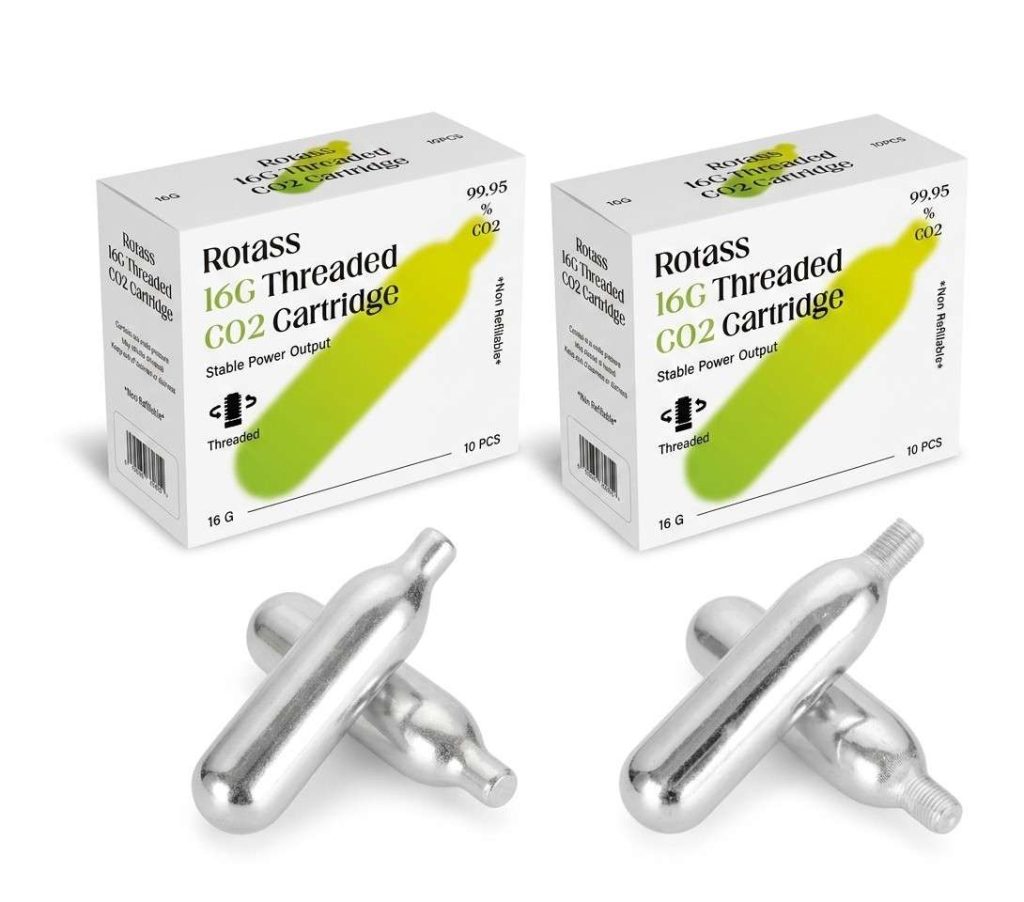
Threaded cartridges screw into the inflator head, and the threading itself acts as a valve. Loosen it slightly and gas starts flowing; tighten it back up and it stops. You can fill to whatever pressure you want and hold what’s left in the cartridge for the next flat.
Threaded cartridges do tend to cost a bit more, and that precision is the reason. Over a full season, not wasting half a cartridge every time adds up and knowing exactly how much gas went in beats guessing whether the tube is properly seated.
How to Choose the Right Size of CO2 Cylinders (12g / 16g / 20g / 25g)
Sizing isn’t something to guess at. Get it wrong and you’re standing on the side of the road with a half-inflated tire and no cartridge left.
The right size comes down to tire volume, not the brand of your inflator. Narrower road tires run at higher pressures but hold less air volume, so a 16g cartridge is usually enough which can bring a 23mm to 28mm tire up to 90–120 psi without issue.
Wider tires work differently. MTB, gravel, and fat bike tires hold a lot more air even at lower pressures, so a 16g cartridge simply runs out of gas before the tire is full. A 20g or 25g cartridge covers that extra volume that’s the size range most MTB and gravel riders carry.
Most threaded cartridges use a 3/8″-24 thread, the same standard across brands, which is why mixing and matching inflator heads and cartridges usually isn’t a problem. If you ride multiple bikes with different tire widths, keep the cartridge size matched to whichever bike you’re on.
Details Riders Often Overlook
Most riders figure this out the hard way the first time they use a CO2 cartridge: a tire filled with CO2 loses pressure noticeably faster than one filled with regular air. The patch is fine. The valve is fine. The problem is the gas itself.
Regular air seeps through rubber slowly that most riders only notice a slight drop over several days. CO2 behaves differently. It’s soluble in butyl rubber, the material most tubes are made from, so instead of slowly seeping through, it essentially diffuses straight through the rubber wall. RoadBikeRider puts it plainly: riders who fix a flat with CO2 and don’t swap the gas out when they get home often wake up to another soft tire the next morning.
The short version: CO2 gets you home, it doesn’t replace a proper refill. Once you’re back, deflate and refill with a floor pump. Don’t trust CO2 to hold pressure overnight.
A few other things worth knowing before you’re out using one:
- The gas releases at very low temperatures, so hold the cartridge with a sleeve or glove rather than bare skin — frostbite from a CO2 cartridge is a real, if minor, risk.
- Don’t thread a cartridge onto your inflator and leave it sitting unused for long stretches. Screw it on only when you’re ready to inflate.
- In cold weather, the sudden temperature drop during release can occasionally cause the valve to stick or ice over briefly. Give it a moment before assuming something’s gone wrong.
Who Threaded Cartridges Are Best For
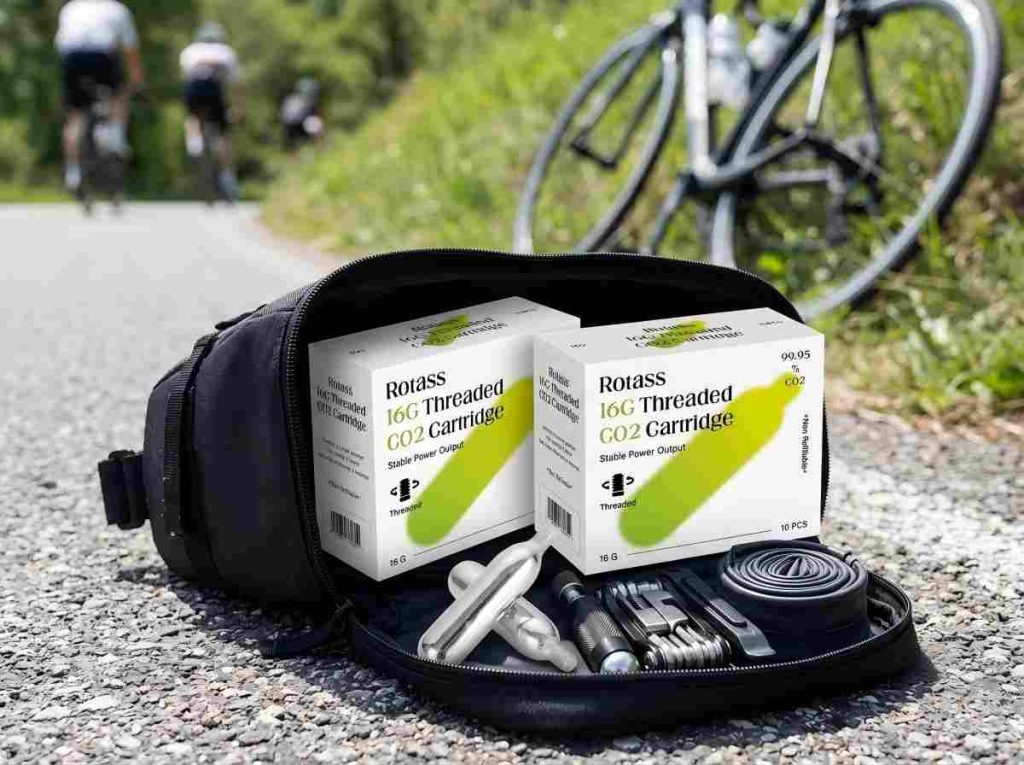
Threaded systems are the go-to for riders who want to travel light: just an inflator head, no bulky cupped attachment around the cartridge. Road racers and long-distance riders tend to run threaded for that reason when you’re carrying two cartridges for a four-hour ride, not wasting half of one on the first flat matters.
Non-threaded cartridges suit riders who’d rather not think about it. There’s no threading to line up and no valve to manage. They’re also easier to find, most general sporting goods stores carry non-threaded, while threaded options are more of a bike shop staple. One isn’t better than the other, it depends on how you ride and how much you want to manage on the side of the road.
Beyond the hardware, the gas fill itself is worth paying attention to. A cartridge that’s short on gas or inconsistently filled will let you down at exactly the wrong moment, with no backup and nowhere to go. Purity matters too, impurities in the gas affect how cleanly and consistently it releases through the inflator. Whether it’s inflating a bike tire or carbonating a drink behind a bar, the gas needs to be manufactured and filled to a consistent standard to actually perform the way it’s supposed to.
As a professional CO2 gas manufacturer, Rotass produces CO2 at 99.95% purity, backed by an annual output of over 1.1 million tonnes. If you’re sourcing CO2 cartridges in bulk, whether for a bike shop, a beverage lineup, or your own brand, get in touch with Rotass to discuss your requirements.
Contact us now, and we’ll get back to you within minutes.