
Share your requirements with Rotass now!
How to Safely Recycle Used N2 Cartridges / Nitrogen Chargers
N2 cartridges, also called nitrogen chargers, are small steel canisters filled with food-grade nitrogen gas. They are mainly used to create the smooth, cascading texture in nitro cold brew coffee and other nitrogen-infused drinks. Unlike N2O cream chargers, which are used for whipped cream and desserts, N2 cartridges are designed specifically for beverages.
Once the gas is used up, many people wonder what to do with the empty canisters. Throwing them directly into the trash or recycling bin is not the right approach. This guide explains how to recycle them safely, based on how these cartridges are made and handled.
As a manufacturer of 2g nitrogen chargers, we often get questions from cafés, home users, and wholesale buyers about how to deal with used cartridges. The steps below keep the process simple while covering the basic safety precautions.
Are N2 Cartridges Recyclable?
Yes. Empty N2 cartridges are made from high-grade carbon steel, often with a zinc coating to help prevent rust. Once all the gas has been released, the canister can be treated as scrap metal and recycled.
Steel is relatively easy to recycle. However, small pressurized canisters are not always accepted in regular household recycling bins. Depending on where you live, you may need to take them to a metal recycling center or scrap yard that accepts this type of item.
The cartridge should be completely empty before you recycle it. A cartridge that still contains gas may not be accepted and can create safety issues during handling or processing.
The U.S. EPA recycling guidance also advises consumers not to put propane cylinders or non-empty aerosol cans into ordinary recycling bins. Recycling rules vary by location, so check with your local recycling service or the facility before dropping off used N2 cartridges.
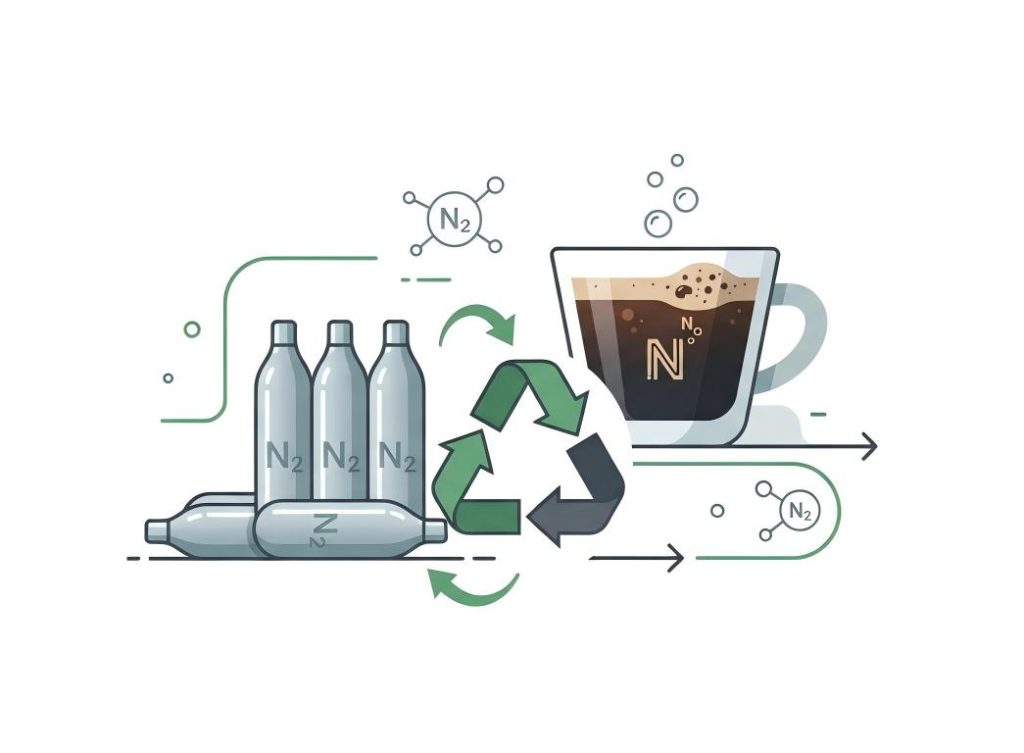
Why Proper Nitrogen Charger Recycling Matters
The main concern is not the steel itself. It is residual pressure.
An N2 cartridge is designed to hold gas under pressure. Even when it seems to be empty, there may still be some gas inside. If a cartridge with residual pressure enters the recycling stream, it could be crushed or processed with other scrap metal.
This is why recycling facilities may have specific rules for gas cartridges and cylinders. In Singapore, for example, the Workplace Safety and Health Council has warned that residual pressure in metal cylinders can cause injuries during waste handling and recommends sending only verified-empty cylinders for metal recovery.
Do not puncture, cut, drill, crush, burn, or heat an N2 cartridge yourself. Do not try to open the cartridge just because it appears empty, and never attempt to refill a disposable charger.
Nitrogen itself is non-flammable, but compressed gas can still create a pressure hazard. A nitrogen safety data sheet notes that cylinders contain gas under pressure and should not be punctured or incinerated.
The safest option is to use the cartridge as intended, release the gas through compatible equipment, and check with the appropriate recycling or waste facility about how to handle the empty container.
Step-by-Step Guide: How to Safely Recycle N2 Chargers
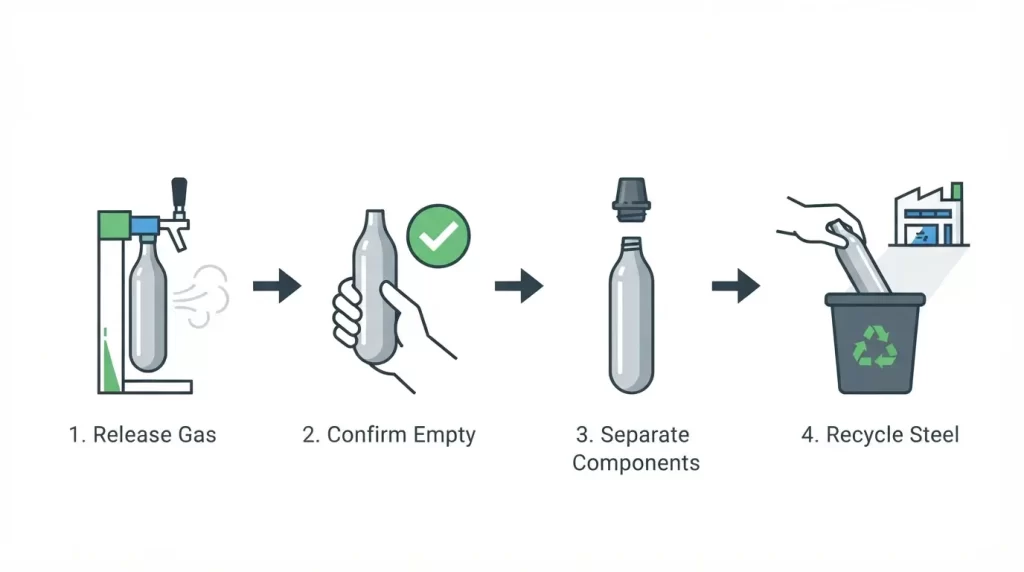
Step 1: Make sure the cartridge is completely empty
Use the charger with compatible nitrogen equipment until no more gas is released. Do this in a well-ventilated area and follow the instructions for the equipment you are using.
Do not rely only on the cartridge feeling light or the sound of the gas stopping to determine whether it is completely empty. If you are not sure whether any pressure remains, do not puncture, open, or modify the cartridge. Treat it as pressurized and check with your local recycling or waste facility for instructions.
Step 2: Check the cartridge for non-metal parts
If the cartridge has a plastic cap or other removable parts, check your local recycling instructions before removing them. Some facilities may want the cartridge left intact, while others may ask you to separate different materials.
The steel body is the part that is typically handled as scrap metal, but the exact requirements depend on the recycling facility.
Step 3: Keep empty cartridges together
Store confirmed-empty chargers in a separate container rather than mixing them with regular household waste. Keeping them together makes it easier to transport them and helps prevent empty cartridges from being confused with other types of waste.
Use a sturdy container and keep the cartridges away from heat or other potential sources of damage.
Step 4: Check local recycling rules
Recycling requirements vary by city and country. Before taking the cartridges anywhere, contact a local metal recycling center, scrap yard, or household hazardous waste facility.
Ask whether they accept small steel gas cartridges or nitrogen chargers and whether the cartridges need to meet any specific conditions before drop-off. Some facilities may accept fully empty cartridges as scrap metal, while others may not accept them through their regular recycling service.
A quick check beforehand can save you a wasted trip and help you avoid putting the cartridges in the wrong waste stream.
Step 5: Take them to an approved facility
Once you have confirmed that the facility accepts the cartridges, follow its instructions for drop-off and transportation.
For larger nitrogen cylinders, check with the supplier or manufacturer to see whether a take-back or return program is available. This can be a practical option when dealing with a larger number of used cylinders.
The same basic principles also apply to N₂O cream chargers, although the products are designed for different applications. If you use both types, see our separate guide: How to Properly Recycle Your Used N₂O Cream Chargers.
Special Considerations for Different Users
Home users usually deal with a small number of 2g cartridges. You can keep the empty cartridges in a sturdy container until you have enough to take to a recycling facility. Before doing so, check your local recycling rules to see how small gas cartridges should be handled.
Cafés, bars, and wholesale buyers may have a much larger number of used cartridges to deal with. A simple collection system can make this easier. For example, staff can place confirmed-empty chargers in a clearly labeled container and arrange regular drop-offs. If you buy cartridges or larger cylinders in bulk, you can also ask your supplier whether they know of local recycling facilities or offer any return options.
The recycling requirements may also differ between small 2g cartridges and larger steel cylinders. Larger cylinders may need to be handled by a specialized facility, so check the requirements before transporting them.
If a cartridge is damaged, the dispenser is broken, or you cannot safely release any remaining gas, do not put it in regular recycling or household trash. Contact your local waste or hazardous waste facility and ask how the item should be handled.
Environmental Benefits and Our Commitment
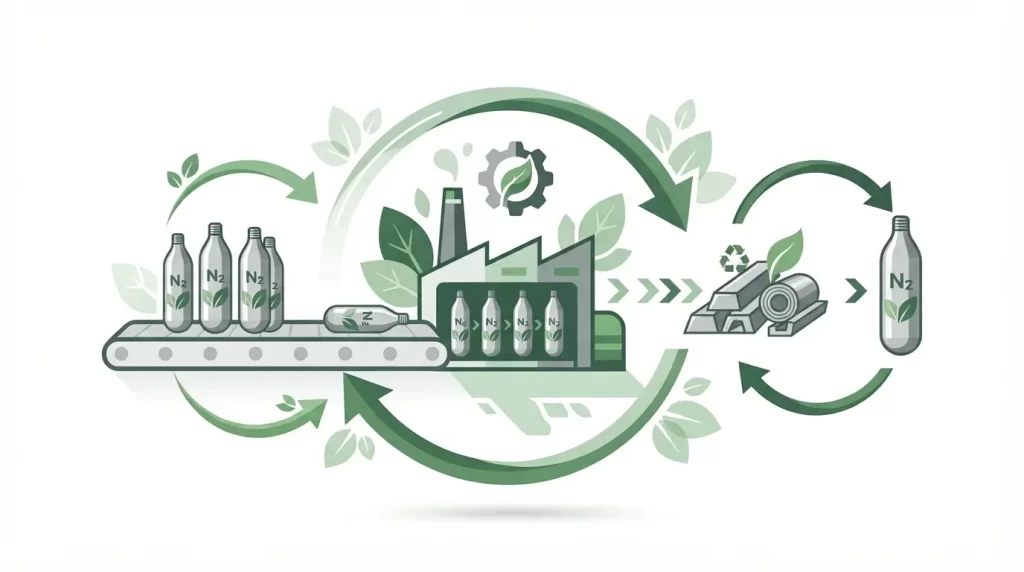
Recycling steel helps reduce the need for new raw materials and can use less energy than producing steel from iron ore. Sending empty cartridges to the appropriate recycling stream also keeps them out of landfill waste.
At Rotass, our nitrogen chargers are made from recyclable steel and filled with food-grade E941 nitrogen. We focus on reliable performance during use while also considering what happens to the cartridge after the gas has been used.
For buyers, it is worth considering both the gas quality and the cartridge material when choosing nitrogen chargers. These factors affect not only how the product performs, but also how the empty cartridges can be handled after use.
*This guide provides general advice on handling and recycling N2 cartridges. Recycling requirements vary by location, so check with your local recycling or waste facility for the most up-to-date information.
Frequently Asked Questions
Can I put empty N2 cartridges in my regular recycling bin?
Only if your local program explicitly accepts small pressurized steel cartridges. Many do not. Always verify first.
Are N2 and N2O chargers recycled the same way?
The process is very similar. Both are steel canisters that must be fully empty before recycling. The difference is mainly in the gas and the intended use.
Can nitrogen chargers be reused or refilled?
No. They are single-use. Once the seal is pierced and the gas is released, the cartridge cannot be safely refilled.
What if local rules are unclear?
Contact the recycling facility or your local waste authority directly. Scrap metal yards are often more flexible with empty steel items than curbside programs.
Contact us now, and we’ll get back to you within minutes.