
Share your requirements with Rotass now!
How to Upgrade from 8g Cream Chargers to Larger N2O Cylinders?
Most users start with standard 8g cream chargers because they are easy to use, widely available, and practical for occasional whipped cream preparation. But as demand increases, using small chargers can become less convenient. Staff have to replace chargers more often, empty canisters accumulate quickly, and the overall process takes more time.
For businesses with higher or more regular usage, larger cylinders such as 580g, 640g, and 2000g models can be a more practical option. They provide more N2O per cylinder and reduce the number of replacements needed during daily operations.
This guide explains what to consider when moving from 8g chargers to a larger N2O cylinder, including the equipment required, basic connection steps, common setup mistakes, and ways to make the transition easier for your daily operation.
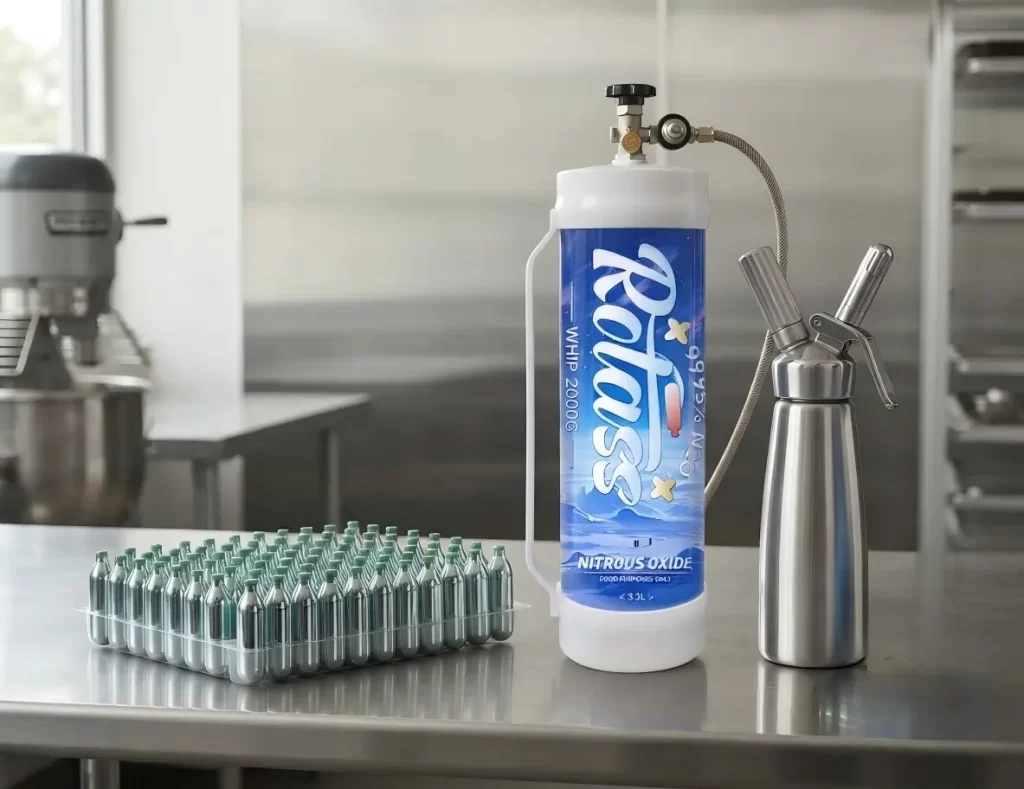
Why Upgrade from 8g Cream Chargers to a Larger N2O Cylinder?
For low-volume use, standard 8g cream chargers are usually enough. But when a café, bakery, dessert shop, or catering business uses whipped cream throughout the day, replacing small chargers repeatedly can become inefficient.
A 2000g N2O cylinder contains about as much nitrous oxide as 250 standard 8g cream chargers by weight. This means fewer cylinder changes and less time spent handling individual chargers during daily production. For businesses with consistent demand for commercial whipped cream, a larger N2O cylinder can also make bulk purchasing and supply management easier.
Another benefit is less packaging waste from individual chargers. Instead of going through dozens of small steel canisters each week, operators can use a larger cylinder for regular production and keep a smaller supply of 8g cream chargers for backup use, lower-volume orders, or mobile applications.
The right setup depends on actual N2O consumption, available storage space, and the equipment being used. For higher-volume operations, however, moving from 8g cream chargers to a 580g, 640g, or 2000g N2O cylinder can be a practical way to simplify whipped cream production.
What You Need to Upgrade from 8g Cream Chargers
A large N2O cylinder is connected to a cream dispenser differently from a standard 8g cream charger. You cannot connect the cylinder directly to the dispenser. A pressure regulator is needed to control the gas pressure, while a hose and the correct adapter connect the cylinder to the dispenser.
For a typical setup, you will need:
- A pressure regulator compatible with food-grade N2O cylinders
- A high-pressure filling hose suitable for N2O
- A compatible adapter for the cream dispenser
- A larger N2O cylinder, such as a 580g, 640g, or 2000g model
The regulator is an important part of the setup because the cylinder pressure must be reduced to a level suitable for the dispenser. The actual working pressure should follow the specifications of the regulator, hose, dispenser, and recipe rather than using one pressure setting for every application.
Rotass offers a pressure regulator for use with its larger N2O cylinders. Using compatible components can make installation easier and helps avoid problems caused by mismatched valves, fittings, or pressure ratings.
In most cases, you can continue using your existing cream dispenser if it is suitable for a refillable N2O system. The adapter and hose replace the standard 8g charger connection, allowing the dispenser to receive N2O from the larger cylinder instead.
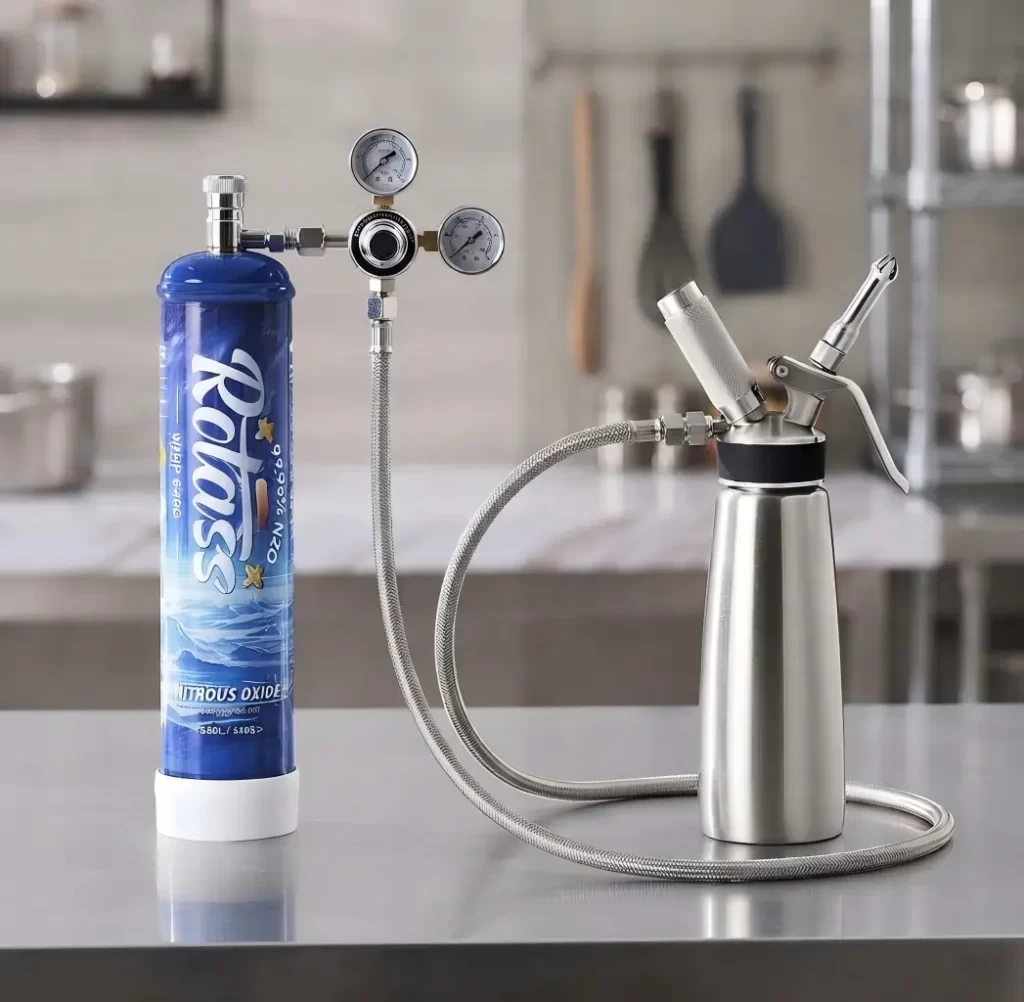
Check N2O Cylinder and Cream Dispenser Compatibility
Before switching from 8g cream chargers to a larger N2O cylinder, check whether your existing cream dispenser and the new cylinder setup are compatible. Many standard dispensers from brands such as iSi, Mosa, Liss and Rotass can be used with a larger-cylinder setup, but the correct adapter is required.
Pay particular attention to the cylinder valve, regulator connection, and adapter fitting. These connections can vary between manufacturers, so a regulator that fits one N2O cylinder may not fit another. Checking the specifications before ordering can prevent problems with mismatched threads or fittings.
If you already have a cream dispenser, record its brand and model and check the adapter requirements. The adapter needs to fit securely onto the dispenser head and connect properly to the filling hose. If the connection type is unclear, confirm the specifications with the supplier before purchasing the regulator or cylinder.
The cylinder itself also needs to be handled differently from an 8g charger. Larger N2O cylinders should be kept upright and secured during storage and use. Follow the handling instructions supplied with the cylinder and regulator rather than treating the larger cylinder like a small disposable charger.
How to Connect a Large N2O Cylinder to a Cream Dispenser
Once the regulator, hose, adapter, and cream dispenser are confirmed to be compatible, the setup is fairly straightforward. Follow the instructions supplied with the equipment and make sure all connections are secure before opening the cylinder valve.
- Secure the cylinder. Place the N2O cylinder upright on a stable surface and secure it so that it cannot tip over. Remove the protective cap from the valve if applicable.
- Install the regulator. Connect the pressure regulator to the cylinder valve. Start by tightening it by hand and use a suitable wrench only if the fitting requires additional tightening. Do not force the connection.
- Connect the hose. Attach the filling hose to the regulator outlet and check that the connection is properly locked.
- Prepare the dispenser. Fit the compatible adapter to the cream dispenser in place of the standard 8g charger holder.
- Fill the dispenser. Add the cream or other suitable mixture to the dispenser without exceeding its maximum fill level. Secure the dispenser head firmly.
- Connect the dispenser. Attach the other end of the hose to the adapter. Make sure the connector is fully engaged before opening the gas supply.
- Open the gas supply slowly. Open the cylinder valve gradually and set the regulator according to the pressure specified for your particular dispenser, regulator, and application. Do not use a pressure setting simply because it is common for another setup.
- Finish the filling process. Once the required amount of N2O has entered the dispenser, close the gas supply and disconnect the hose. Shake the dispenser according to the instructions for the cream or mixture being prepared.
When the job is finished, close the cylinder valve and release any residual pressure from the hose before disconnecting it. If the cylinder will not be used for some time, store it according to the cylinder manufacturer’s instructions.
For more detailed guidance on regulator settings, see the Rotass nitrous oxide pressure regulator guide. Use the pressure recommendations provided for your specific equipment rather than applying one setting to every cream dispenser or cylinder.
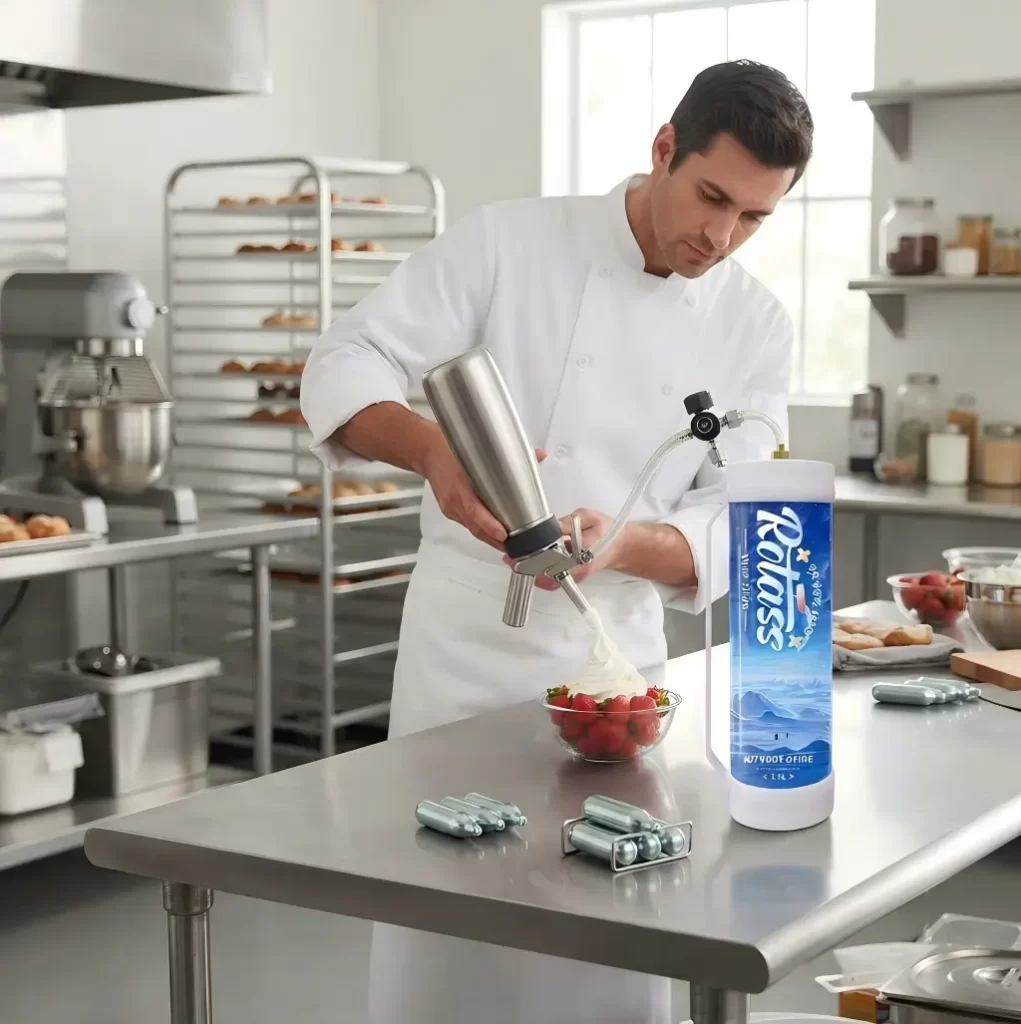
Common Mistakes When Using a Large N2O Cylinder
Moving from 8g cream chargers to a larger N2O cylinder changes how the equipment is connected and operated. A few simple mistakes can lead to gas leaks, inconsistent pressure, or unnecessary wear on the equipment.
Opening the cylinder valve too quickly can cause a sudden pressure change and may expose weak or poorly fitted connections. Open the valve slowly and check the fittings for any signs of leakage before continuing.
Using more pressure than the equipment requires can affect the texture of the whipped cream and place unnecessary stress on the dispenser and its seals. Follow the pressure limits and operating instructions for the regulator and dispenser. If the system allows pressure adjustment, make changes gradually rather than increasing the pressure sharply.
Leaving the regulator connected when the cylinder is not in use can make routine maintenance more difficult and may put unnecessary strain on the connections over time. Close the cylinder valve, release residual pressure from the hose, and disconnect the regulator when the equipment will be stored for an extended period, following the manufacturer’s instructions.
Using the cylinder horizontally or upside down can allow liquid N2O to enter the regulator or downstream equipment. Keep the cylinder upright and secured during use and storage. Liquid N2O can cause cold burns on contact, so avoid direct exposure.
Disconnecting the hose before shutting off the gas supply can release N2O unnecessarily. Close the cylinder valve or flow control first, release any remaining pressure in the hose, and then disconnect the fitting.
Connecting dirty or damaged fittings can also lead to leaks. Before installation, check the cylinder valve, regulator connection, and hose fittings for dirt, damage, or worn sealing components. Keep the connection surfaces clean and replace damaged parts instead of trying to force them into place.
How to Manage 8g Cream Charger Stock After Upgrading
Switching from 8g cream chargers to a larger N2O cylinder does not mean you have to stop using your existing stock immediately. Keeping a small number of 8g cream chargers can still be useful for lower-volume orders, staff training, backup use, or situations where taking a large cylinder is not practical.
Before ordering a 2000g N2O cylinder, look at how many cream dispensers your business fills each day and how much N2O each application normally requires. For example, a café that regularly prepares around ten 0.5-litre batches per day can use its actual consumption records to estimate how long a 2000g cylinder is likely to last. This gives you a more useful purchasing figure than relying on a general estimate.
For the first order, it can make sense to keep some 8g cream chargers in stock while the team becomes familiar with the new setup. Once the large N2O cylinder is being used regularly, the 8g chargers can be kept as a smaller backup supply rather than the main source of N2O.
Storage also needs to be planned before bringing a large N2O cylinder into the kitchen or production area. A 2000g cylinder takes up more space than a box of small chargers and should be stored upright, secured against tipping, and kept in a suitable, well-ventilated area away from heat and direct sunlight. Follow the storage requirements provided by the cylinder manufacturer and local regulations.
When a cylinder is empty, do not treat it like ordinary metal waste. Follow the supplier’s instructions and local requirements for returning, handling, or recycling N2O cylinders. Cylinders should only be depressurised by an appropriate method and by trained personnel where required.
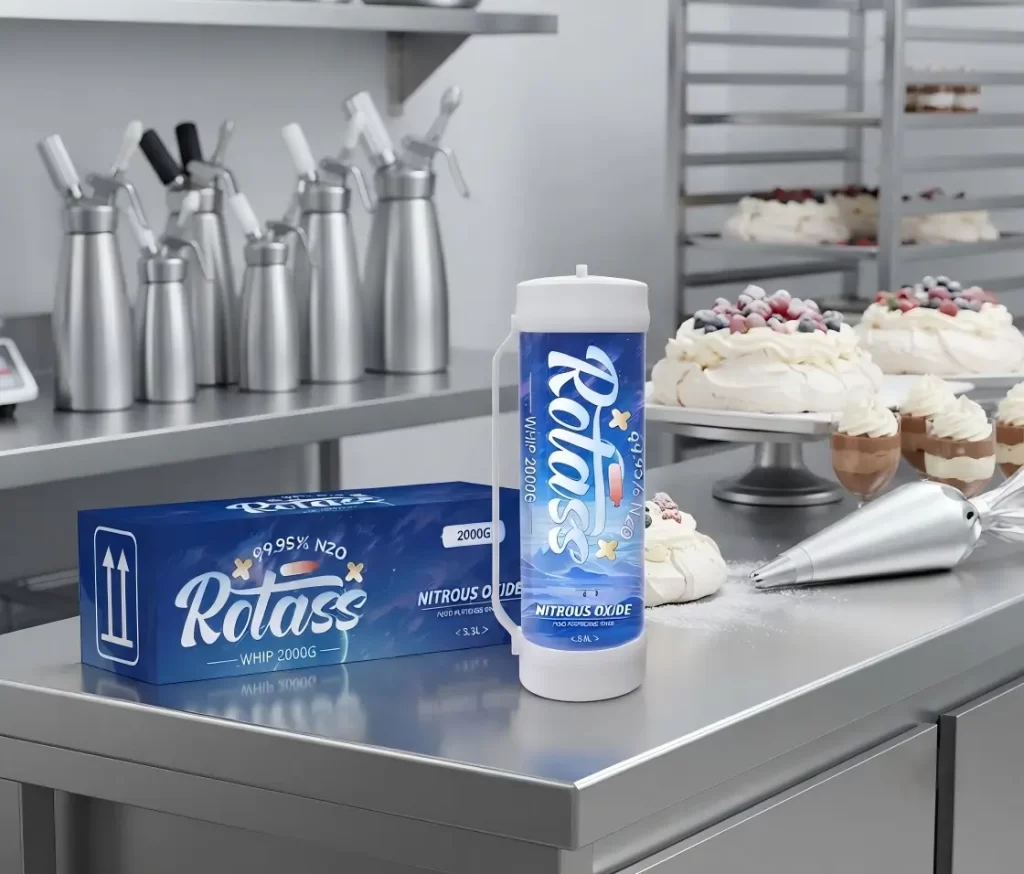
Is a Larger N2O Cylinder More Cost-Effective?
A larger N2O setup requires a higher initial investment because you need both the cylinder and a compatible pressure regulator. Whether the switch saves money depends on your current consumption, charger prices, labor time, and how often the dispenser is used. For businesses going through large quantities of 8g cream chargers each week, comparing the cost per use can give a clearer picture of whether a larger cylinder makes financial sense.
Cylinder size also matters. A 2000g N2O cylinder is better suited to operations with consistent, higher-volume demand, while a 580g or 640g N2O cylinder can be a more manageable option for businesses that want to reduce the number of 8g cream chargers they use without moving straight to the largest format.
For a closer look at the 2000g option, see the Rotass 2000g N2O cylinder for information on capacity and typical applications. Comparing your actual weekly N2O consumption with the available cylinder sizes is the best way to choose a suitable format.
Once the correct regulator, hose, and adapter are selected, the change from 8g cream chargers to a larger N2O cylinder is relatively simple. The main points to get right are equipment compatibility, pressure control, cylinder handling, and storage.
If you are unsure which regulator or adapter matches your existing cream dispenser, contact Rotass before ordering. Providing the dispenser model and cylinder requirements can help confirm the correct connection and avoid compatibility issues.
FAQs
Contact us now, and we’ll get back to you within minutes.