
Share your requirements with Rotass now!
Why Is Whipped Cream Runny And How to Fix It?
Whipped cream should be light, stable, and hold its shape. When it comes out thin, flat, or starts weeping liquid after a few minutes, something went wrong and it usually comes down to one of a handful of fixable reasons.
This guide covers every scenario: cream that won’t thicken in the first place, cream that collapses after whipping, overwhipped cream, watery canned cream, and the best ways to stabilize it going forward.
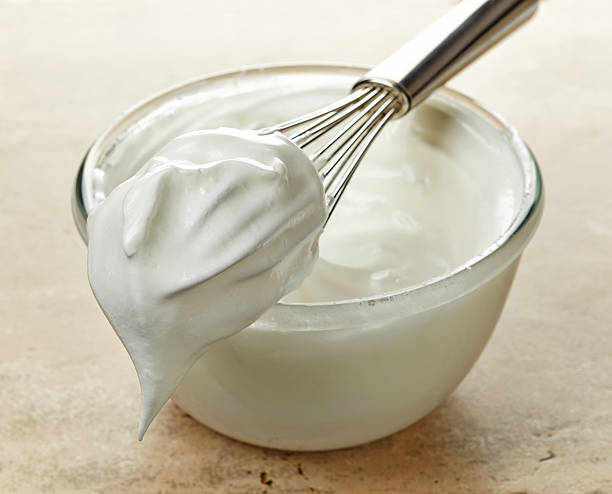
Why Is My Heavy Cream Not Thickening or Whipping
If your cream isn’t thickening at all, the problem almost always starts before the whisk does.
Fat content is too low. Whipping cream needs at least 30% fat to form stable peaks, and heavy whipping cream sits between 36–40%. If you used light cream, half-and-half, or a “whipping cream” product below 30% fat, it won’t whip properly, no technique will change that. Check the label before you start.
The cream or bowl is too warm. This is the most common reason. Fat globules need to be cold to trap air and hold structure. If your cream has been sitting at room temperature or your mixing bowl is warm from the dishwasher, the fat melts before it can form a foam. The fix: refrigerate the cream for at least 30 minutes before whipping, and chill your bowl and beaters in the freezer for 10–15 minutes first.
The cream is past its best. Older cream even within its use-by date has less stable fat and is more prone to separation. If yours smells fine but just won’t cooperate, freshness may be a factor.
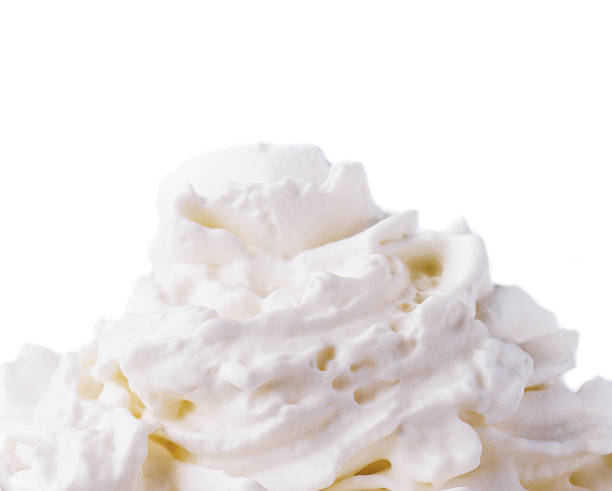
Why Whipped Cream Turns Watery After Whipping
There’s an important difference between cream that won’t whip and cream that whips fine but turns runny afterward. The two problems have different causes.
If your whipped cream holds peaks right after mixing but starts releasing liquid within minutes, temperature is usually responsible. Once the cream warms up from a warm kitchen, a warm serving bowl, or just sitting out too long, and the fat structure softens and the foam begins to break down.
If it went runny after being refrigerated overnight, that’s a stabilization issue. Unstabilized whipped cream typically holds for 1–2 hours at most. After that, it slowly weeps liquid as the air escapes and fat globules separate. Adding a stabilizer before whipping (covered below) prevents this entirely.
How to Fix Runny Whipped Cream?
The right fix depends on how far gone it is.
Slightly runny, soft peaks instead of stiff ones. Move the bowl to the refrigerator for 20–30 minutes, then try whipping again on medium-high speed. The brief chill is often enough to firm it back up. Don’t add anything yet.
Noticeably thin but not completely liquid. Chill it as above, then whip with 1–2 tablespoons of cold heavy cream added during mixing. The fresh cream gives the structure something to bind to. Whip just until stiff peaks form and stop immediately.
Very runny, pooling liquid at the bottom. At this stage, re-whipping alone rarely works. Your best option is to add a stabilizer (see the section below), then whip from scratch. If the cream has separated heavily, it may be past saving but try chilling it first before deciding to discard it.
One general rule: always whip cold, in a cold bowl, at medium-high speed. Starting on high immediately can cause uneven texture and makes it easier to accidentally overshoot.
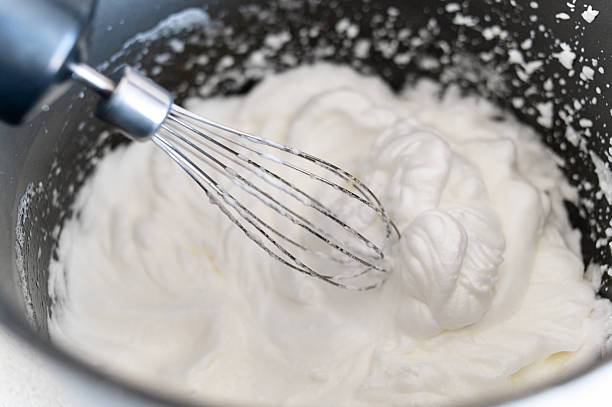
How to Fix Watery Whipped Cream in a Can?
Canned whipped cream, the kind dispensed from a pressurized can, goes runny for different reasons than hand-whipped cream, and the fixes are specific to how those cans work.
The can wasn’t shaken enough. The cream inside needs to be fully mixed with the nitrous oxide before dispensing. Shake the can vigorously for 15–20 seconds before use.
The can is too warm. Canned whipped cream requires refrigeration right up until use. If it’s been sitting at room temperature, the propellant pressure drops and the cream dispenses thin. Refrigerate the can for at least an hour, then shake and try again.
The nozzle is clogged. A partial blockage affects the pressure and produces a flat, runny stream. Remove the nozzle and rinse it under warm water, then reattach and test.
The can is nearly empty. As the gas pressure drops toward the end of a can, the cream comes out flat. This isn’t fixable, it’s just the nature of pressurized cans.
If you use a cream whipper with separate N₂O chargers, you have more control: you can recharge as needed, adjust the amount of cream, and the output stays consistent from first to last serving.
How to Fix Overwhipped Cream?
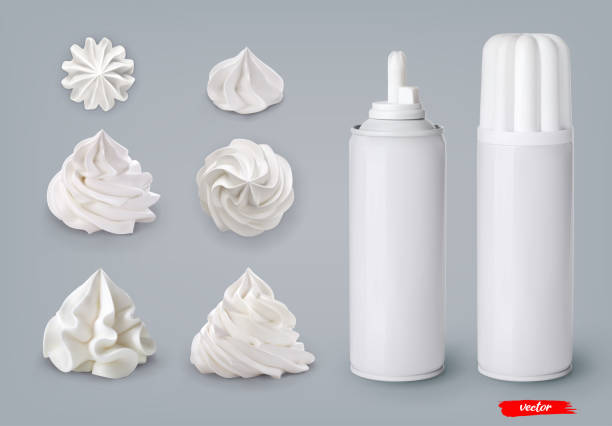
Overwhipped cream is a different problem and it needs a different solution. At this stage, the fat globules have clumped together and the foam has begun to break down into a greasy, curdled texture. If it looks like soft butter with liquid pooling around it, it’s overwhipped.
If you have extra heavy cream: Add 1–2 tablespoons of cold, unwhipped heavy cream directly to the bowl. Fold it in gently with a spatula, do not use the mixer. In many cases, this loosens the structure enough to bring it back to a usable consistency. Add small amounts gradually rather than all at once.
If you don’t have extra cream: This is what most guides skip. Place the bowl in the refrigerator for 15 minutes, then fold the cream gently with a spatula several times. The chilling firms up the fat slightly, and the folding redistributes it without adding more air. It won’t fully recover stiff peaks, but it can reach a soft, spreadable consistency that works well on cakes or as a filling.
The key in both cases is to stop using the electric mixer. Further machine whipping will push it straight into butter territory.
How to Thicken Heavy Cream: Stabilizers That Actually Work
Whether you’re preparing cream in advance or just want it to hold longer, a stabilizer added before whipping makes a significant difference. According to King Arthur Baking and some tests from Rotass Team, stabilized whipped cream can hold for up to 24 hours refrigerated without weeping.
Here’s how the main options compare:
Powdered (icing) sugar — The simplest option. Cornstarch in powdered sugar acts as a mild stabilizer. Use 1–2 tablespoons per cup of cream. Add it after soft peaks form. Good for everyday use, subtle effect.
Cornstarch — Mix 1 teaspoon cornstarch with 2 teaspoons cold water, heat until thickened, cool completely, then fold into the cream before whipping. More effective than powdered sugar alone and doesn’t affect flavor.
Unflavored gelatin — The most reliable for long-hold applications. Bloom ½ teaspoon gelatin in 1 tablespoon cold water, microwave for 5–10 seconds until dissolved, cool to room temperature, then stream it in while whipping at low speed. Holds peaks for up to 48 hours. Slightly firmer texture.
Cream cheese — Add 1–2 tablespoons of softened cream cheese per cup of cream. Beat it in at the start. Produces a denser, richer whipped cream that holds well — particularly suited to cake frosting or piping.
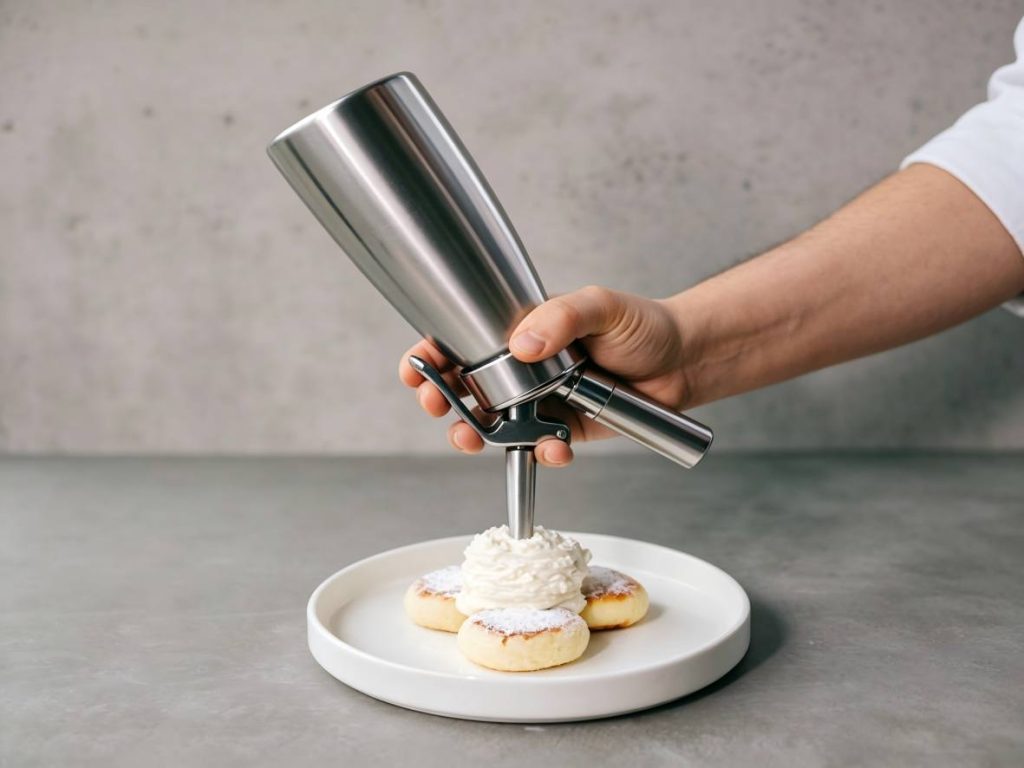
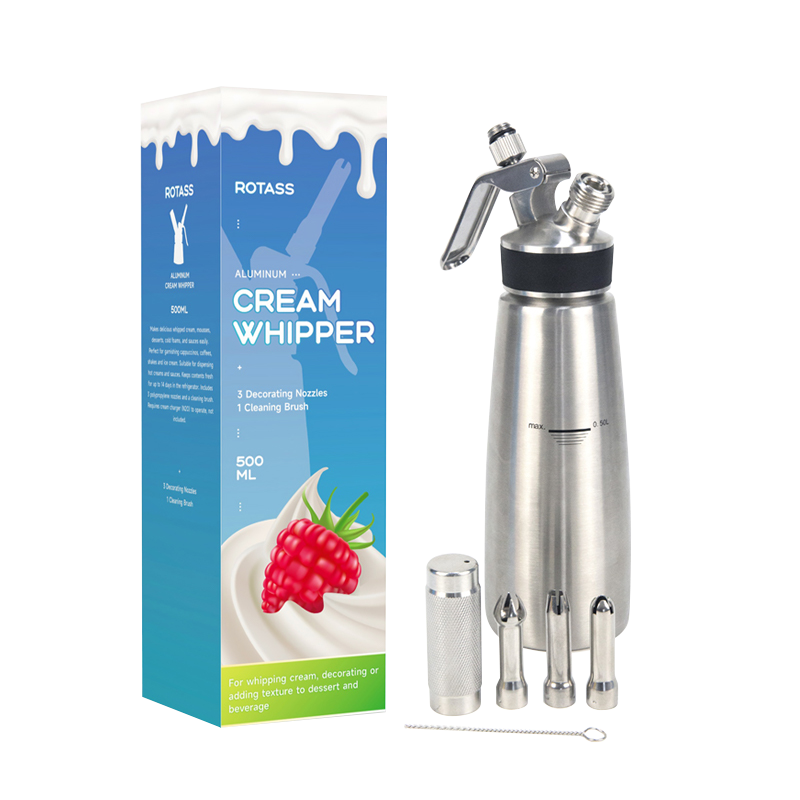
N₂O whipped cream chargers — A fundamentally different approach. Instead of adding ingredients, nitrous oxide is dissolved into the cream under pressure inside a whipper. The pressurized gas creates a foam that is physically more stable than hand-whipped cream. Properly charged whipped cream keeps for up to 3 days refrigerated in the dispenser. This is what cafes and professional kitchens rely on for consistent, stable output and it eliminates the risk of overwhipping entirely. If you’re preparing cream regularly, a Rotass whipped cream charger removes most of the variables that cause these problems in the first place.
99.95% purity N2O · OEM · Low MOQ · Local delivery
How to Prevent Runny Whipped Cream?
Most whipped cream failures are preventable with a consistent setup.
Keep everything cold: cream, bowl, and beaters all go in the refrigerator or freezer before you start. Use heavy whipping cream with at least 36% fat. Add your stabilizer of choice before or during the soft-peak stage — not after. Stop whipping as soon as you reach stiff peaks; the difference between stiff peaks and overwhipped takes about 20 seconds at high speed.
If you’re serving it on a warm day or need it to hold for more than an hour, gelatin or a cream charger is the more dependable choice. For a short-hold situation like topping a dessert that will be eaten within 30 minutes, powdered sugar stabilization is enough.
When to Start Over
Some cream can’t be rescued. If it smells sour or has an off taste, discard it — that’s spoilage, not a whipping problem. If it has fully turned to butter (yellow-tinted, solid, and greasy throughout), there’s no reversing it; butter can be used for cooking but not as a topping. And if large amounts of watery liquid have separated out even after chilling, the structure is too far broken to recover with simple fixes.
In those cases, starting fresh is faster than trying to salvage something that won’t hold.
Runny whipped cream is almost always the result of temperature, fat content, or timing, all things that can be controlled. Work through the diagnosis from the top: is it a before-whipping problem or an after-whipping problem? That determines the fix. Once you know what went wrong, the correction is usually straightforward.
Contact us now, and we’ll get back to you within minutes.