
Share your requirements with Rotass now!
Common Mistakes When Using Nitrogen Chargers for Nitro Drinks
Nitro drinks can look deceptively simple. When everything is working properly, you get the familiar cascade, a thick creamy head, and a smooth texture. But getting that result consistently can take a little more attention than expected.
One reason is that nitrogen behaves differently from carbon dioxide. It is much less soluble in liquid, which means small changes in pressure, temperature, or handling can affect the final result. The type of gas you use and the condition of the dispenser also make a difference.
In this guide, we’ll look at some of the most common mistakes when making nitro drinks, from pressure and temperature issues to improper cleaning and maintenance. The recommendations below are based on common equipment practices and troubleshooting guidance, but your dispenser or nitrogen system may have different requirements. Always follow the instructions provided by the manufacturer for your specific equipment.
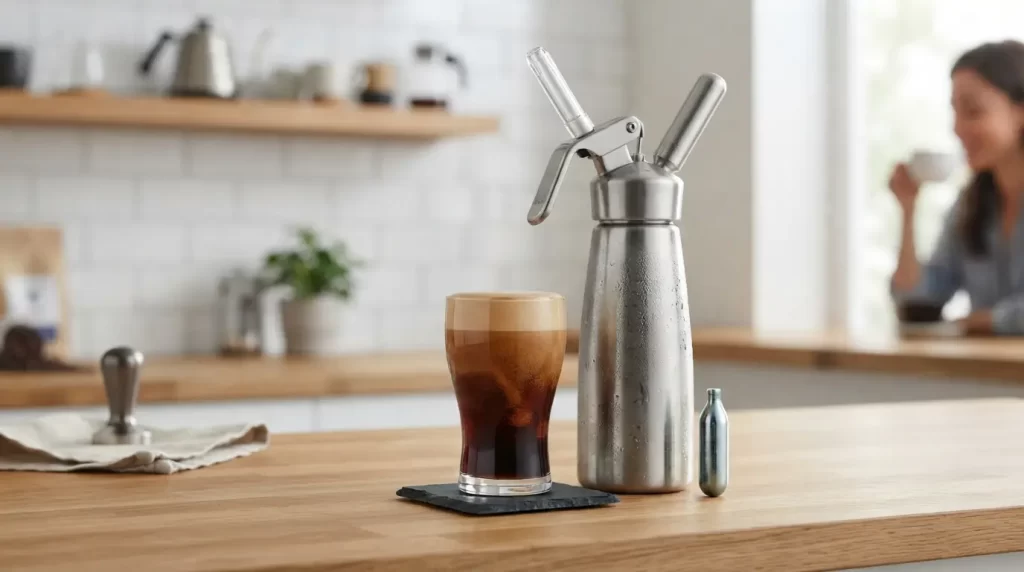
1. Using N2O or CO2 Instead of Pure Nitrogen
Before changing the pressure or adjusting the dispenser, check the gas you are using. It is an easy mistake to make, especially when different chargers and cylinders look similar.
Nitro coffee needs nitrogen. CO2 and N2O will not produce the same result.
CO2 dissolves readily in liquid and creates carbonation, so a drink made with CO2 can taste fizzy and more acidic than expected. N2O is also much more soluble than nitrogen and is widely used in whipped cream dispensers because of the way it contributes to foaming and texture. It can produce a softer mouthfeel, but it does not create the same fine-bubble structure or cascade associated with a nitrogenated drink.
Nitrogen has much lower solubility in liquid. When used under the right conditions, it produces the small bubbles that give nitro coffee its characteristic creamy texture and visual cascade.
This is why using the wrong charger can make a drink seem “flat” even when the dispenser itself is working normally. If CO2 or N2O was used by mistake, changing the pressure alone will not fix the result.
Check the label on the charger or cylinder before connecting it to the dispenser. Do not identify the gas by the appearance of the charger alone, as different gas products can look very similar.

2. Using the Wrong Charging Pressure
Pressure is one of the first things to check when a nitro drink does not come out as expected. The tricky part is that there is no universal pressure setting for every nitrogen dispenser.
Many commercial nitro systems run at around 20–40 psi, but the actual setting depends on the keg, regulator, infuser, beverage temperature, faucet, and overall system design. Some systems also use a higher pressure while nitrogen is being infused and reduce it for dispensing.
Pressure that is too low may not give the nitrogen enough force to dissolve into the beverage properly, which can leave the drink looking flat. On the other hand, excessive pressure can make the pour too forceful, disturb the foam, and put unnecessary strain on seals, fittings, or other components.
There is another issue that is easy to miss: the gas supply itself. As a cylinder or nitrogen source gets low, the regulator may struggle to maintain a steady pressure. You might get a good-looking pour at the beginning of service and noticeably weaker results later on.
For commercial systems, keep an eye on the regulator gauge instead of trying to judge the remaining gas by feel. With small nitrogen chargers, use the charger size and charging procedure specified for the particular dispenser. If the pressure requirement is unclear, the manufacturer’s instructions are a better reference than a setting used on a different machine.
3. Skipping or Rushing Agitation
Nitrogen is less soluble in a beverage than CO2, so agitation plays an important role in many small-scale nitro systems.
One common mistake is to attach the charger, shake the dispenser for a few seconds, and start pouring right away. A quick shake may not give the nitrogen enough contact with the liquid to achieve the texture you are looking for.
For many home nitro dispensers, the recommended method is to charge the cold beverage and then shake the dispenser vigorously. The exact procedure depends on the equipment. For example, iSi and Rotass both recommend shaking its Nitro system vigorously at least six times after charging.
Shaking helps increase the contact between the gas and liquid, allowing more nitrogen to move from the headspace into the beverage. If agitation is too brief, more of the gas can remain in the headspace rather than contributing to the final texture. This can result in a noticeable burst of foam during the first pour, followed by pours that become progressively flatter.
At the same time, more shaking is not necessarily better. Once the beverage has absorbed as much nitrogen as the system and recipe allow, additional agitation will have limited effect. It cannot make up for a beverage that is too warm, a poor seal, or equipment that is not designed for effective nitrogen infusion.

4. Charging Warm Liquid
Temperature has a noticeable effect on how well nitrogen dissolves into a drink. According to Henry’s Law, gases are generally more soluble in liquids at lower temperatures. In practice, this means nitrogen can be absorbed more easily when the beverage is cold than when it is at room temperature.
For nitro cold brew, the coffee should be thoroughly chilled before charging. Commercial nitro systems are built around serving cold beverages as well, so temperature is not something to overlook when troubleshooting a flat pour.
A drink that produces a good cascade when properly chilled may give very different results if you charge it while it is still warm. Warmer liquid tends to hold less dissolved nitrogen, and the gas can escape more quickly once the drink is poured. You may end up with a thin layer of foam that disappears almost immediately.
Adding more gas is not a reliable fix for this problem. If the beverage is too warm, increasing the pressure will not fully make up for the loss in nitrogen solubility.
If your nitro drink keeps losing its foam within seconds, check the beverage temperature first. It is often worth fixing the temperature before changing the gas pressure or charging process.
5. Using the Wrong Dispenser or Ignoring a Worn Seal
Not every cream whipper or beverage dispenser is made for nitrogen. Nitrogen chargers can work differently from standard N2O cream chargers, so the dispenser needs to be rated for the gas and pressure involved. Using the wrong charger or an incompatible dispenser can lead to poor results and, in some cases, create a safety risk.
One of the easiest things to notice is a hissing sound during or shortly after charging. If you hear it, check for a leak rather than assuming the dispenser has charged properly.
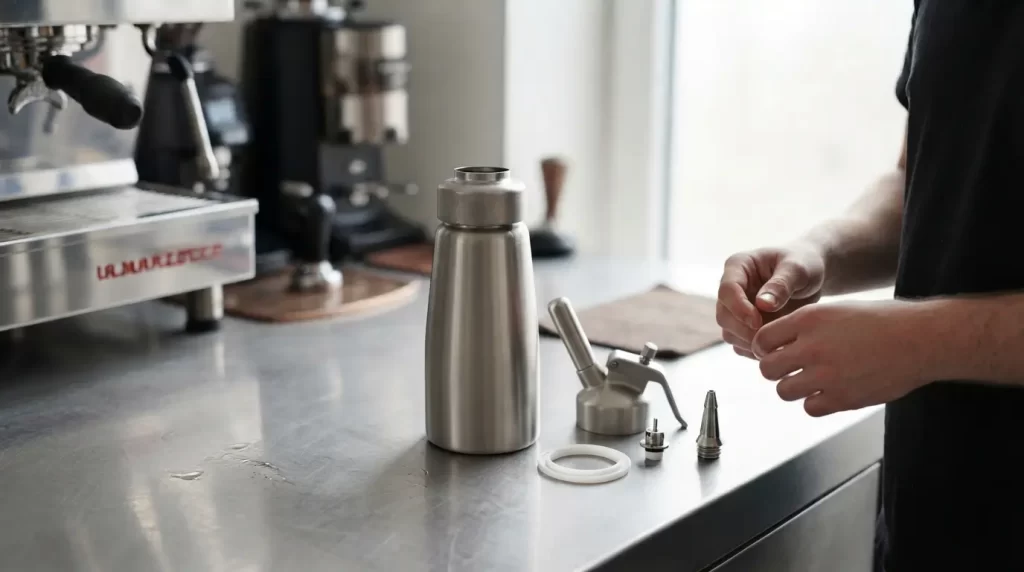
Start with the charger holder, head gasket, O-ring, dispensing valve, and other fittings. Make sure the head is seated correctly and tightened as instructed by the manufacturer. There is no need to overtighten anything. Excessive force can damage the threads or fittings and make the leak worse.
Seals can also wear out over time. A gasket that has become flattened, cracked, or brittle may still look fine at first glance, but it may no longer provide a proper seal. In that case, nitrogen can escape before you even start pouring.
Check the seals as part of regular equipment maintenance, especially if the dispenser is used frequently. If a gasket or O-ring needs replacing, use the part specified by the manufacturer. Avoid replacing it with a random O-ring that only appears to be the same size. The material and fit both matter when the part is used with pressurized food equipment.
6. Over-Charging Without Considering Beverage Volume
It can be tempting to add another charger when the first charge does not produce enough foam. However, using more nitrogen does not necessarily improve the texture.
The amount of nitrogen a drink can absorb depends on the beverage, its temperature, the dispenser, and the way the system is designed. Once the liquid has absorbed enough nitrogen, adding more gas mainly increases the pressure inside the dispenser rather than improving the drink.
The right charger quantity also varies between dispensers. For example, some 1-liter nitro whippers are designed to work with a single charger.
For that reason, avoid relying on simple rules such as “one charger per 500 ml.” The manufacturer’s instructions are a better guide because charger requirements can vary between models.
If the drink still comes out flat after using the recommended amount, adding another charger is unlikely to solve the problem. Check the beverage temperature, agitation, seal, and operating pressure instead. Using more chargers than recommended can also put extra pressure on the dispenser’s gaskets, valves, and other components.
7. Pouring Too Soon After Charging
After nitrogen enters the beverage, it needs time to distribute through the liquid. Some commercial systems require longer cold conditioning, while smaller dispensers may be designed for use shortly after charging and agitation.
There is no universal five-minute or overnight rule. Follow the instructions for your specific dispenser and beverage system. If a short resting period is recommended, keep the dispenser cold. As the beverage warms, dissolved nitrogen can escape and affect the foam and texture.
A common sign is a strong first pour followed by flatter pours. If this happens, check the beverage temperature, how long the dispenser has been sitting, and whether the system is maintaining proper pressure.
Commercial systems may require longer conditioning, but home dispensers can work differently. Avoid copying keg-based recipes unless they match your equipment.
8. Ignoring the Liquid Itself
Sometimes the equipment is working fine, but the beverage is the problem. The ingredients in the drink can affect how nitrogen bubbles form and how long the foam holds. Sugar, fat, and suspended solids can all change the final texture.
For example, a sweetened drink or a milk-based nitro beverage may foam differently from a plain cold brew. The foam may have larger bubbles, feel less dense, or disappear more quickly, even when the nitrogen has been infused properly.
That does not necessarily mean the recipe cannot be used for a nitro drink. It simply means the recipe itself needs to be considered separately from the charging process.
Fill volume is another detail worth checking. The dispenser needs enough headspace for the gas to mix with the liquid properly. Do not fill the dispenser above the maximum level specified by the manufacturer.
If plain cold brew works well but the result changes after adding milk, syrup, or other ingredients, test the new recipe on its own before changing the gas pressure or adding more chargers.
9. Neglecting Equipment Maintenance
A nitro dispenser comes into direct contact with the beverage, so regular cleaning is important for both hygiene and proper operation. Coffee residue, sugar, milk, and other ingredients can build up around the dispensing valve, nozzle, gasket, and gas pathway. If left for too long, this buildup can affect the way the dispenser works and make cleaning more difficult.
For home use, clean the dispenser according to the manufacturer’s instructions after use, especially around the valve and nozzle. Commercial systems should follow the recommended cleaning and sanitation schedule, including regular line cleaning where applicable.
It is also a good idea to check the cylinder valve, regulator, hoses, and fittings from time to time. If a valve feels stiff or looks damaged, don’t force it. Have the component inspected or replaced by a qualified technician.
When replacing parts, make sure they are compatible with your system. Components from different brands may appear to fit but have different seals, pressure ratings, or connector specifications.
10. Ignoring Basic Pressure Safety
Nitrogen cylinders and pressurized dispensers should always be handled as pressure equipment.
Store cylinders securely as recommended by the manufacturer, usually in an upright position, and keep them away from direct sunlight, hot cars, open flames, and other heat sources. Pressure increases as temperature rises, so avoid exposing a cylinder to excessive heat.
Do not modify the valve, regulator, charging head, pressure-relief device, or connector. Even a simple-looking fitting can be part of the system’s pressure-control setup. Never block, remove, or tamper with a pressure relief valve. If it activates during normal use, stop using the equipment and find out what caused the pressure to rise.
Most importantly, don’t copy the pressure rating from another dispenser. Working pressure, temperature limits, charger capacity, and safety features can vary between systems. Always follow the pressure limits specified by the equipment manufacturer.
Contact us now, and we’ll get back to you within minutes.