Last Updated: June 2026
Nitrous Oxide Gas Cylinders Guide: Sizes, Colors and Safety Standards
Table of Contents
Nitrous oxide cylinders show up in more places than most people realize: dental offices, commercial kitchens, beverage labs, and industrial facilities all rely on them. But when it comes to actually buying one, the options can get confusing fast. What size do you need? What does the color mean? Which certifications actually matter?
This guide covers all of it in one place, with practical information that helps you make the right call before you place an order.
What Is a Nitrous Oxide Gas Cylinder?
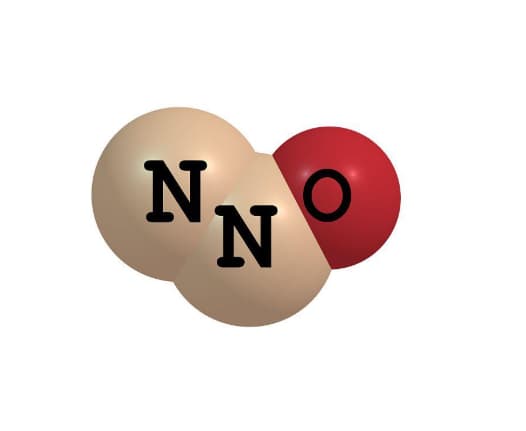
Nitrous oxide (N₂O) is a colorless, odorless gas with a faint sweet note. It’s non-flammable and stable under normal conditions, which makes it safe to handle when stored correctly. Because N₂O is kept as compressed liquefied gas under high pressure, standard containers won’t do, it requires dedicated cylinders built and tested to specific pressure ratings.
Its applications span several industries. In medicine, it’s used as an analgesic and anesthetic, typically combined with oxygen. In food service, it’s the gas behind cream dispensers and certain carbonated beverages. In industrial settings, it plays a role in semiconductor manufacturing and as an oxidizer in specialized combustion processes.
The cylinder you need depends entirely on which of these applications you’re working with and that starts with size.
Nitrous Oxide Cylinder Sizes: Full Comparison
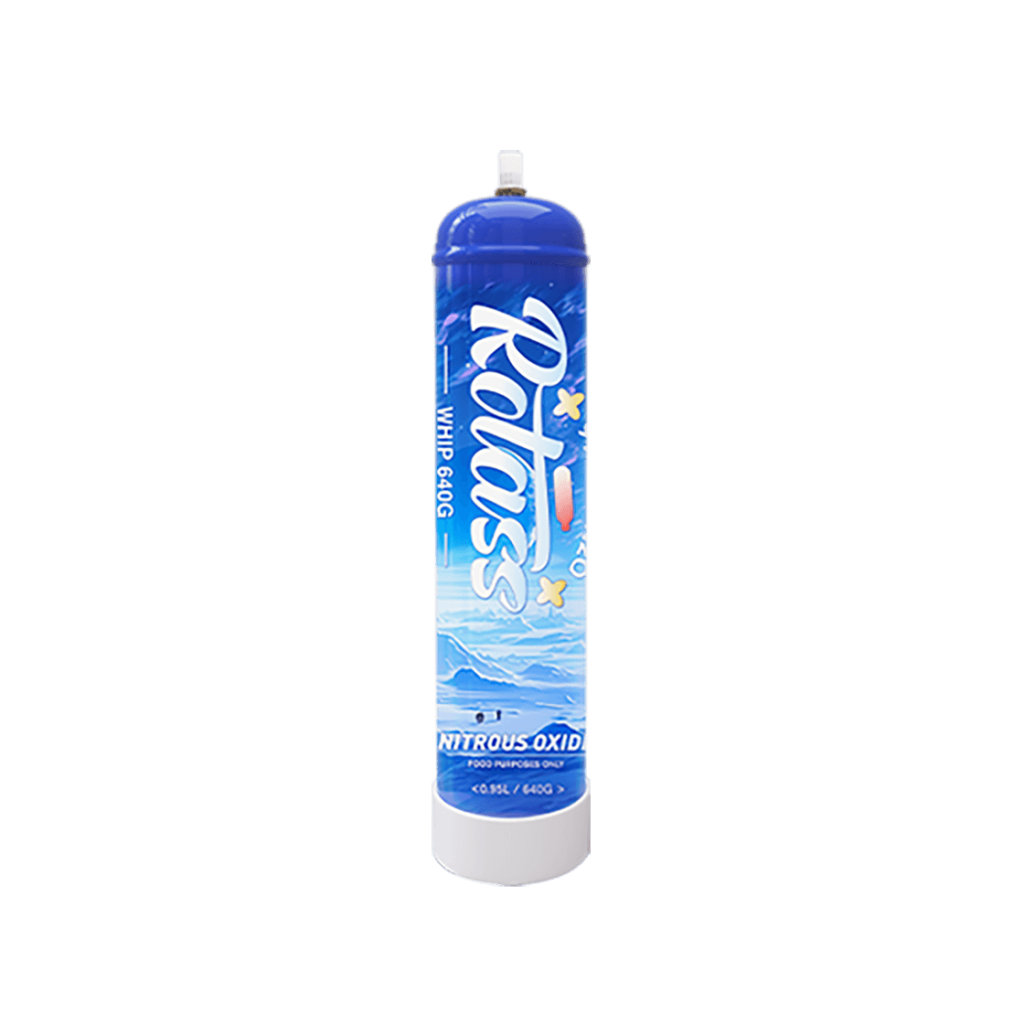
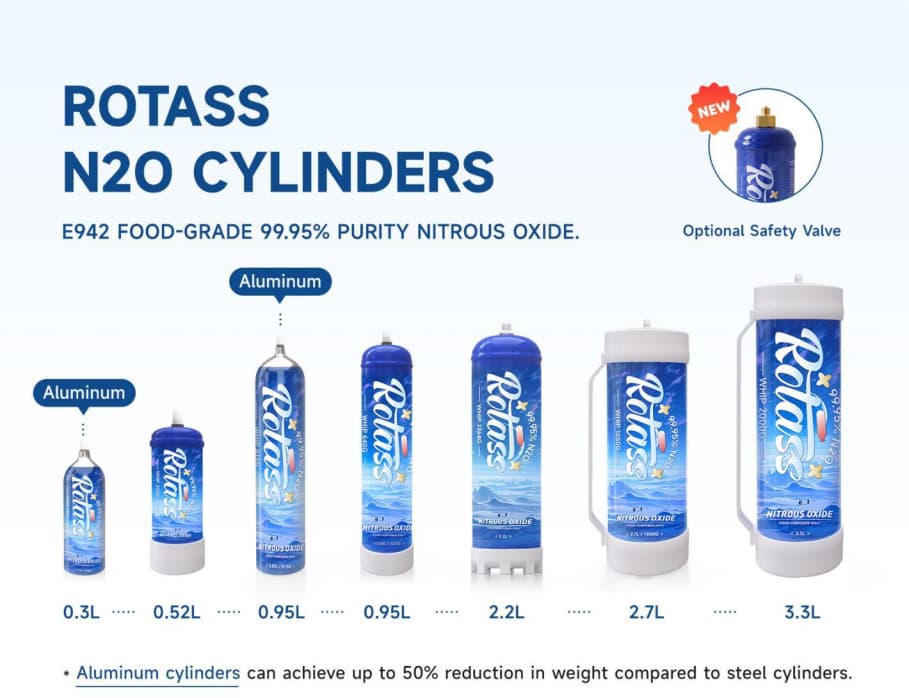
ROTASS produces N₂O cylinders across seven size options, covering everything from portable single-use needs to continuous industrial supply. The table below gives you a complete picture, including physical dimensions and approximate yield per fill.
| Size | Gas Content | Approx. Height | Approx. Diameter | Est. Yield (Whipped Cream) | Typical Use Case |
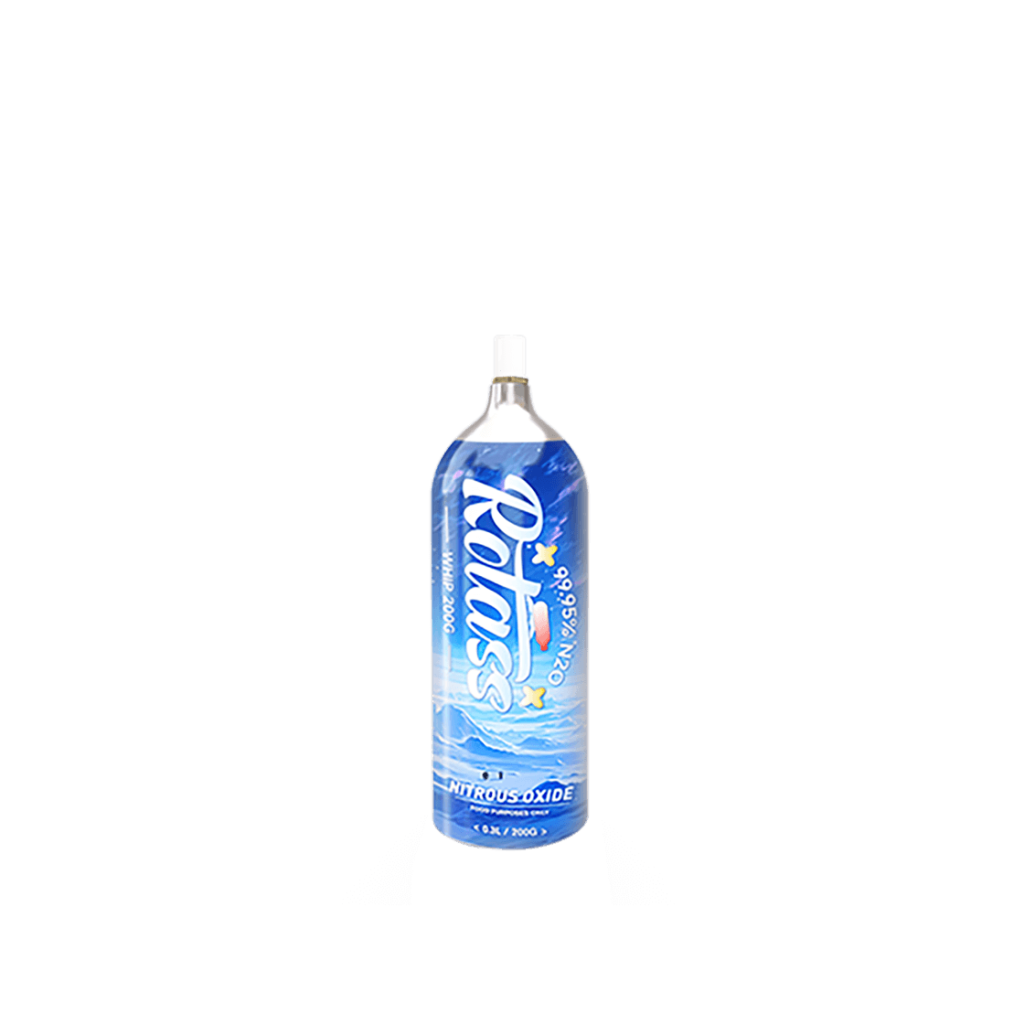
| 200g | 200g | ~270mm | ~55mm | ~30–35 portions | Home use, portable |
| 320g | 320g | ~330mm | ~60mm | ~50–55 portions | Cafés, small catering |
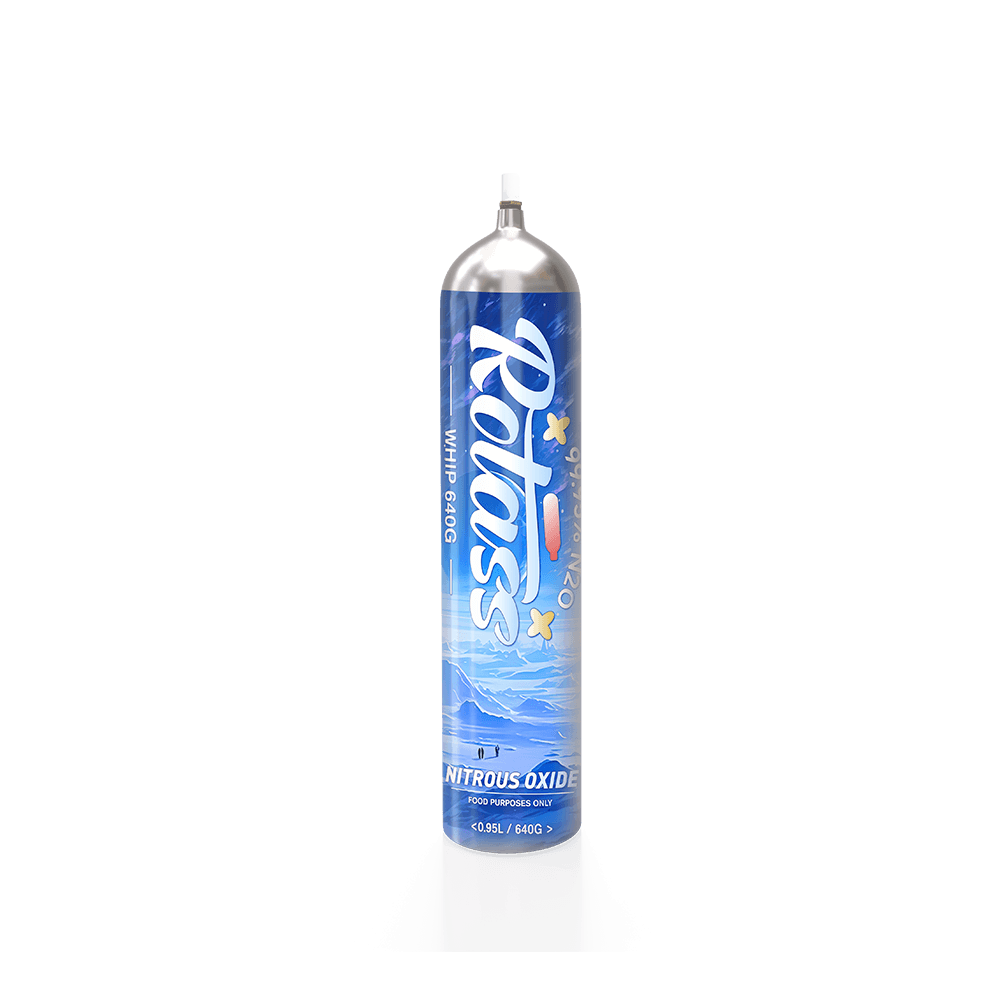
| 640g | 640g | ~430mm | ~70mm | ~100–110 portions | Mid-volume kitchens |
| 1364g | 1.36kg | ~540mm | ~90mm | ~210–230 portions | High-demand catering |
| 1650g | 1.65kg | ~580mm | ~95mm | ~255–275 portions | Food production lines |
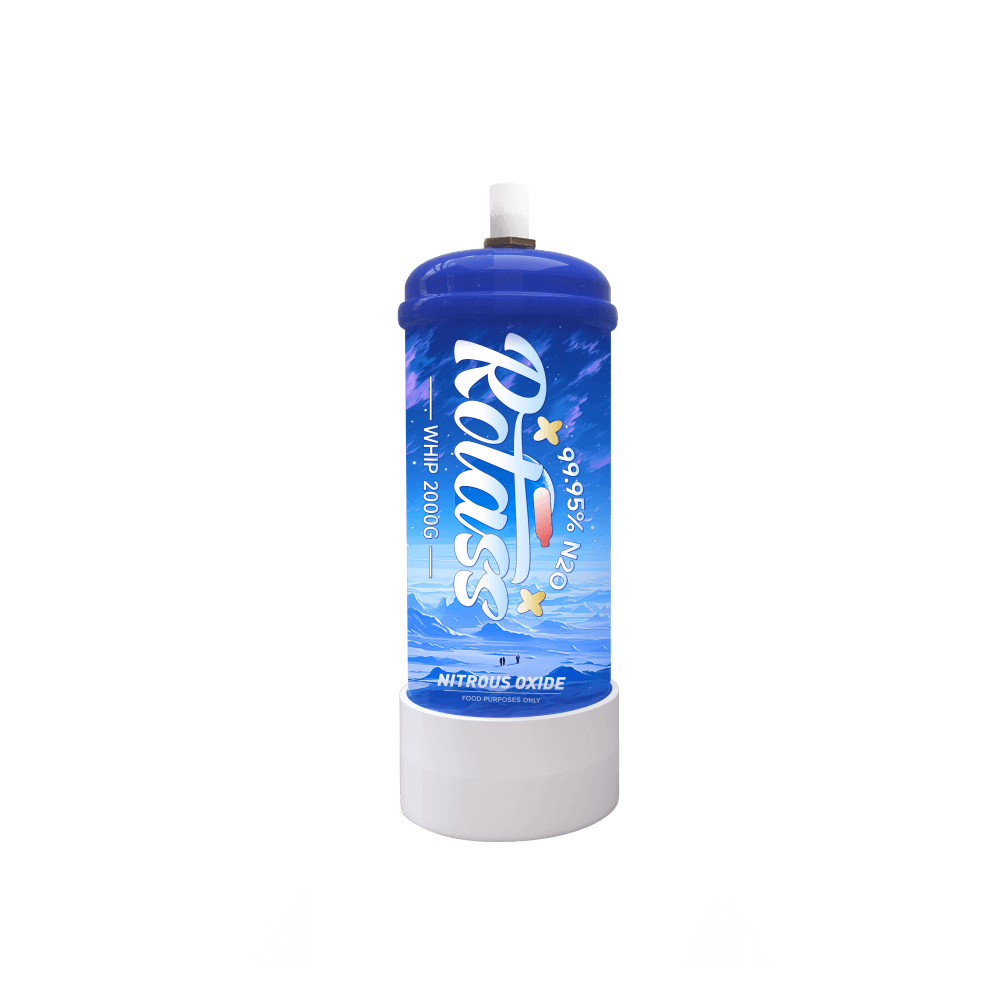
| 2000g | 2.0kg | ~640mm | ~100mm | ~310–330 portions | Lab and semi-industrial |
| 3000g | 3.0kg | ~720mm | ~110mm | ~460–490 portions | Continuous industrial use |
Yield estimates are based on standard 0.5L cream dispenser output and may vary depending on equipment and technique.
How to Choose the Right Size
The right cylinder size comes down to three practical factors: how often you use it, where you store it, and how much output you need per session.
For home users or small café settings, the 200g to 320g range is usually sufficient. These cylinders are compact, easy to handle, and don’t require much storage space. If you’re running a mid-sized kitchen or catering operation, the 640g or 1364g options offer a better balance between convenience and cost-per-use. For food production environments or industrial applications where downtime matters, the 2000g and 3000g cylinders reduce how often you need to swap out tanks.
One thing worth noting: a larger cylinder isn’t always better. If usage is infrequent, a cylinder that sits partially used for weeks introduces unnecessary pressure management and storage concerns. Match the size to your actual throughput.
Nitrous Oxide Cylinder Colors: What Each Color Means
Color coding on gas cylinders exists for one reason: to prevent dangerous mix-ups. The system tells handlers what’s inside before they even read the label, which matters most in high-pressure environments like hospitals or industrial facilities.
That said, color standards are not universal. Different countries use different systems, and what looks like the same color in one region may carry a different meaning in another. Here’s how the major standards break down.
Color Code Standards by Country / Region
| Region | Standard | Body Color | Shoulder Color | Notes |
| International | ISO 32 | Gray | Blue | Shoulder color is the key identifier |
| United Kingdom | BS EN 1089-3 | Gray | Blue | Shoulder color system strictly applied |
| European Union | EN 1089-3 | Gray | Blue | Harmonized with ISO 32 |
| United States | CGA C-9 | No fixed rule | Varies | Label identification takes precedence |
| Australia | AS 4484 | Blue (full body) | — | Full body color used, not just shoulder |
For reference on international standards, the European Industrial Gases Association (EIGA) publishes detailed guidance on cylinder color coding used across EU member states.
Food-Grade vs. Medical vs. Industrial: Does Color Differ?
This is where buyers sometimes get confused. Medical-grade N₂O cylinders in the UK and EU typically follow the gray body / blue shoulder standard strictly, because misidentification in a clinical setting carries serious risk. Food-grade cylinders, on the other hand, are subject to less rigid color enforcement in many markets which is why you’ll see food-grade suppliers, including ROTASS, offering cylinders in blue body finishes or custom colors.
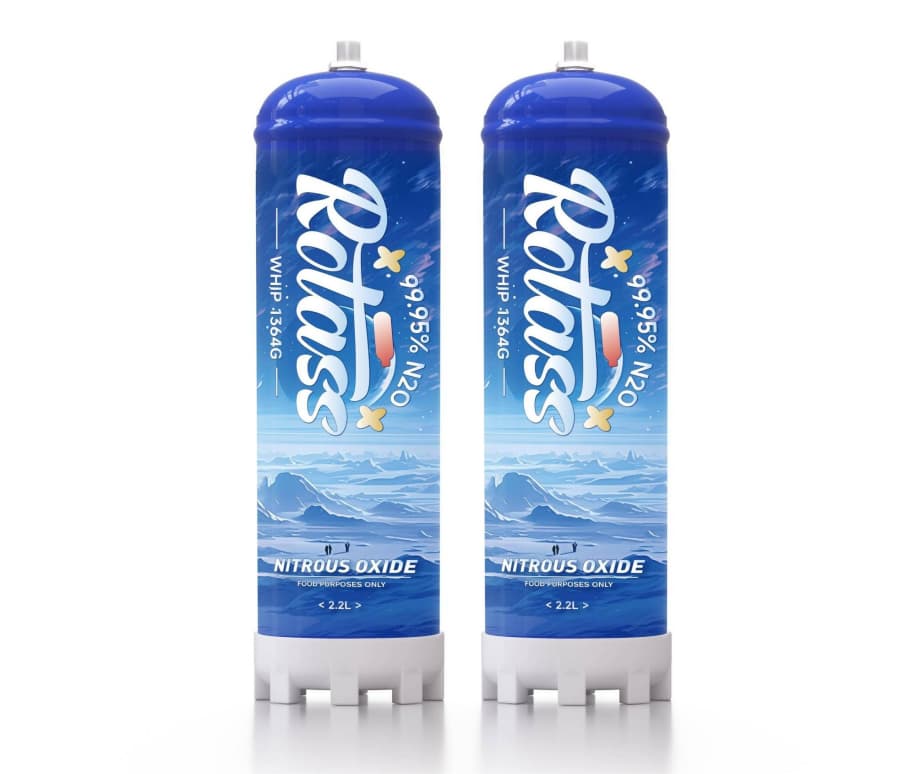
The color of the cylinder does not affect the gas inside. What matters for food-grade applications is the purity level (≥99.9% N₂O) and the relevant food safety certifications not whether the body is gray or blue. If you’re purchasing for food service use, always verify the purity specification and certification documents rather than relying on color alone.
ROTASS offers custom color and label options for wholesale and OEM clients. If brand consistency matters for your operation, this is covered under the BrandCollab program.
Common Questions About N2O Cylinder Colors
Why are nitrous oxide cylinders blue? The blue shoulder color (or blue body in some regions) is a convention established under ISO 32 and adopted by multiple national standards as the identifier for N₂O. It’s a historical and regulatory convention, not a technical requirement of the gas itself.
Does a faded or painted-over cylinder color make it unsafe? A faded color doesn’t automatically make the gas unsafe, but it does create an identification risk. Any cylinder where the color is unclear should be verified by its label and valve markings before use. Do not rely solely on color if there’s any doubt.
Are food-grade and medical-grade N₂O cylinders the same color? Not always and they shouldn’t be assumed interchangeable. While the gas may appear similar in purity, medical-grade cylinders are subject to additional regulatory controls. For food and beverage use, stick to cylinders specifically certified for food-grade applications.
Related Safety Standards and Certifications
A gas cylinder is only as good as the standards it’s built and tested to. When evaluating any N₂O cylinder supplier, these are the certifications that actually carry weight.
ISO 9809 covers the design, manufacture, and testing requirements for seamless steel gas cylinders. Cylinders certified under this standard have been pressure-tested and inspected at the production stage. Periodic re-inspection (typically every 5–10 years depending on jurisdiction) is required for continued use.
DOT (U.S. Department of Transportation) certification is required for cylinders shipped into or within the United States. If you’re supplying the North American market, this is non-negotiable.
CE marking indicates conformity with European safety, health, and environmental requirements. For cylinders sold into EU markets, CE marking is a baseline requirement.
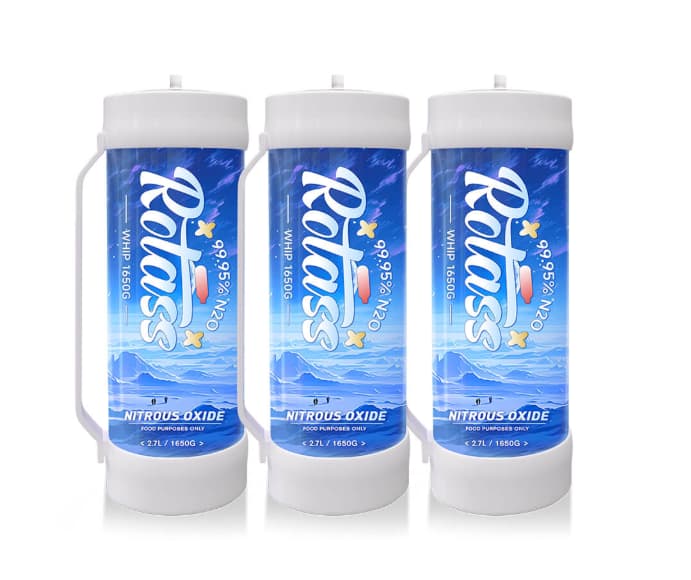
You can check our quality control to get more info.
Storage and Handling Checklist
- Store cylinders upright and secured against tipping at all times
- Keep in a cool, dry, well-ventilated area, away from heat sources and direct sunlight
- Never store near flammable materials or in enclosed spaces without ventilation
- Use only pressure regulators designed specifically for N₂O
- Close the valve when the cylinder is not in use
- Inspect regularly for corrosion, valve damage, or physical deformation
For a detailed breakdown of transport regulations and storage best practices, ROTASS has a dedicated guide on handling food-grade N₂O cylinders.
Checklist to Buy Nitrous Oxide Cylinders
Finding a supplier isn’t difficult. Finding a reliable one is a different matter. Before committing to a purchase especially for bulk or ongoing orders run through these checkpoints.
Certifications first. Request ISO, DOT, and/or CE documentation upfront. A legitimate manufacturer will have these readily available. If a supplier is vague about certification status, that’s a red flag worth taking seriously.
Confirm valve compatibility. Different applications require different valve configurations. A cylinder valve that doesn’t match your regulator or dispenser creates both a practical and safety problem. Confirm the valve type before ordering, especially for industrial or lab use.
Check purity documentation. For food and beverage applications, ask for the Certificate of Analysis confirming N₂O purity at ≥99.9%. This should come from a third-party lab or be issued with each production batch.
Understand MOQ and lead times. For wholesale buyers, minimum order quantities and shipping timelines vary significantly by supplier. Make sure the logistics match your inventory cycle, particularly if you’re importing.
Clarify international shipping compliance. Compressed gas cylinders are classified as hazardous materials under most freight regulations. Confirm that the supplier has experience with compliant export packaging and documentation for your destination market.
Why Choose ROTASS
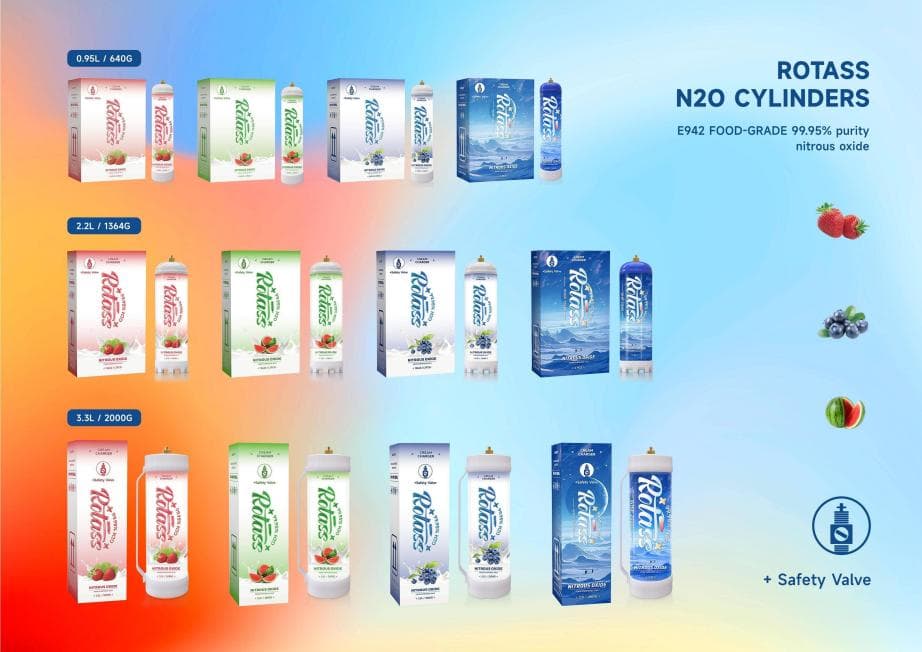
ROTASS is a manufacturer-direct supplier of N₂O cylinders and cream chargers, operating out of Chongqing, China with export capability to markets across Europe, North America, Australia, and Southeast Asia.
Our product range covers all seven cylinder sizes listed in this guide, with certifications including ISO 9809, DOT, and CE across the lineup. Cylinders are available in standard finishes or with custom color, label, and valve configurations for wholesale and OEM clients, making ROTASS a practical option for distributors who need brand-consistent product alongside verified safety credentials.
Beyond the product itself, ROTASS provides documentation support, pre-shipment inspection access, and technical guidance on storage and handling. For buyers sourcing at volume, that kind of after-sales structure reduces the friction that often comes with international procurement.
If you’re looking to discuss cylinder specifications, request samples, or get pricing for a specific order size, reach out to the ROTASS team directly.
Contact us now, and we’ll get back to you within minutes.