Share your requirements with Rotass now!
How to Recycle Empty Soda Water CO2 Cartridges and Cylinders Safely?
CO₂ cartridges and cylinders are commonly used to make sparkling water at home and in cafés, bars, and other beverage businesses. Smaller cartridges are used with some carbonation and dispensing equipment, while larger cylinders are often connected to home or commercial sparkling water systems. Once the CO₂ has been used up, the next question is usually what to do with the empty container.
Can a small CO₂ cartridge go into the recycling bin? Can a larger steel cylinder be recycled in the same way? Not necessarily. The right method depends on the type and size of the container, whether it is completely empty, and the waste disposal rules in your area.
Even when a cartridge or cylinder appears to be empty, it may still contain some residual pressure. For this reason, CO₂ containers should not be placed with ordinary metal recycling unless they have been properly depressurized and local recycling guidelines allow them.
This guide covers the safe handling and recycling of common CO₂ cartridges and cylinders used for sparkling water, including 8g, 12g, and 16g cartridges as well as larger cylinders used with home and commercial carbonation systems.
Why Proper Recycling Matters
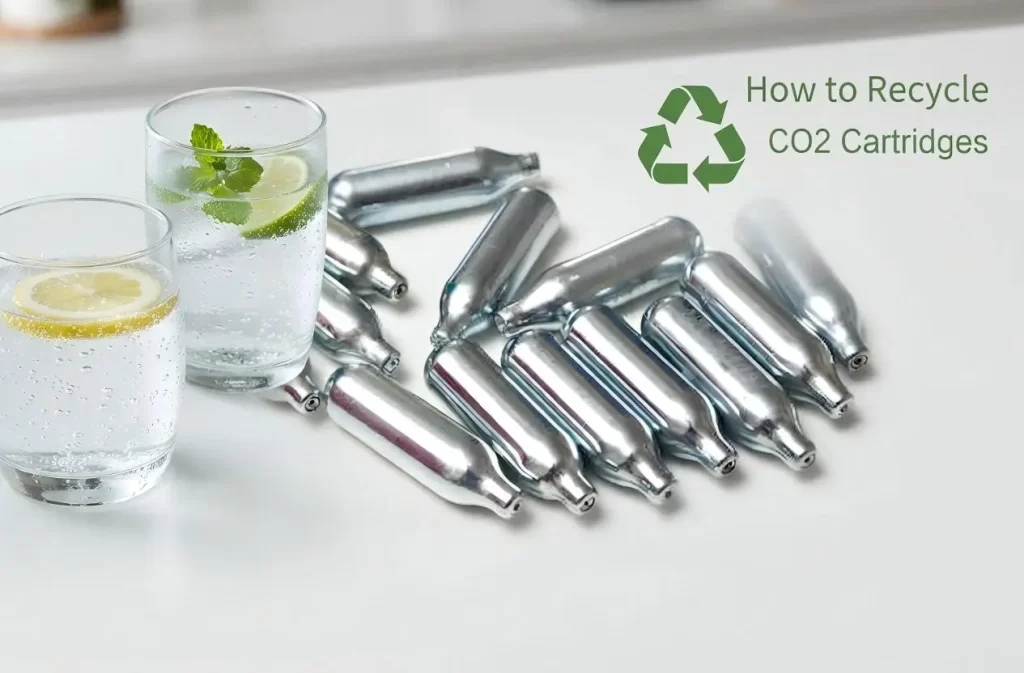
CO₂ containers are made from materials such as steel or aluminum, both of which can be recovered and reused. Once a container has been safely emptied and accepted by a recycling facility, recovering the metal can reduce the need for new raw materials and keep useful material out of landfill.
The issue is the pressure inside the container.
A CO₂ cartridge or cylinder is designed to hold compressed gas. If it still contains pressure, crushing, cutting, heating, or otherwise damaging the container can create a serious safety problem. This is one reason compressed gas tanks are included among examples of household hazardous waste by the U.S. Environmental Protection Agency. Local rules can differ, so the EPA recommends checking with the relevant local waste management authority rather than assuming that a pressurized container can go into household trash.
This makes CO₂ containers different from ordinary food cans or beverage cans. The fact that the container is made from recyclable metal does not automatically mean it belongs in a standard curbside recycling bin.
Safety reminder: If there is any doubt about whether a cartridge or cylinder still contains CO₂, treat it as pressurized and contact a qualified recycling or waste facility for instructions.
First Step: Make Sure the CO₂ Container Is Completely Empty
Before thinking about recycling, determine whether the container is actually empty.
For a small CO₂ cartridge, the safest approach is to use it with the equipment it was designed for and allow the gas to be released through the equipment according to the manufacturer’s instructions. When the cartridge is exhausted, the equipment will generally stop producing gas. A cartridge that no longer produces gas may be empty, but users should not rely on weight or sound alone as proof that there is no pressure remaining.
Do not try to create an opening in the cartridge to make sure it is empty. Do not drill it, puncture it, crush it, or cut it open.
Larger CO₂ cylinders require more care. If a cylinder is connected to a sparkling water system, follow the equipment manufacturer’s instructions for determining when the gas supply has been used up. If the cylinder still contains gas, do not attempt to remove the remaining CO₂ by damaging the valve or container.
In particular, never use heat to empty a CO₂ container. Never place a cartridge or cylinder in a fire, near a strong heat source, or under conditions where the pressure could rise significantly.
If you cannot confirm that the container is empty, do not put it into a household recycling or trash container. Contact a local waste facility, gas supplier, or cylinder service provider and ask how they want it handled.
How to Recycle Different Types of CO₂ Containers
The best way to dispose of a CO₂ container depends on its size, material, and whether it still contains pressure.
Small CO₂ Cartridges: 8g, 12g, and 16g
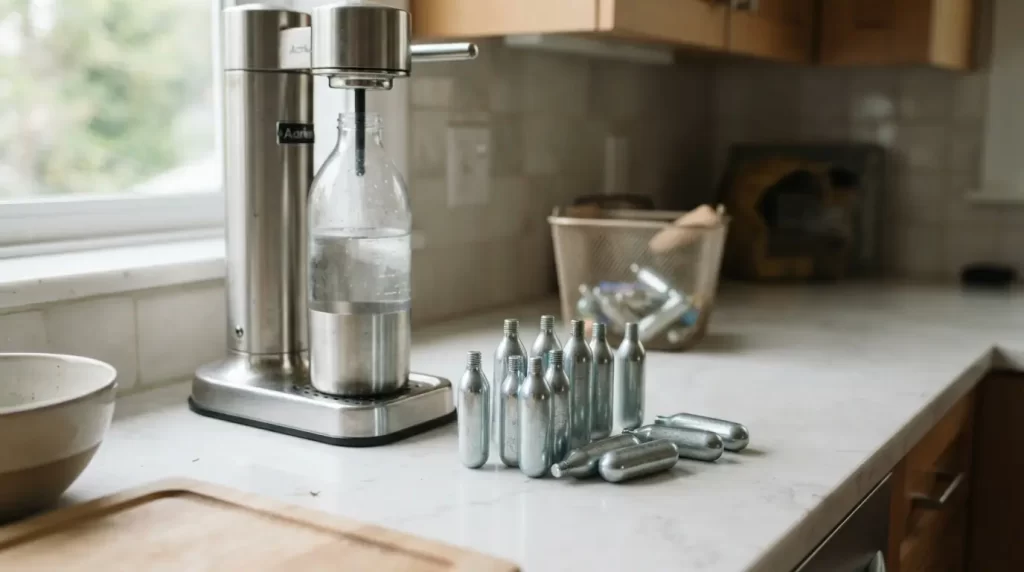
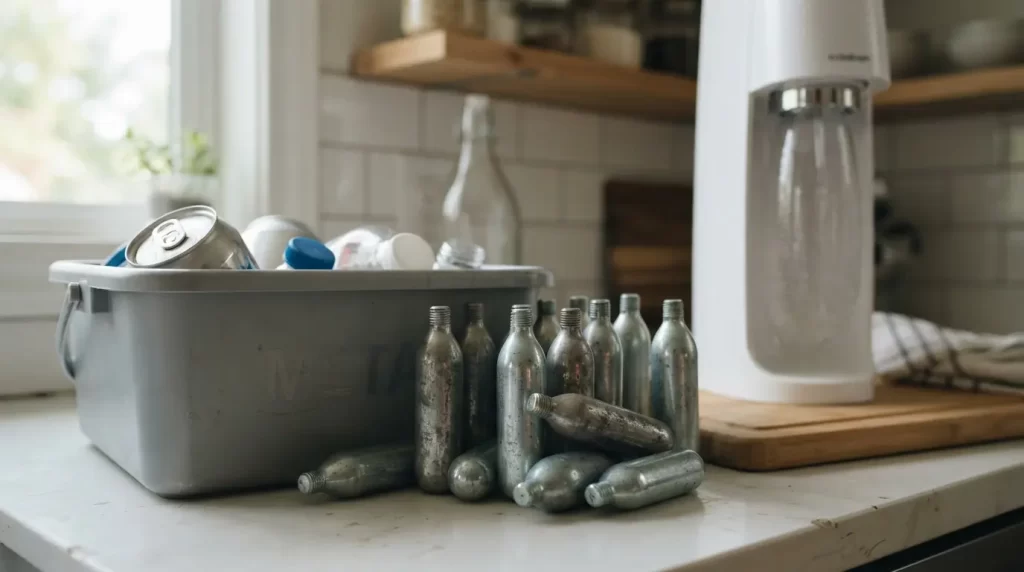
Small CO₂ cartridges are commonly made of steel and are typically designed for one-time use. After the cartridge has been used up through the equipment it is intended for, the empty metal container may be recyclable as scrap metal.
That does not mean every recycling facility will accept it, though. Some facilities take empty CO₂ cartridges with other metal scrap, while others treat gas cartridges as special waste and require them to be brought to a designated collection point.
Before putting a used cartridge in a recycling bin, check with your local recycling service or waste authority. If the cartridge has been used with a compatible device until the CO₂ supply is exhausted, follow the manufacturer’s instructions to make sure it is no longer under pressure. Do not puncture, cut, crush, or otherwise modify the cartridge to try to make it easier to recycle.
For most users, the process is straightforward:
- Use the cartridge with the equipment it was designed for until the CO₂ is exhausted.
- Follow the manufacturer’s instructions for confirming that the cartridge is no longer pressurized.
- Leave the cartridge intact rather than puncturing or crushing it.
- Check whether your local recycling center accepts empty CO₂ cartridges.
- If regular recycling is not available, take the cartridge to an approved metal recycling or special-waste facility.
If you have several empty cartridges, store them in a dry, protected place while you arrange disposal. This can be more practical than trying to recycle each cartridge separately.
For users in the U.S., Earth911’s recycling center search can help locate nearby recycling facilities and collection programs. Earth911 does not recycle the cartridges itself; it provides information to help users find suitable local options.
Larger CO₂ Cylinders: 60L and Similar Carbonators
Larger cylinders should generally not be treated in the same way as small disposable cartridges.
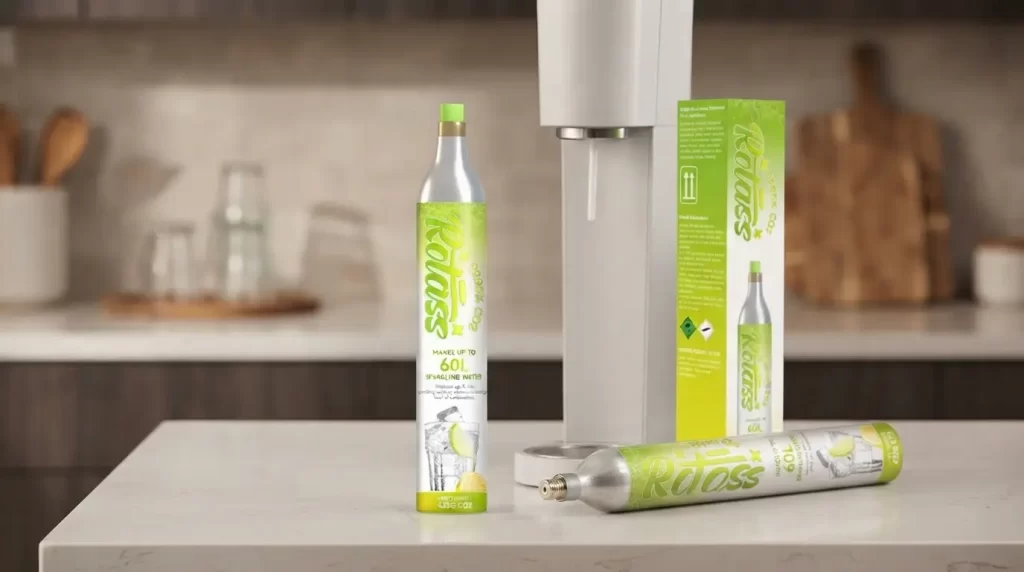
If the cylinder belongs to a branded sparkling water system, an exchange or refill program is usually the preferred option. For example, SodaStream and Rotass operate cylinder exchange programs in which customers return empty cylinders and receive refilled ones. The returned cylinders are cleaned, inspected, and refilled rather than simply sent to a scrap metal facility.
This type of system extends the useful life of the cylinder and avoids unnecessary disposal. SodaStreamand Rotass also states that its cylinders are reusable and refillable, and that customers can exchange empty cylinders through participating retail locations or its online program.
If no manufacturer exchange program is available, contact a qualified cylinder service provider, gas supplier, scrap metal facility, or local hazardous-waste program before taking the cylinder anywhere. Some facilities may accept empty cylinders, while others may require the valve to be handled by an approved professional.
For cafés, restaurants, bars, and other commercial users, it is often more practical to arrange cylinder collection directly with the CO₂ supplier. If a business regularly uses multiple cylinders, a supplier-managed exchange or return system can reduce storage and disposal problems.
Regional Differences Matter
Recycling requirements for CO₂ cartridges and cylinders vary from one region to another. There is no single disposal method that applies everywhere.
In the United States, for example, some compressed gas containers may be accepted through household hazardous waste programs or other specialized waste services. The exact requirements depend on local regulations, so the EPA recommends checking with your state or local solid waste authority before disposal.
The same applies in Europe, Australia, and other regions, where gas cylinders and other pressurized containers may be subject to different collection and recycling rules. Requirements can even vary between neighboring cities.
Before taking a CO₂ cartridge or cylinder to a recycling facility, check its disposal policy or contact the facility directly. It is worth confirming:
- Whether empty CO₂ cartridges or cylinders are accepted
- Whether the container must be completely depressurized
- Whether steel and aluminum gas containers are accepted
- Whether the cylinder valve should remain intact
- Whether the container should instead be taken to a hazardous-waste or special-waste collection point
A quick check before you go can save you an unnecessary trip and, more importantly, help ensure that a pressurized container does not end up in the wrong waste stream.
What NOT to Do With Empty CO₂ Containers
Some disposal methods may seem simple, but they can create safety risks if a cartridge or cylinder still contains pressure.
Do not place a pressurized CO₂ cartridge or cylinder in regular household trash. Containers can be crushed or damaged during collection and waste processing, which may cause a pressurized container to rupture.
Avoid putting a container with unknown pressure in a curbside recycling bin. A cartridge may appear empty while still holding residual pressure. If you are not sure about its condition, check with your local waste or recycling authority before disposing of it.
Do not heat, burn, or expose CO₂ containers to high temperatures. Heat can increase the pressure inside a sealed container and may cause it to fail.
Do not puncture, drill, cut, or crush the container yourself. Although this may seem like a way to prepare a metal container for recycling, it can be dangerous if any gas remains inside. Recycling facilities use their own procedures for processing metal containers.
Be careful when shipping CO₂ containers. A container that still contains gas should not be shipped unless the manufacturer and carrier specifically permit it and all applicable requirements are met.
Do not assume that every empty cylinder can be refilled. Refillable cylinders must meet applicable inspection and service requirements. If a cylinder is designed for reuse, have it refilled only through an appropriate supplier or authorized service program.
A More Sustainable Approach to CO₂ Use
Recycling the metal container is one option, but reusing a container can be a better approach when a suitable refill or exchange program is available.
For people who use sparkling water regularly, refillable cylinders can reduce the number of containers that end up as waste. Rather than purchasing a new cylinder each time, users return the empty one for inspection and refilling. Rotass and our local distributors can offer a cylinder exchange program that allows customers to return empty cylinders and receive refilled ones.
Commercial users may also be able to set up a regular return arrangement with their CO₂ supplier. Depending on the supplier, empty cylinders can be collected, inspected, and returned through the same distribution network used for deliveries. This can simplify cylinder handling, especially for businesses that use CO₂ on a regular basis.
Small disposable cartridges still have a practical role where portability and convenience are important. Once they have reached the end of their service life, however, they should be emptied and disposed of according to local requirements.
For businesses buying CO₂ cartridges or cylinders in larger quantities, sustainability can also be considered when choosing a supplier. Container material, refillability, take-back programs, and local recycling requirements can all affect how the containers are managed after use. Considering these factors before purchasing can help reduce waste and may also lower long-term handling and disposal costs.
Final Thoughts
If you work with CO₂ systems regularly, having a consistent disposal process can help prevent used containers from piling up and reduce unnecessary safety risks. Proper handling also makes it easier to recover the metal when the containers are accepted for recycling.
For more information on storing CO₂ cartridges before they are empty, see our earlier guide on how to store CO₂ cartridges safely. If you use nitrous oxide cream chargers, our N₂O recycling guide covers similar steps for handling and recycling used chargers.
Contact us now, and we’ll get back to you within minutes.